Times of India
Crows can hold grudges for up to 17 years, scientists say
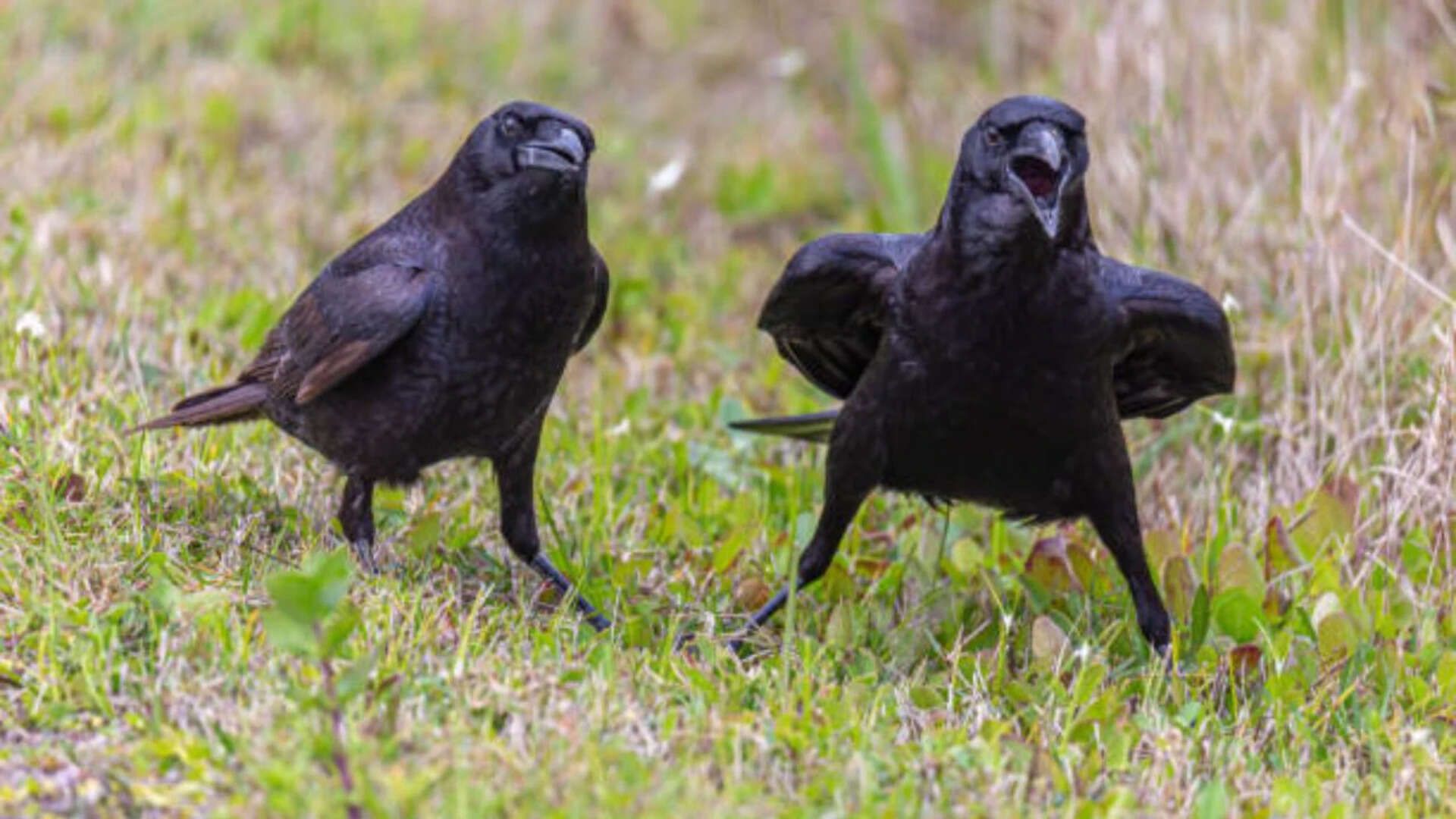
You might forgive and forget but a crow won't. Not just this, they will even tell their friends and family about it. Lisa Joyce ran screaming down the streets of Vancouver as crows dive bombed, landed on her head and took off again, hitting her eight times in between.
The encounters grew so frequent that she had to change her commute to work to avoid the birds. Neil Dave, a Los Angeles resident described crows attacking his house, slamming their beaks against his glass door to the point where he was afraid it would shatter, as per the New York Times.Joyce and Dave are not alone, across the world people have reported being attacked by a bird that looks as harmless as a crow. From car mirrors to human heads, crows have been capable of destroying anything they target just with their beaks.
While one might believe they are being targeted by the flighty birds, it actually seems like they are making an honest mistake, one they are intelligent enough to make.
A bright bird
A crow is known to be an intelligent bird. But its capabilities extend to more than just that. These birds can mimic human speech, use tools, identify and remember faces, even among large crowds. They also gather for what seems to be funeral rites when a member of their group, known as a murder, dies or is killed.
Due to their immense mental strength, they are also able to hold grudges. When a murder of crows singles out a person as dangerous, their wrath can be alarming and, yes, murderous. Moreover, this ick can be passed along beyond an individual crow's life span of up to a dozen years or so, creating multigenerational grudges.
Stalkerish tendencies
Are these grudges developed accidentally, or have you done something?
But are these grudges developed accidentally or have you done something? Gene Carter, a computer specialist in Seattle told NYT how he was followed by crows for a better part of a year.
They would stare at him from outside the kitchen, dive bomb him when he walked to his car and follow him around. What did he do to attract this attack? Well, he apprehended crows encroaching on a robin's nest and launched a rake into the air.“They were waiting for me at the bus stop every single day,” he said. “My house was three or four blocks away and they would dive bomb me all the way home.” The harassment stopped only when he moved.
A natural instinct
According to experts, the majority of crow attacks occur in the spring and early summer when protective parents are watching over their young ones and defending their nests from encroachers. But according to Dr John Marzluff, a professor who has spent his career studying human-crow interaction, crows can hold a grudge as long as 17 years.His estimate is based on an experiment he began in 2006 at the University of Washington campus.
He captured seven crows while wearing an ogre mask and then set them free. He said the episode traumatised the crows and the members of the murder who witnessed it.To test how long the birds would hold onto their grudge, the professor and his assistants would put on the ogre mask periodically and walk around the campus. They noted that crows let out aggressive caws, a sound that experts call scolding. The number of crows increased around seven years into the experiment, when around half the crows he encountered cawed vociferously.
Why so smart?
Offending a crow comes with the consequences of incessant cawing, dive bombing or attacks with their beaks and feet.
Crows possess a highly developed vision. Their eyes are adapted to detect subtle differences in patterns, shapes and movements and can perceive the details of a human shape. That means that when a crow encounters a human, their brain rapidly processes visual cues from the face – the arrangement of eyes, nose, mouth, the shape of the head, and even subtle expressions. If this initial encounter is significant (e.g., being trapped, harassed, or, conversely, consistently fed), the crow’s brain forms a powerful association between that specific facial pattern and the outcome of the interaction.A crow isn't thinking 'beware of humans', it is saying 'beware of a human who looks like this and did that to one of us!'Moreover, when a crow encounters a human who previously harassed it, the others see the reaction of their group member to the person and form an association of danger to the person. This information is then shared and reinforced throughout the crow community, teaching others present.How do they show their grudge? In most cases, offending a crow comes with the consequences of incessant cawing, dive bombing or attacks with their beaks and feet.
Sometimes, if one is lucky, crows also avoid the paths where they know the grudge-holder is present.In the end, grudge-holding is not personal. It is a part of the crow's cognitive system. They hold the capability to distinguish between individuals, categorise them and even remember specific negative encounters. It is an avid and developed survival strategy.On the flip side, one could always maintain a positive relationship with crows since they also remember the kind people who provide them with food or a safe environment. Maybe offer them some unsalted peanuts in a shell or clean water to slowly build trust and get on the safe side.
View original source — Times of India ↗
Related stories
Dawn
ScienceJul 14, 2026 · 1 min
Wildlife rescuers help birds hit with dehydration, heatstroke survive Pakistan's hotter summers
Dawn

Dawn
ScienceJul 14, 2026 · 1 min
US launches third night of strikes on Iran; IRGC targets American assets in Bahrain and Jordan
Dawn

Philippine Daily Inquirer
ScienceJul 14, 2026 · 1 min
Special task group probes fatal shooting of American marine scientist
Philippine Daily Inquirer

Euronews
ScienceJul 14, 2026 · 1 min
Retired footballers show higher rates of depression and anxiety, study finds
Euronews