Times of India
France equips Rafale with low-cost rockets to tackle Shahed-style drone threats
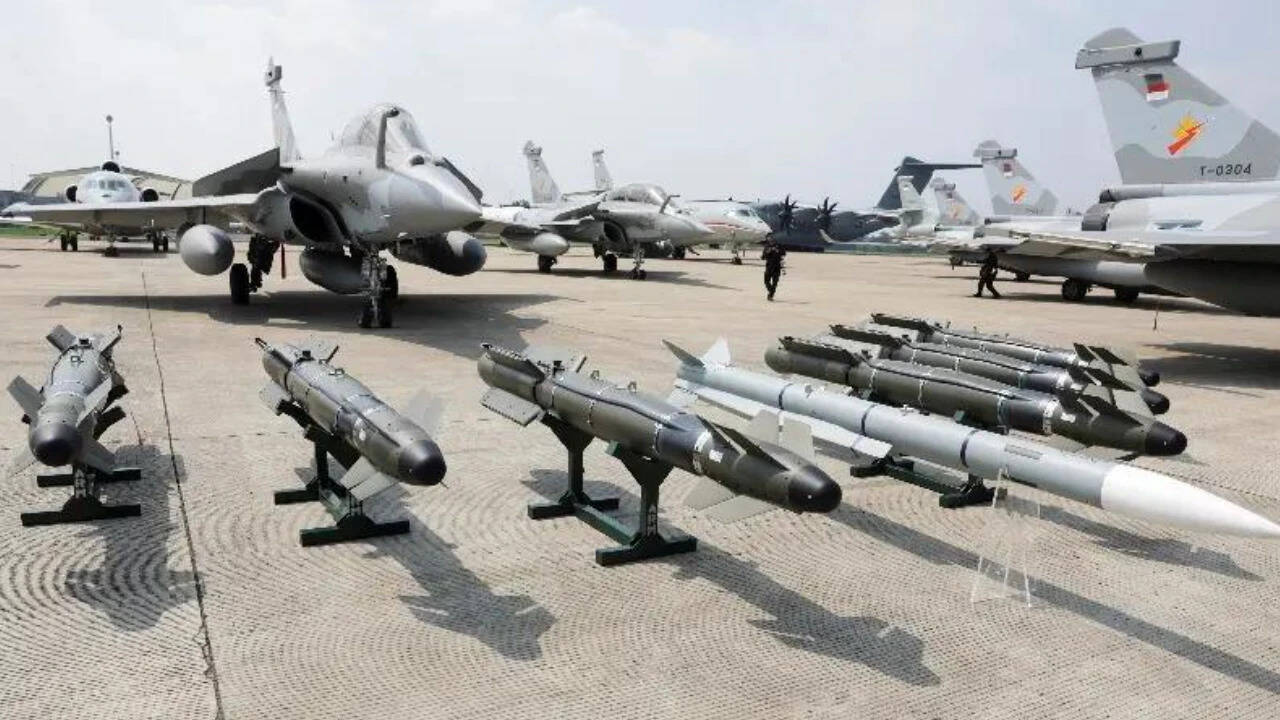
France has successfully integrated 68mm laser-guided rockets onto its Rafale fighter jet, adding a lower-cost weapon designed to counter the growing threat from drones. The move comes as air forces increasingly look for affordable alternatives to expensive air-to-air missiles amid the rapid proliferation of unmanned aerial threats.The program is known as Lutte anti-drone sur avion de combat (Ladac) programme, developed to provide the French Air and Space Force with an effective and affordable anti-drone capability.
Rapid anti-drone upgrade
According to a statement issued by France's DGA carried by French media outlet, Mer et Marine, the integration work was carried out in partnership with the French Air and Space Force's Centre d'expertise aérienne militaire (Ceam), with support from Dassault Aviation and Thales.
India Eyes Local Production Of 114 Rafale Fighter Jets In Landmark France Deal
On July 7, 2026, the DGA successfully completed the integration test campaign for 68mm laser-guided rockets on the Rafale fighter aircraft. The agency added that less than eight months elapsed between awarding the contract and delivering the first operational capability.The first batch of launcher pods, laser-guided rockets and Talios laser designation pods equipped with the Ladac mode will begin reaching the French Air and Space Force from the end of July, paving the way for full qualification of the new weapon system, the DGA said, claimed The War Zone (TWZ).
According to TWZ, in October 2025, French Air and Space Force chief general Jérôme Bellanger called for laser-guided rockets on the Rafale and Mirage 2000D to counter long-range one-way attack drones such as Iran's Shahed-136.
Designed to defeat drones at lower cost
The programme stems from France's search for a more economical way to intercept drones after the growing use of inexpensive one-way attack drones in recent conflicts.According to the DGA, as quoted by The War Zone(TWZ), it evaluated multiple solutions in late 2025 before selecting the already-qualified 68mm laser-guided rocket previously integrated on the Tiger attack helicopter.Since February this year, engineers have conducted flight trials covering radar detection, Talios pod tracking and laser designation, carriage of rocket pods, live firing and laser guidance against representative aerial targets.The DGA said the new capability would allow Rafale fighters to shoot down threats such as Shahed drones using 68mm laser-guided rockets instead of relying solely on much costlier air-to-air missiles.
Lessons from modern conflicts
TWZ also said the new capability reflects a broader shift in air combat as Western air forces adapt to the proliferation of low-cost drones.Using advanced air-to-air missiles against inexpensive drones creates an unfavourable cost exchange, making guided rockets a more sustainable option for prolonged operations. The DGA described the programme as evidence of its ability to respond rapidly to operational requirements through an accelerated procurement process.The Ladac capability is set to enter service with French Air and Space Force Rafales by the end of this month, meeting the deployment timeline outlined in April. It remains unclear whether the Rafale's 30mm cannon will also be adapted for counter-drone missions. The move follows a wider trend, with the US already integrating 70mm APKWS laser-guided rockets on fighters including the F-15E, F-16 and A-10, which have been used operationally to counter Iranian drones and missiles in the Middle East, including during the defence of Israel, since 2024.
The Eurofighter Typhoon has also added the weapon, with the UK Royal Air Force announcing in May that its Typhoons were equipped with APKWS for operations in the region.Laser-guided rockets offer a cheaper and more sustainable alternative to traditional air-to-air missiles against low-cost drones and cruise missiles. They also increase a fighter's firepower by allowing multiple rockets to be carried on a single weapons station. The cost advantage is significant, with a French MICA missile estimated at around $2 million compared with roughly $50,000 for a Shahed drone, highlighting the growing need for more economical counter-drone weapons.
View original source — Times of India ↗
Related stories

TechRadar
TechnologyJul 14, 2026 · 1 min
How to watch England vs India 2026 ODI series: cricket live streams, schedule, preview
TechRadar

South China Morning Post
TechnologyJul 14, 2026 · 1 min
Global AI boom sees China’s chip exports nearly double in first half of year
South China Morning Post

Indian Express
TechnologyJul 14, 2026 · 1 min
Karnataka High Court hikes compensation for software engineer’s death to Rs 70 lakh
Indian Express

The Guardian
TechnologyJul 14, 2026 · 1 min
France hopes to send ‘strategic signal’ about Europe’s renewed military focus at Bastille Day celebrations – Europe live
The Guardian