Times of India
Living in relative's house for free? You can't later claim tenancy rights, Gujarat HC rules
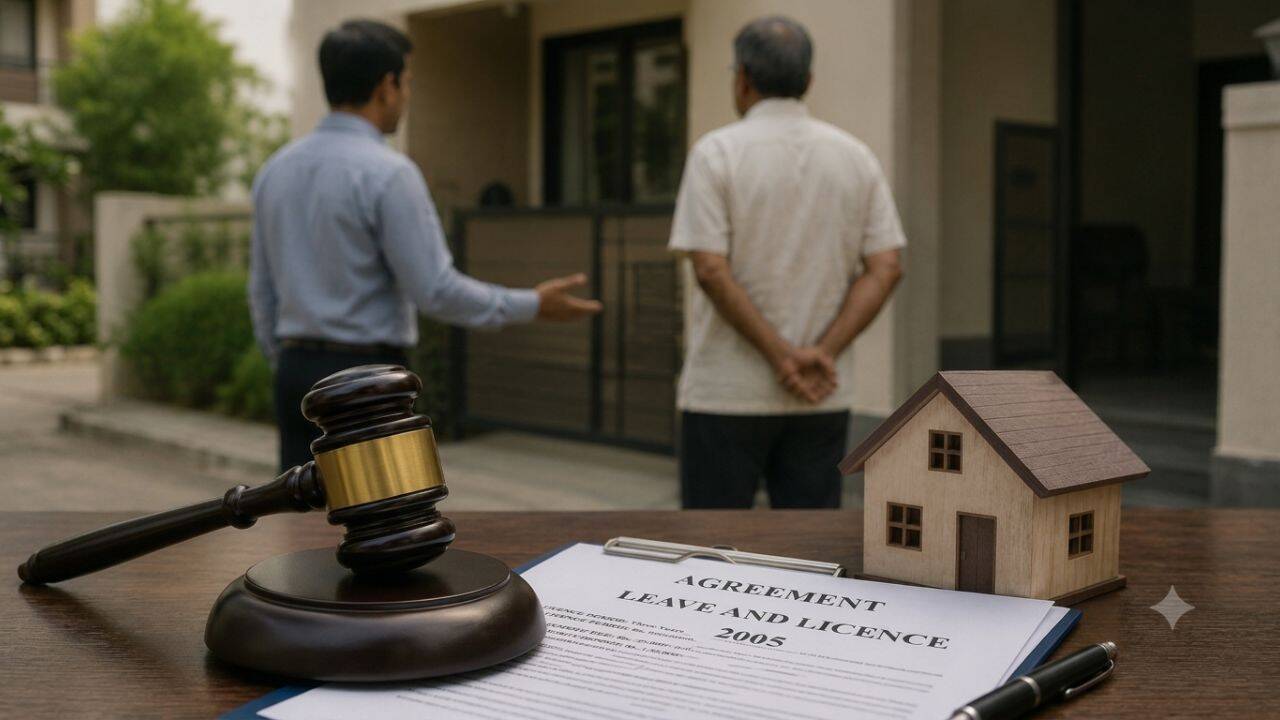
AI generated image
NEW DELHI: The Gujarat high court has held that a person allowed to live in a relative's house out of goodwill, without paying rent, cannot later claim tenancy rights over the property.
In its July 3 order, the court noted that oral claims cannot override what a signed agreement clearly says.What was the issueSawaisinh Devisingh Chauhan, a relative of house owner Yashwantsinh Mahansinh Rathod, was allowed to move into Rathod's house in Motera, Gandhinagar, in 2005. Chauhan was then working at Torrent Electricity Company and about to retire, and was looking for a place to stay. Out of family goodwill, Rathod let him live there for two years, rent-free, with the understanding that Chauhan would leave once he found another home of his own.
In 2005, they put this arrangement down in writing and both signed it, as per the court order.When the two-year period ended, Chauhan did not vacate the property and instead filed a suit in 2008, asking that he not be evicted without due legal process. The court did not rule on whether he actually had a right to stay — it simply held that he couldn't be thrown out without following proper legal procedure.Rathod then filed a fresh suit in trial court seeking vacant possession and compensation for wrongful use of the property.
In his defence, Chauhan denied ever signing a valid agreement, claiming he was illiterate and that his signature was taken by force. He first said in his written statement that his consent wasn't properly taken, but later, while giving oral evidence in court, he added a new claim, that Rathod had threatened to kill himself if Chauhan didn't sign. Chauhan also claimed that he was actually a tenant paying Rs 1,500 a month in rent, and separately claimed Rathod had agreed to sell him the house for Rs 7 lakh.The trial court in Gandhinagar ruled in Rathod's favour in 2016, ordering Chauhan to hand over the property and pay Rs 5,000 a month in compensation dating back to January 2008. Chauhan challenged this order before the Gujarat high court.What the court saidJustice J.C. Doshi rejected Chauhan's claim that he was a protected tenant, noting that the property was built and handed over to Rathod only in 2004 — which meant it fell outside Gujarat's Rent Act altogether, since buildings constructed after September 2001 are exempt from that law.
The relationship between the two men was therefore governed by ordinary property law and their own written agreement.The court also found Chauhan's suicide-threat claim unconvincing, since he never raised it in his written statement or in his earlier 2008 case — it surfaced only during his oral evidence at trial, years later."This court finds it significant and surprising that the ground of suicide threat, a specific and grave allegation, was never raised at any prior point of time.
It was not pleaded in the written statement nor raised in the earlier suit filed by the defendant (RCS 293/2008). It appears for the first time in the examination-in-chief filed during the trial. Such a contention, raised belatedly and unsupported by any prior pleading or contemporaneous document, is a hollow statement and cannot be accepted.
Such statement is clear afterthought product," the court said.Examining the 2005 agreement, the court held that the words in the agreement made it very clear what kind of stay this really was.
"Exhibit 40 governs the relationship between the parties," it noted, adding that once the two-year period ended, "licensee's possession became illegal.""The defendant is in possession of the suit property under the good will of the plaintiff, who is the owner. The plaintiff, as owner, permitted the defendant to reside in the premises gratuitously and for a limited period, out of their family relationship and because the defendant was on the verge of superannuation.
The defendant did not vacate the premises upon expiry of the agreed period and has continued in possession since 2005 without any legal basis," the high court added."The defendant, in the present case, does not have any valid, subsisting agreement rent, lease, or licence in his favour. Exhibit 40 itself establishes that his possession was permissive and for a limited period. The defendant's claim to remain in possession, supported only by oral evidence and unsupported by any documentary proof of tenancy, fails," it further added.The court largely upheld the trial court's decision, only modifying the compensation period — Chauhan will now pay Rs 5,000 a month from the date the suit was filed (23 December 2011) instead of from January 2008, as the trial court had wrongly ordered. On every other point, including handing over possession, the appeal was dismissed and the original decree stood confirmed.The court gave Chauhan four weeks before the order takes effect, to allow him to approach a higher court if he chooses to.
View original source — Times of India ↗
Related stories

The Punch
WorldJul 14, 2026 · 1 min
SDP presidential candidate hails Soyinka’s enduring legacy at 92
The Punch
The Punch
WorldJul 14, 2026 · 1 min
Finance minister urges stronger tax cooperation in West Africa
The Punch
The Punch
WorldJul 14, 2026 · 1 min
No immigrant should stay in UK forever, Kemi Badenoch tells Labour
The Punch
The Punch
WorldJul 14, 2026 · 1 min
Supreme Court directs lawyers to upload appeal documents online from September
The Punch