Indian Express
Calcutta High Court protest: Former TMC MLA Kunal Ghosh held guilty of contempt
The Calcutta High Court recently held several individuals, including Trinamool Congress leader Kunal Ghosh and protestors linked to the SSC recruitment controversy, guilty of criminal contempt for acts that scandalised the judiciary and interfered with the administration of justice.
A special bench of Justices Arijit Banerjee, Sabyasachi Bhattacharyya and Rajarshi Bharadwaj observed that attacks on judges and lawyers strike at the very foundation of the justice delivery system and that freedom of expression does not extend to intimidating the judiciary or undermining public confidence in courts.
The court found that the apology tendered on behalf of Ghosh was not genuine and refused to accept it. It imposed the maximum fine of Rs 2,000 on him and directed that he would undergo three days’ simple imprisonment in default of payment.
“The demonstrators, including the alleged contemnors, are educated people. They are presumed to know the consequences of what they did. They were trying, in effect, to browbeat an Hon’ble Judge of this Court. They are not illiterate people or from a rustic background who did not know what they are entitled to do in law and what law prohibits them from doing,” the July 13 order read.
The case arose from a protest held near the Calcutta High Court on April 25, 2025, by candidates involved in the long-running West Bengal School Service Commission (SSC) Physical Education and Work Education recruitment dispute. The candidates, who had been recommended for appointment as assistant teachers, claimed that their appointments had been stalled because of pending litigation challenging the recruitment process.
Demonstrations, slogans and interviews
It was claimed that the protesters blocked public roads, obstructed lawyers from entering and leaving their chambers, raised slogans against a sitting high court judge, and displayed and trampled upon photographs of the judge during the demonstration. It was further alleged that abusive remarks were directed at advocates appearing in the recruitment litigation.
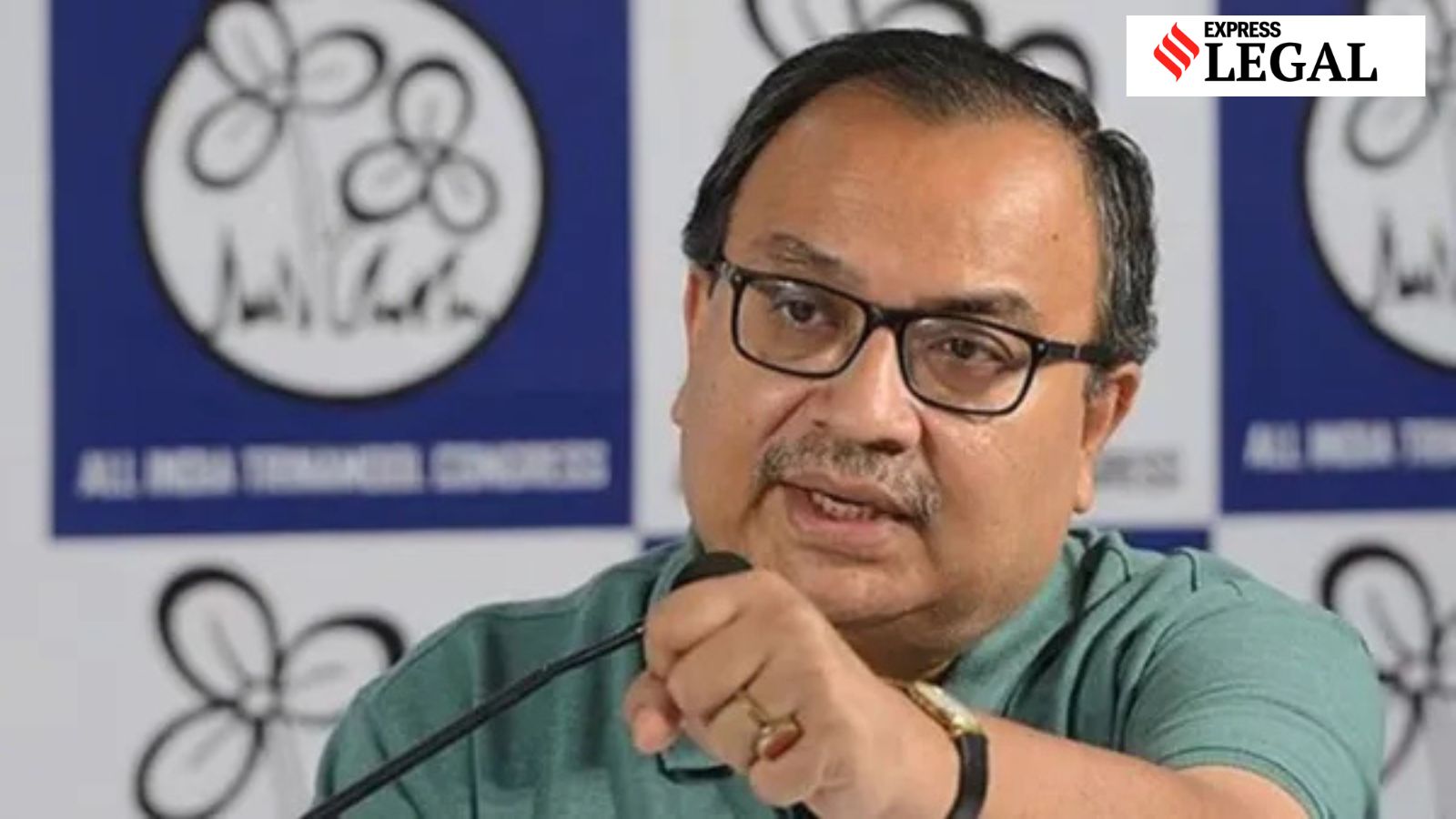
The following day, Kunal Ghosh, a Trinamool Congress leader and party spokesperson, held a press conference in which he criticised certain advocates involved in the recruitment litigation and made remarks that allegedly undermine public confidence in the judiciary.
Story continues below this ad
After several advocates brought these incidents to the notice of the chief justice, the court constituted a special three-judge bench to examine whether the actions of the protesters and others amounted to criminal contempt by scandalising the judiciary, intimidating advocates, and interfering with the administration of justice.
Later, after advocates brought the incidents to the notice of the Chief Justice, he saw the footage allegedly showing a person stamping on a judge’s photograph and making remarks against judges and lawyers, and then he constituted a special three-judge bench to examine the matter.
‘No apology accepted’
The high court referred to the interview and noted that Ghosh stated: “I do not know what happens to the judge when some of the lawyers belonging to the CPI(M) camp appear before him. I have seen Abhijit Gangopadhyay — ‘God-God’.
Story continues below this ad
The court found that the said statement was an unequivocal imputation against the judge that he gets swayed when some particular lawyers belonging to a particular political camp appear before him. “This clearly impinges on the impartiality and independence of the Hon’ble Judge and is an attack on the entire justice delivery system,” the court added.
Holding Ghosh guilty of criminal contempt, the high court stated that there was a subtle indication that the said judge was raising a new issue at every hearing and calling for fresh documents/information.
“There definitely is an innuendo in these statements that the Hon’ble Judge is partisan towards the party to the litigation which obtained a stay order and wanted cancellation of the appointment letters issued by the then chief minister”, the court noted.
Coming to the apology tendered by Ghosh, the high court stated that an apology which deserves to be accepted must be “unconditional, sincere and genuine” and should convey a feeling of regret, repentance and contrition. The court added, “It must not be a pretended apology”.
Story continues below this ad
Findings against protesters
The court also pointed out that, by making derogatory and disparaging comments concerning a sitting judge of this court, the alleged contemnors have exceeded the “bounds” of their legal rights and have interfered with the course of justice, thereby committing criminal contempt of court.
The high court clarified that the demonstrators, including the alleged contemnors, are educated people who are presumed to know the consequences of what they did. “They were trying, in effect, to browbeat an Hon’ble Judge of this Court. They are not illiterate people or from a rustic background who did not know what they are entitled to do in law and what law prohibits them from doing,” the court further added.
Finding their apology cannot be accepted, the court pointed out that their acts and conduct were a “vicious attack” on the independence and impartiality of the judiciary. The high court also stated that they showed “utter disregard” for the judiciary.
However, noting that the contemnors were embroiled in litigation concerning their appointments as teachers and the frustration caused by the prolonged dispute, the high court took a lenient view and imposed a fine of Rs 1,000 on each of them.
Story continues below this ad
Arguments
Appearing for the alleged contemnors, one of the senior advocates, Partha Sarathi Sengupta, submitted that even assuming that these proceedings are maintainable in law, his clients tender an unconditional apology. He added that they do not try to justify their actions and conduct but are victims of circumstances.
He added that his clients, having participated in the recruitment process concerning teachers and having been recommended as candidates, had their appointments inordinately delayed by reason of interim orders passed in legal proceedings pending before this court. He added that they were frustrated, financially insecure and mentally disturbed but had no intention to dishonour or malign the High Court or any of its judges.
Advocate Kalyan Bandopadhyay, appearing for the alleged Kunal Ghosh, tendered a sincere, profound, unqualified and unconditional apology to the court. He added that on the date of the alleged incident, i.e., April 25, 2025, Kunal was not physically present at or near the premises of the Calcutta High Court or at the site of the protest, but was at the News 18 Studio in Newtown, Kolkata for a professional engagement.
It was added that Kunal’s criticism was directed at the perceived political conduct and professional inconsistency of the said advocates and not at this court or its orders. He added that Kunal’s statements did not scandalise the court, nor did they interfere with or obstruct the administration of justice.
Story continues below this ad
On the contrary, the counsel appearing for the Bar Library Club, advocate Subhankar Nag, submitted that to ascribe motives to a judge is to sow the seed of distrust in the minds of the public about the administration of justice as a whole. He added that the courts are obliged not only to protect the dignity of the Court and uphold its majesty, but also to extend the umbrella of protection to all the limbs of the administration of justice and advocates, while discharging their professional duties, also play a pivotal role in the administration and dispensation of justice.
Appearing for the Incorporated Law Society, advocate Mukul Lahiri submitted that the purported apology tendered by the alleged contemnors should not be accepted. He added that an apology must be articulately sincere and unconditional and must not be a second line of defence if justification fails.
View original source — Indian Express ↗
Related stories

Philippine Daily Inquirer
PoliticsJul 14, 2026 · 1 min
Ridon to Sara Duterte’s lawyers: You didn’t disprove threat; do better
Philippine Daily Inquirer

France 24
PoliticsJul 14, 2026 · 1 min
US strikes in Iran continue, Trump says reinstates blockade on Strait of Hormuz
France 24

Euronews
PoliticsJul 14, 2026 · 1 min
Ukraine inches closer towards joining EU with opening of another cluster
Euronews

Euronews
PoliticsJul 14, 2026 · 1 min
Targeting Patriarch Kirill risks fuelling EU scepticism, Bulgarian foreign minister warns
Euronews