Times of Israel
Bnei Brak set to implement gender segregation on two main streets — report
Following ruling by rabbis, city will put up signs and barriers segregating sidewalks, despite Supreme Court ban on practice in 2017
By Michael Horovitz
You will receive email alerts from this author.
Manage alert preferences on your profile page
You will no longer receive email alerts from this author.
Manage alert preferences on your profile page
Today, 10:01 am
Edit
Michael Horovitz is a breaking news editor at The Times of Israel
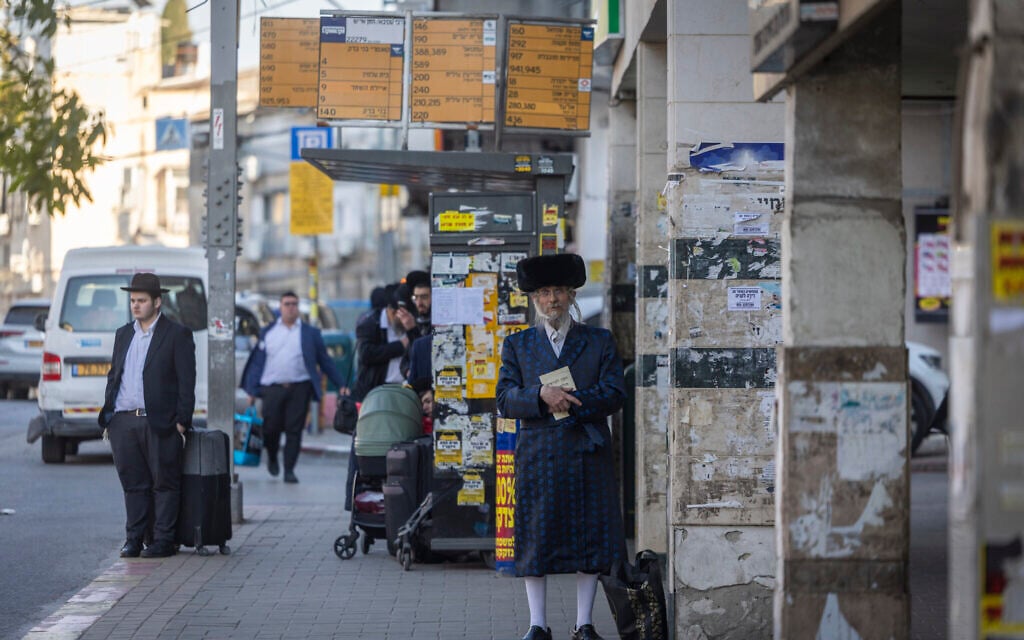
The Bnei Brak municipality is working to establish gender-segregated sidewalks inside the largely ultra-Orthodox city, according to a report on Monday.
In accordance with a decision by the city’s rabbis, Bnei Brak plans to segregate the bustling Shlomo Hamelech and Ezra streets with barriers and signage to prevent men and women from crossing each other’s paths, Channel 13 reported.
The plan has been in development for several years and is likely to be expanded to other busy streets in the city, municipal officials told the channel.
An official message by the city instructed residents of all ages to abide by the new guidelines, the report said.
The municipality told Channel 13 that rabbis’ instructions are “very clear and speak for themselves. The city’s public, which is committed to obeying the great Torah leaders and heeding their words, will comply with their request.”
Get The Times of Israel's Daily Edition
by email and never miss our top stories
By signing up, you agree to the terms
Yael Yechieli, the director of the 5050 initiative, which works for gender equality in Israel, decried the move, saying that “religious leaders want to exclude women from everywhere, and if we don’t stop them, it will continue.”
“The monster of segregation is insatiable,” she said, noting that it was only men who made the decision at the Bnei Brak Municipality. “The disaster of segregation must end and the public needs to fight for it.”
In 2017, the Supreme Court ordered the Beit Shemesh municipality to remove “modesty” signs instructing men and women to walk on opposite sides of streets in an ultra-Orthodox neighborhood.
In contrast to Beit Shemesh’s mix of ultra-Orthodox, modern Orthodox, and secular residents over restrictions on women’s dress and gender-segregation, Bnei Brak’s roughly 231,000 residents are mainly ultra-Orthodox.
If you’d like to comment, join
The Times of Israel Community.
View original source — Times of Israel ↗
Related stories

The Punch
WorldJul 14, 2026 · 1 min
C’River gov orders urgent repair of failed road section
The Punch
The Punch
WorldJul 14, 2026 · 1 min
Eno approves ₦1.3bn bursary, raises A’Ibom students’ grant to ₦50,000
The Punch
The Punch
WorldJul 14, 2026 · 1 min
Xenophobia: Final batch of 315 Nigerians to return from S’Africa Wednesday
The Punch
The Punch
WorldJul 14, 2026 · 1 min
SDP presidential candidate hails Soyinka’s enduring legacy at 92
The Punch