
Hacker Noon
Everyone Can Build An App Now - Nobody Can Get Their First 100 Users
The hard part of shipping used to be building the thing. That part is over. Where I live, what replaced it is trust inside WhatsApp groups, and I am building a marketplace for exactly that. A friend showed me his app last month. He had built it in a weekend, mostly by prompting, and it was good. Clean, fast, solved a real problem. I asked him how many people were using it. He went quiet, then said, "My brother, that is the issue." I have had some version of that conversation almost every month this year. Someone in Accra builds something genuinely good, faster and cheaper than was possible a year ago, because AI now writes most of the code and lays out most of the screens. One person, one weekend, then finally a real product. Then nothing. No users, and no idea how to get them. We spent a decade treating building as the hard thing. It was the bottleneck, the reason most ideas died in someone's head. AI has quietly taken that bottleneck away. What it did not take away, and cannot, is the problem of getting one real human to stop what they are doing and try your thing. Building went to zero. Getting used to it did not move an inch. So, the scarce asset flipped. It used to be the ability to make software. Now, it is attention, and specifically, the first hundred people who will actually open your app twice, not just like the post about it. My part of the world works differently here, and the difference is an advantage most people overlook. In Silicon Valley, distribution is a machine you buy. You pour money into Meta or Google, an algorithm shows your app to strangers, and a slice of them install it. Expensive, getting worse, but it is a system, and it works from a distance. That machine barely turns here. The ad platforms are thin, the targeting is poor, and the people you actually want are not sitting where the ads can find them. What we have instead is trust, and it lives inside groups. A church youth leader with four hundred people who listen when she speaks. A campus rep whose broadcast actually gets opened. The admin of a neighbourhood group that every trader in the area checks five times a day. These people spent years building the one thing no ad platform can manufacture, which is an audience that believes them. And nobody pays them for it. Companies profit from audiences like theirs every single day, and the person who built the trust never sees a cedi of it. That gap is the product. I am calling it First100. The idea is plain enough to explain in one breath. A founder who needs users posts a bounty. I will pay this much for every person who actually uses my app. Not signed up. Uses. The founder decides what counts, and it has to be real, like a borrower who enters their loans and sees their payoff plan. The money goes into escrow. An audience owner picks up the bounty, shares the product with their group through a tracking link, and gets paid by mobile money the second a user activates. Whatever nobody earns refunds itself. One rule holds the whole thing up. An audience owner only runs a bounty they would send to their own mother's group. If they would not put their name behind it, they do not touch it. That is not decoration. Their credibility is the only thing they are really selling, so they protect it more fiercely than any content rule I could write. The trust does the policing for me, for free. I know exactly how this reads. Marketplace, two sides, escrow, tracking links. It sounds like a platform that needs six engineers and a year. It is not, and if I built it that way, it would die. Version one is embarrassingly manual, and that is intentional. A plain page listing live bounties, which is really a list, a wallet number, and some links. Two WhatsApp groups, one for founders and one for audience owners, because that is already where these people live. And me in the middle, matching bounties to audiences by hand, checking each activation against the founder's data before I send the payout myself, one MoMo transfer at a time. Yes, that is me doing the work a database should do. That is the whole point. Ten bounties run by hand will teach me the real activation rates, the real ways people cheat, and the real price the market will bear, before I write a line of automation. The software comes after the manual thing works. Most marketplaces die the other way round, building the machine before they know anyone wants the ride. I also have a start most marketplace founders would kill for, and it is the only reason I would touch a two-sided market. I can seed both sides myself. The first bounties are my own products and my friends' startups. The first audience owners are people I already know by name. Bounty number one will be a project I run myself, which means my first case study and my first real user are the same moment. I am not going to pretend this is safe. The margins are thin, so it is only a business at volume, which is why the number I watch is not sign-ups or founders, it is bounties completed. Someone will try to farm fake activations inside the first month. Lean on a group too often, and it stops converting. I know where the bodies are, because I went looking before I started digging. But the timing is the part I cannot argue myself out of. AI made builders infinite. That makes distribution the rarest thing in tech. And I happen to live in the one place where distribution mainly runs through relationships instead of ad auctions, which is a moat you cannot dig from San Francisco. If the first hundred users are the whole game now, then an honest way to reach them, through the people your customers already trust, is worth building. Even if version one is just me, a WhatsApp group, and a long list of payouts I send by hand.
View original source — Hacker Noon ↗
Related stories

TechCrunch
TechnologyJul 16, 2026 · 1 min
Newsletter platform Beehiiv’s now lets subscribers chat with each other, adds AI
TechCrunch

The Verge
TechnologyJul 16, 2026 · 1 min
Google is better at playing this game
The Verge

TASS
TechnologyJul 16, 2026 · 1 min
Transfer of extra funds to Kiev fueling escalation with Russia — Finnish politician
TASS
TechRadar
TechnologyJul 16, 2026 · 1 min
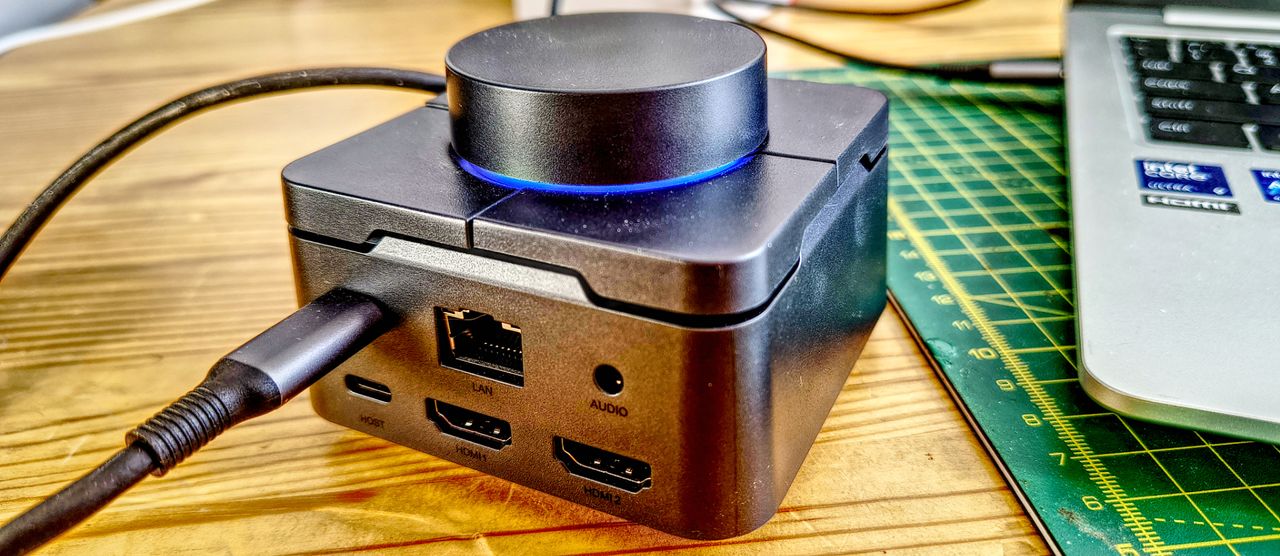
TobenONE UDS060 review: This compact 11-in-1 USB-C dock is one of the smallest I've ever tested
TechRadar