Indian Express
‘Matter of national security’: Rajasthan High Court junks plea against mosques’ eviction near Indo-Pak border
4 min readNew DelhiUpdated: Jul 14, 2026 04:19 PM IST
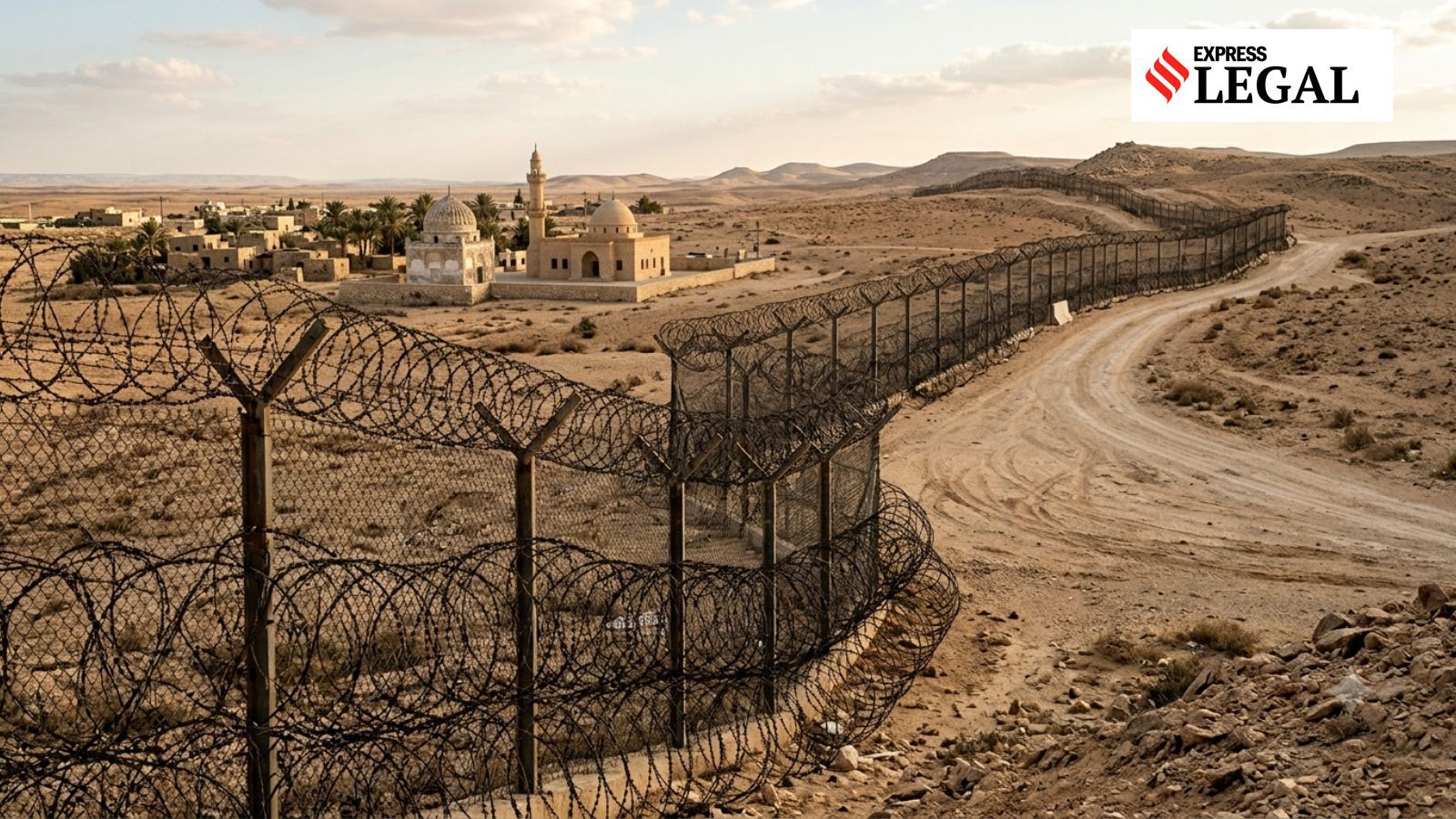
The court said that policy decisions concerning the border area were based on intelligence inputs, documentary evidence, and past incidents involving cross-border threats and smuggling. (Image generated using AI)
Refusing to stall eviction proceedings against religious institutions within 50 kilometres of the Indo-Pak border, the Rajasthan High Court has held that national security outweighs fears of possible demolition and parties must first approach the appropriate authorities in such matters, instead of the court.
Justice Sameer Jain was on July 13 hearing a batch of writ petitions filed by several mosques, madrasas, dargahs and individuals from Jaisalmer, Barmer and other border districts, challenging notices issued under the Rajasthan Colonization Act, 1954, and the Rajasthan Land Revenue Act, 1956, concerning properties situated within approximately 50 km of the Indo-Pak border.
Interestingly, the court penned a few lines of poetry in Hindi and added that “…in matters involving national security, strict adherence to the traditional rigours of natural justice is not always warranted, and a pragmatic, situation-responsive approach is permissible, provided that there exists material justifying such action.”
The court noted that “sufficient procedural compliance” was achieved without causing any prejudice to the petitioners as they had not participated in the proceedings. Accordingly, it dismissed the writ petitions.
The case arose after the authorities issued notices to several religious structures and occupants in the sensitive border belt, alleging unauthorised occupation of government land, illegal constructions and absence of mandatory permissions. The petitioners moved the high court claiming the notices were part of a larger exercise to remove structures following heightened security measures near the international border, and expressed apprehension that demolition would follow.
Justice Sameer Jain said that issues involving the international border require greater judicial restraint. (Image enhanced using AI)
The lead petition was filed by the Peer Mohammad Shah Jilani Dargah in Jaisalmer, while connected petitions involved numerous madrasas, mosques, dargahs and individuals across Jaisalmer and Barmer districts. They argued that several of these institutions had existed for decades, attracted devotees from different communities and conducted religious events with permissions granted by district authorities. They claimed the authorities had acted arbitrarily and intended to demolish the structures without following due process.
The state opposed the petitions, arguing that the structures were situated in an extremely sensitive border zone and that many had allegedly been established without statutory permissions on government land. It relied upon intelligence inputs, documentary material and national security considerations to justify the issuance of notices. The government also maintained that the petitioners had adequate statutory remedies under the Rajasthan land laws.
Story continues below this ad
No demolition order yet
Justice Jain noted that the notices only asked the petitioners to explain their position and did not direct immediate demolition. The court found that the petitioners themselves admitted that they had received show-cause notices and opportunities for personal hearing but had chosen not to participate in the proceedings. It also observed that there was no material before the court to show that coercive action or demolition had actually been initiated.
Interestingly, the court penned a few lines of poetry in Hindi. (Image enhanced using AI)
‘Can’t ignore national security’
The judgment stressed that issues involving the international border require greater judicial restraint.
The court accepted the state’s submission that policy decisions concerning the border belt were based on intelligence inputs, documentary evidence and past incidents involving cross-border threats and smuggling.
It observed that authorities had nevertheless issued show-cause notices and provided opportunities for hearing before taking any final action.
The exercise of such powers cannot be construed in isolation but must be appreciated as part of a
coordinated national effort to safeguard territorial integrity and public order, the court said.
Relying on Supreme Court precedents, Justice Jain held that high courts should ordinarily not entertain writ petitions against mere show-cause notices, especially where disputed questions of fact exist, and statutory remedies remain available.
Committee to examine issues
Before dismissing the petitions, the high court directed that considering the element of national security, a committee comprising the district collector, superintendent of police and a representative of the Border Security Force (BSF) should examine issues arising in such sensitive border cases.
Dismissing the entire batch of petitions, the court held that the petitioners must first avail themselves of the remedies provided under the Rajasthan Colonization Act and the Rajasthan Land Revenue Act before invoking the extraordinary jurisdiction of the high court.
© IE Online Media Services Pvt Ltd
Vineet Upadhyay is an Assistant Editor with The Indian Express, where he leads specialized coverage of the Indian judicial system.
Expertise
Specialized Legal Authority: Vineet has spent the better part of his career analyzing the intricacies of the law. His expertise lies in "demystifying" judgments from the Supreme Court of India, various High Courts, and District Courts. His reporting covers a vast spectrum of legal issues, including:
Constitutional & Civil Rights: Reporting on landmark rulings regarding privacy, equality, and state accountability.
Criminal Justice & Enforcement: Detailed coverage of high-profile cases involving the Enforcement Directorate (ED), NIA, and POCSO matters.
Consumer Rights & Environmental Law: Authoritative pieces on medical negligence compensation, environmental protection (such as the "living person" status of rivers), and labor rights.
Over a Decade of Professional Experience: Prior to joining The Indian Express, he served as a Principal Correspondent/Legal Reporter for The Times of India and held significant roles at The New Indian Express. His tenure has seen him report from critical legal hubs, including Delhi and Uttarakhand. ... Read More
Tags:
India National Security
Indo-Pak border
Rajasthan High Court
View original source — Indian Express ↗
Related stories

The Punch
WorldJul 14, 2026 · 1 min
How to apply for free CAC registration under FG’s 250,000 MSME programme
The Punch
The Punch
WorldJul 14, 2026 · 1 min
Missing Kwara farmer found dead in bush, family demands justice
The Punch
The Punch
WorldJul 14, 2026 · 1 min
Bayelsa approves new welfare packages for workers
The Punch
The Punch
WorldJul 14, 2026 · 1 min
FG to provide land for 10,000-home housing project
The Punch