Indian Express
80-year-old deaf man goes to bank to open FD, sold insurance instead, wins Rs 2.47 lakh
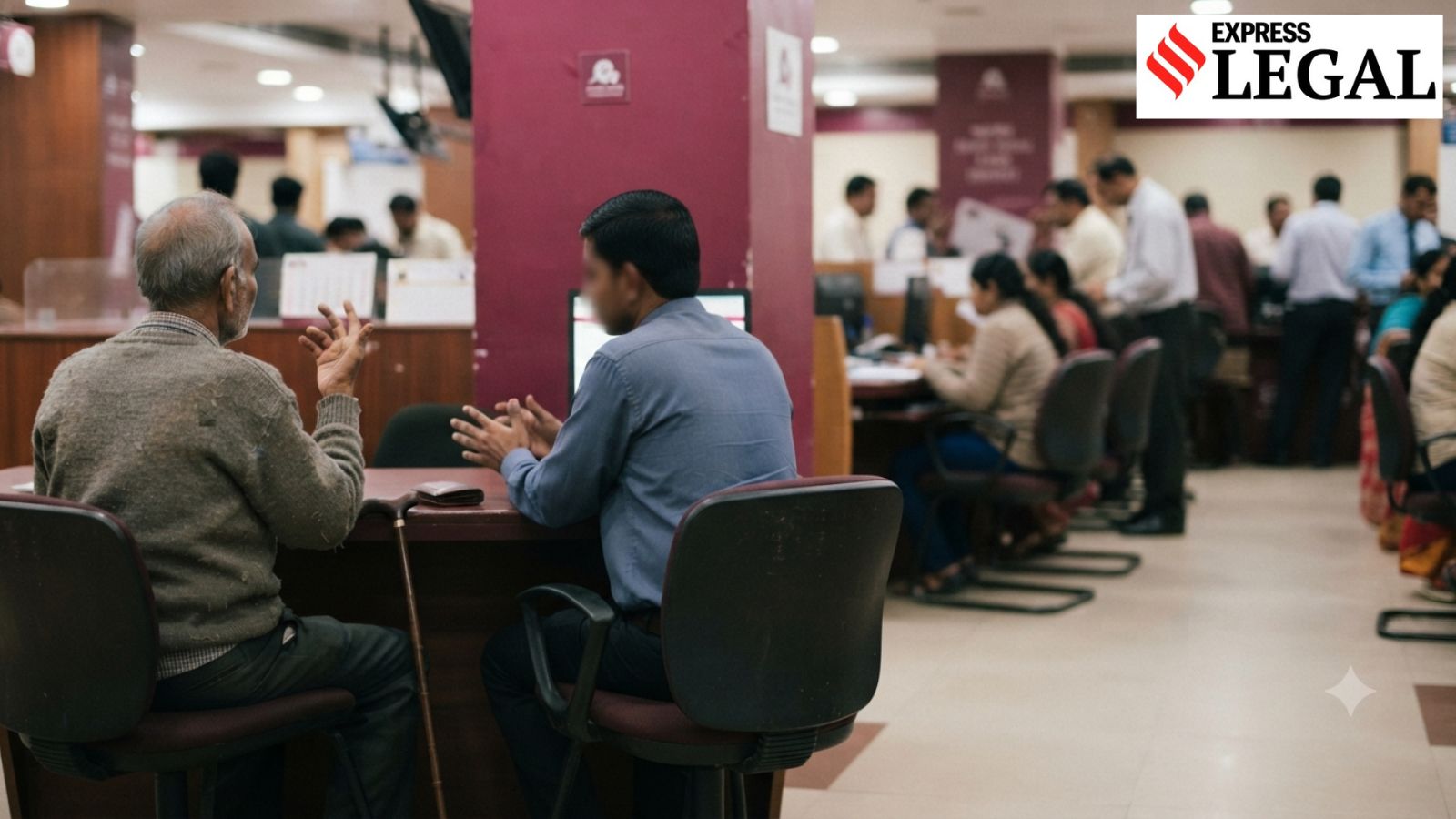
An 80-year-old man with a hearing impairment who visited a bank to open a fixed deposit was allegedly sold a life insurance policy instead, causing him a loss of nearly Rs 1.78 lakh. Calling it a case of deficiency in service and unfair trade practice, a Chhattisgarh consumer body has ordered Axis Bank and Max Life Insurance to refund the amount with 12 per cent interest, along with Rs 70,000 as compensation and litigation costs.
President Sujata Jaswal and member Dakeshwar Soni of the Uttar Bastar-Kanker District Consumer Disputes Redressal Commission were hearing a complaint filed by one Hichha Ram Sen and his son Dinesh Kumar Sen against Axis Bank’s Kanker branch and Max Life Insurance Company Limited, alleging that they had been misled into purchasing an insurance policy instead of opening a fixed deposit (FD) and had consequently suffered financial loss.
“Complainant number 1 is an 80-year-old person who is completely deaf. Taking advantage of his age, disability and limited understanding, the opposite parties sold him an insurance policy instead of the fixed deposit he had sought, which amounts to deficiency in service and unfair trade practice,” said the commission on June 25.
The dispute dates back to December 2014, when the elderly complainant approached the bank to invest his savings in what he believed was a fixed deposit scheme. Instead, a life insurance policy was issued, resulting in deductions of nearly Rs 3.95 lakh over four premium payments. More than a decade later, the commission concluded that the complainants had been unfairly deprived of a substantial portion of their savings.
How dispute began
According to the complaint, Hichha Ram maintained a joint savings account with the bank’s branch in Kanker, along with his son. On December 6, 2014, he approached the bank intending to invest Rs 3 lakh in a senior citizen fixed deposit.
The complainants alleged that bank officials, along with an insurance agent, advised him that investing in an insurance plan would fetch much higher returns than a fixed deposit. They allegedly assured him that if he deposited about Rs 1 lakh annually for three years, he would receive around Rs 6 lakh after eight years. They also claimed that in the event of his death, his family would receive a benefit exceeding Rs 9 lakh.
The commission noted that the complainant had complete hearing loss, was elderly and had poor education, making him dependent on the representations made by bank officials. It further recorded that all discussions with him were carried out in writing because of his hearing disability.
Story continues below this ad
Money deducted in 4 premiums
Instead of creating the fixed deposit sought by the complainant, the insurer allegedly issued a “Life Gain Premier” policy on December 12, 2014. The policy was issued not in the father’s name but in the name of his son, Dinesh Kumar Sen, while the father was shown only as the nominee. The annual premium was fixed at Rs 96,032.63, the premium-paying term was eight years and the overall policy term was 20 years.
The commission found that in four premium instalments, Rs 99,000, Rs 1 lakh, Rs 97,800 and Rs 97,833.24 were automatically debited from the complainant’s bank account between December 2014 and January 2017, taking the total deductions to Rs 3.94 lakh
After waiting for years believing he would receive the promised returns, the complainant approached the bank seeking his money back. Instead of receiving the amount he expected, the policy was surrendered and only Rs 2,67,018 was credited to the son’s bank account on December 14, 2025 as surrender value.
Feeling cheated after losing nearly Rs 1.78 lakh from the amount deducted, the complainants issued legal notices before approaching the consumer commission in 2025.
Story continues below this ad
Allegations denied
Axis Bank denied any wrongdoing, contending that it had merely facilitated banking services and had no role in the insurance contract entered into between the complainants and the insurer. It maintained that the complainants had voluntarily authorised premium deductions from their account and that the insurance company alone was responsible for the policy.
Max Life Insurance Company also denied any deficiency in service, arguing that the policy had been issued after all formalities were completed and that the complainants had willingly purchased the insurance product. It also raised objections regarding the maintainability of the complaint.
‘Bank, insurer jointly responsible’
Rejecting the defence of both opposite parties, the commission held that the evidence clearly showed that the complainant had approached the bank to invest his savings and not to purchase a long-term insurance policy.
It observed that the complainant’s advanced age, complete hearing impairment and limited education made it all the more necessary for the bank and insurer to ensure that he understood the transaction. Instead, they persuaded him to invest in an insurance product and issued the policy in his son’s name without properly explaining its implications.
Story continues below this ad
The commission also noted that the premiums were regularly debited through the complainant’s bank account, establishing the bank’s active role in the transaction. It held that both the bank and insurer were jointly responsible for the loss suffered by the complainants and had indulged in deficiency in service and unfair trade practice.
Allowing the complaint, the commission directed Axis Bank and Max Life Insurance Company to jointly or severally refund the balance amount of Rs 1,77,615.24 after adjusting the surrender value already paid.
They must also pay interest at 12 per cent per annum on the refundable amount, besides Rs 50,000 as compensation for mental agony and financial harassment, and Rs 20,000 towards litigation costs.
Significance
The ruling underscores that banks cannot mis-sell insurance products to customers who seek fixed deposits, particularly vulnerable consumers such as senior citizens and persons with disabilities. By holding both the bank and insurer jointly liable, the commission stressed their duty to obtain informed consent before selling financial products.
Story continues below this ad
For consumer-related grievances, individuals may contact the consumer helpline in their respective states and union territories (Chhattisgarh: 1800-233-3663) or call the National Consumer Helpline at 1915 for assistance.
View original source — Indian Express ↗
Related stories

The Punch
WorldJul 14, 2026 · 1 min
How to apply for free CAC registration under FG’s 250,000 MSME programme
The Punch
The Punch
WorldJul 14, 2026 · 1 min
Missing Kwara farmer found dead in bush, family demands justice
The Punch
The Punch
WorldJul 14, 2026 · 1 min
Bayelsa approves new welfare packages for workers
The Punch
The Punch
WorldJul 14, 2026 · 1 min
FG to provide land for 10,000-home housing project
The Punch