The Guardian
Johnson government wasted ‘vast’ sums on PPE, Covid inquiry finds
Boris Johnson’s government wasted £10bn of public money because of the flawed way it went about buying personal protective equipment during the coronavirus pandemic, an official inquiry has concluded.
The Covid-19 inquiry chair, Heather Hallett, also criticised the then Conservative government’s controversial “VIP lane”, which gave high priority for PPE contracts to companies with political connections to the Tories.
The most high-profile scandal of the VIP lane contracts was PPE Medpro, a newly formed company linked to the then Conservative peer Michelle Mone, which was awarded two contracts worth £203m after Mone first approached Michael Gove, the then Cabinet Office minister, in May 2020.
The inquiry has heard evidence relating to PPE Medpro, and Lady Hallett, a former court of appeal judge, has reached her conclusions, but they are not yet being published because of a long-running investigation by the National Crime Agency into the procurement of the contracts. Hallett’s findings will only be published after the conclusion of any criminal proceedings.
Hallett said in her report: “The ‘high priority lane’, also known as the ‘VIP lane’, was a misguided attempt to give priority to the most credible offers,” and that it “embedded unfairness” in the procurement. “Some suppliers received favourable treatment because they had connections to government,” she found, “undermining public trust at a moment when it was needed most.”
The waste of PPE procured as the crisis hit – mainly from manufacturers in China – was widely reported within months, as it piled up and began to be disposed of. “The UK entered the pandemic with an inadequate stockpile of PPE and plans that had never been stress-tested,” Hallett said.
“The waste of public money was vast and could have been avoided. Of approximately £14.9bn spent on PPE, nearly two-thirds – almost £10bn – was wasted.”
Hallett’s report says £4.2bn was paid by the government on “VIP lane” PPE contracts.
During the hearings on procurement in March 2025, Pete Weatherby KC, a lawyer for Covid Bereaved Families for Justice (CBFFJ), which represents about 7,000 people whose relatives died during the pandemic, called for “scrutiny as to whether cronyism, unfair advantage and corruption allowed chancers to make fabulous profits at the expense of all of us, the bereaved, the key workers”.
Matt Hancock, who was the health secretary at the time, and other ministers defended the VIP lane at the inquiry, arguing it enabled the government to prioritise credible offers.
Theodore Agnew, a Cabinet Office minister at the time, told the inquiry it was “bollocks” to suggest the VIP lane was “some kind of plan by rightwing people trying to enrich themselves”.
Hallett concluded that the inquiry “has not identified cronyism or corruption on the part of ministers and officials in final contracting decisions”. But, she said: “The ‘high priority’ lane should not have been established and must not be repeated.”
Hallett said: “Although it was not intended, the system was inherently biased towards those with connections to the UK government. This heightened the risk of abuse.”
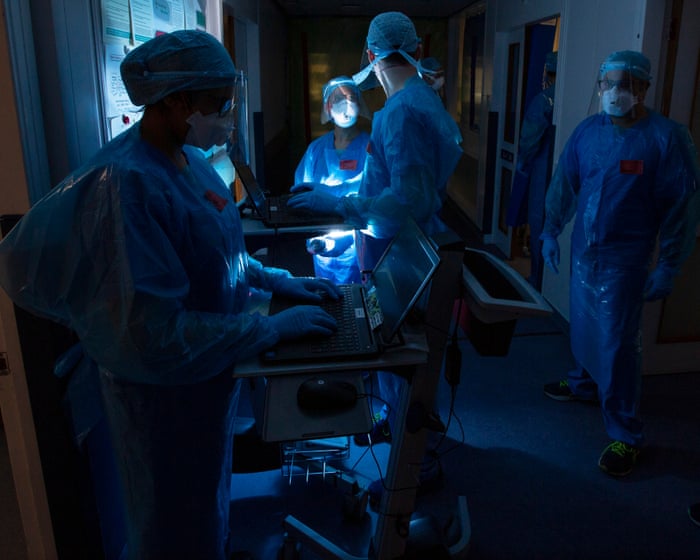
In a damning report, Hallett found the nation’s stockpile of PPE and other vital healthcare equipment was inadequate at the start of the pandemic, and doctors, healthcare and care workers could not protect themselves, or those for whom they were caring, from infection.
Members of the CBFFJ told the inquiry they believed inadequate PPE and equipment was a factor in their relatives’ contracting Covid and dying. In advance of the report, the group said of the government’s procurement failures and the VIP lane: “For bereaved families, these were not abstract failures of administration. Many believe their loved ones died, at least in part, because health and care services lacked the equipment, supplies and systems needed to keep patients and staff safe.
“What makes these failures even harder to bear is that some well-connected individuals and companies were making enormous profits from these same failures.”
Hallett agreed that patients and care home residents were put at risk in the deadliest, early period of the pandemic, concluding that the UK’s PPE stockpile was “in a perilous state” and the UK was “simply not ready to compete” in the frantic global rush to buy healthcare equipment. However, she praised the public, businesses and the UK’s life sciences and advanced manufacturing sectors for rallying “enthusiastically” to help.
“As the pandemic worsened, many doctors, nurses and care sector staff worked without adequate PPE or sufficient healthcare equipment such as ventilators,” she said. “This left them unable to properly protect themselves, or those in their care, from dangerous infection.”
In the report, Hallett made 11 recommendations for ensuring that the rushed scramble for vital healthcare equipment, enormous waste of public money, and government procurement favouring politically connected companies were not repeated in any future pandemic.
The recommendations included investing in British advanced manufacturing, improving pandemic stockpile management, “radically overhauling” the necessary supply chain and emergency procurement systems, and “improving transparency, governance and accountability in emergency procurement, so that the public can be confident that money is being spent with propriety and fairness”.
Hallett concluded: “A better prepared emergency procurement system will reduce the cost of obtaining essential supplies and save lives.”
View original source — The Guardian ↗
Related stories
South China Morning Post
PoliticsJul 14, 2026 · 1 min
Why is a Trump commission attacking Nietzsche, Foucault and Sartre?
South China Morning Post

The Hill
PoliticsJul 14, 2026 · 1 min
How to hold Trump accountable: Sue, baby, sue
The Hill
The Guardian
PoliticsJul 14, 2026 · 1 min
New US Ebola patient arrives in Germany for treatment
The Guardian

TASS
PoliticsJul 14, 2026 · 1 min
Vucic says doesn’t want to drag Serbia into any conflicts, not seeking NATO membership
TASS