Indian Express
UAE has a plan to bypass Strait of Hormuz amid Iran-US war. Here’s how
4 min readUpdated: Jul 14, 2026 05:32 PM IST
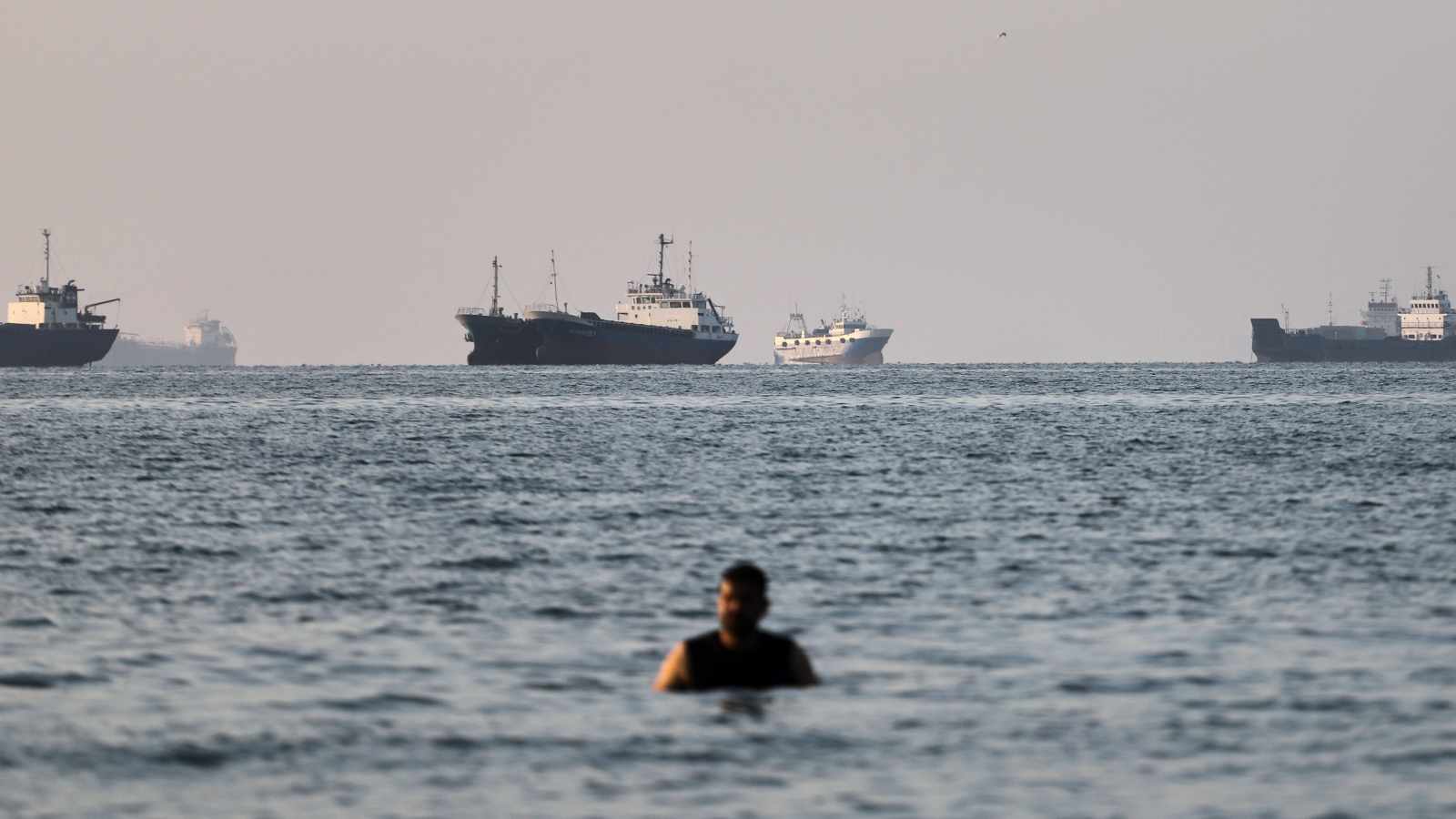
A person stands in shallow water as cargo and commercial vessels are anchored in the Strait of Hormuz off Bandar Abbas, Iran. (AP)
The United Arab Emirates is planning a new deepwater port on its east coast that would allow cargo to bypass the Strait of Hormuz, reducing reliance on one of the world’s most strategically vulnerable shipping routes after months of conflict between Iran and the United States, the Financial Times reported.
Dubai-based DP World plans to develop the project in Fujairah along with a new terminal at the existing harbour in the same emirate, the report added.
Formed in 2005, the company specialises in cargo logistics, port terminal operations, maritime services and free trade zones. It handles around 70 million containers annually.
The Port of Jebel Ali, also known as the Jebel Ali Free Zone, is a free economic zone and is the flagship free zone of DP World. It hosts over 11,000 businesses and is an integral part of DP World’s UAE integrated hub.
Effects of the US-Iran conflict
The UAE, a key strategic ally of the United States in West Asia, has faced repeated Iranian attacks since the US-Iran conflict erupted in late February. According to reports, Iran has launched nearly 3,000 drones and missiles at the UAE. During one such attack, debris from an intercepted missile triggered a fire at Dubai’s Jebel Ali port.
The conflict has severely disrupted shipping through the Strait of Hormuz, hitting operations at Jebel Ali — West Asia’s largest container port. According to the Financial Times, activity at the port plunged by as much as 90 per cent after Iran closed the strait, forcing DP World to look for alternative routes and facilities.
Jebel Ali has long been the backbone of Dubai’s re-export business and a key hub linking trade with Asia, Africa and Europe. But its location inside the Persian Gulf leaves it heavily dependent on the Strait of Hormuz, the narrow waterway between Iran and Oman that handles a significant share of global oil and cargo shipments.
Story continues below this ad
Although vessel traffic has partially recovered since the interim ceasefire, averaging about 40 transits a day, it remains well below pre-conflict levels. DP World’s proposed east coast expansion would allow cargo to enter the UAE through the Gulf of Oman, bypassing the Strait of Hormuz altogether, before being transported overland to Dubai, Abu Dhabi and neighbouring Gulf countries.
What does the project involve?
The new port is expected to be completed within about 18 months, with a term sheet currently being finalised with the UAE government, a senior DP World executive told the Financial Times. The project’s financing and ownership structure are still under discussion.
“Jebel Ali will continue to be Jebel Ali. It will never be downsized,” the executive told the newspaper, stressing that the new facility would complement rather than replace the flagship port.
While DP World has not officially confirmed details of the proposed east coast project, it has acknowledged that it is exploring ways to diversify its operations in response to growing geopolitical risks. The company is expected to invest hundreds of millions of dollars in developing the new facilities, with the final amount depending on operational requirements.
Story continues below this ad
Since the conflict began, DP World has increasingly relied on ports along the UAE’s east coast, diverting cargo from the congested Jebel Ali terminal to Fujairah and Khor Fakkan.
If completed, the project would mark one of the UAE’s biggest strategic moves to reduce its dependence on the Strait of Hormuz while reinforcing its position as the Gulf’s leading logistics and transhipment hub.
© IE Online Media Services Pvt Ltd
The Express Global Desk at indianexpress.com which delivers authoritative, verified, and context-driven coverage of key international developments shaping global politics, policy, and migration trends. The desk focuses on stories with direct relevance for Indian and global audiences, combining breaking news with in-depth explainers and analysis.
A major focus area of the desk is US immigration and visa policy, including developments related to student visas, work permits, permanent residency pathways, executive actions, and court rulings. The Global Desk also closely tracks Canada’s immigration, visa, and study policies, covering changes to study permits, post-study work options, permanent residence programmes, and regulatory updates affecting migrants and international students.
All reporting from the Global Desk adheres to The Indian Express’ editorial standards, relying on official data, government notifications, court documents, and on-record sources. The desk prioritises clarity, accuracy, and accountability, ensuring readers can navigate complex global systems with confidence.
Core Team
The Express Global Desk is led by a team of experienced journalists and editors with deep expertise in international affairs and migration policy:
Aniruddha Dhar – Senior Assistant Editor with extensive experience in global affairs, international politics, and editorial leadership.
Nischai Vats – Deputy Copy Editor specialising in US politics, US visa and immigration policy, and policy-driven international coverage.
Mashkoora Khan – Sub-editor focusing on global developments, with a strong emphasis on Canada visa, immigration, and study-related policy coverage. ... Read More
Stay updated with the latest - Click here to follow us on Instagram
Tags:
crude oil
Dubai
Iran War
Strait of Hormuz
View original source — Indian Express ↗
Related stories

The Punch
PoliticsJul 14, 2026 · 1 min
Tinubu seeks amendment to state police bill
The Punch
The Punch
PoliticsJul 14, 2026 · 1 min
Tinubu very passionate about school feeding — First Lady
The Punch
The Punch
PoliticsJul 14, 2026 · 1 min
Reps probe CBN, NNPCL over unremitted operating surplus
The Punch
The Punch
PoliticsJul 14, 2026 · 1 min
I am more knowledgeable than most graduates — MC Oluomo
The Punch