Indian Express
What are the emerging problems associated with chemical disinfection of water?
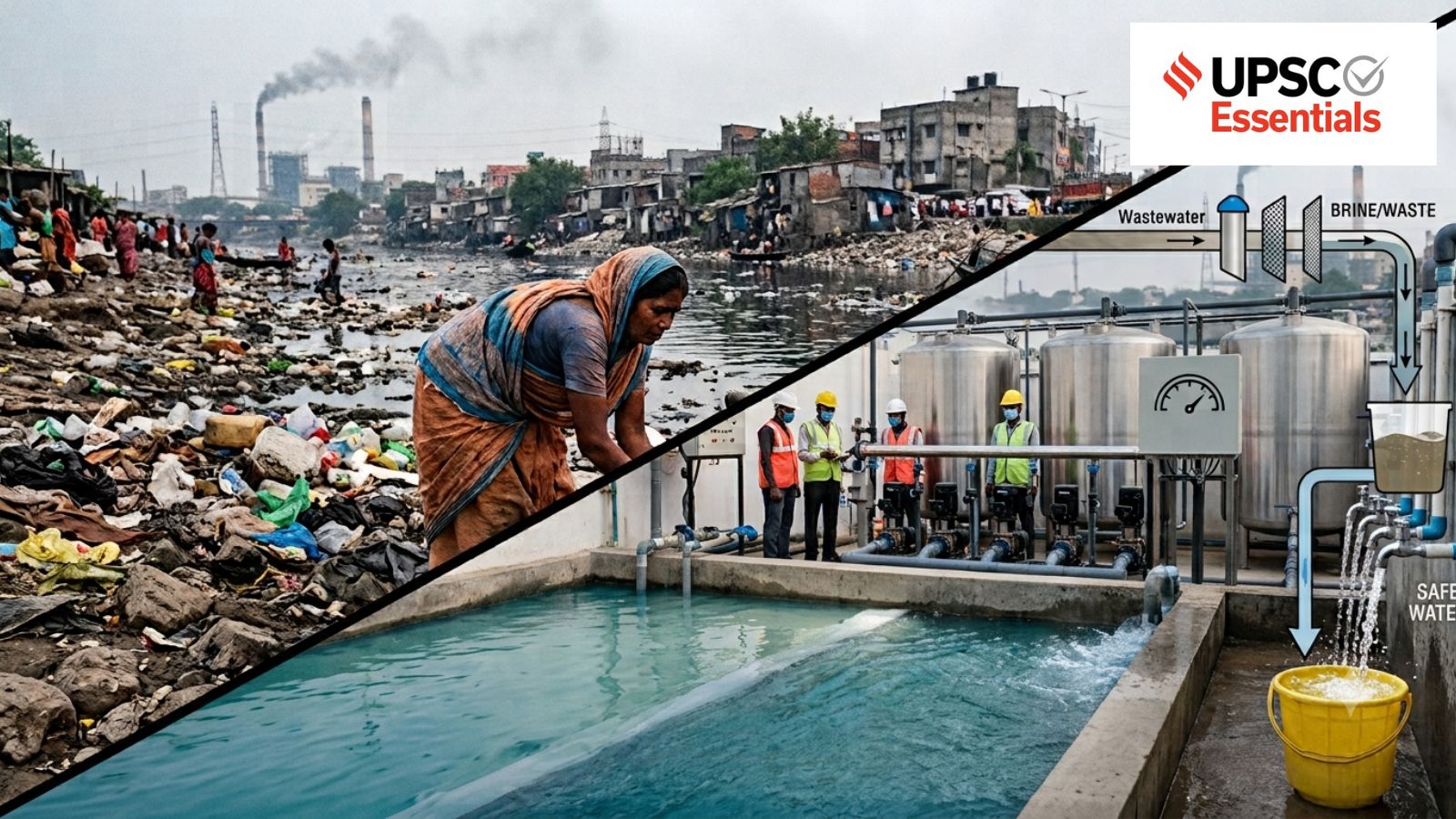
Recurring episodes of water contamination in Delhi and other states have drawn attention to the efficacy of water disinfection systems. Although chemical disinfection is designed to eliminate harmful microorganisms, it can also create conditions that favour the survival of microbes adapted to stress. Therefore, it becomes important to identify and limit adaptations that allow microorganisms to recover and thrive more readily after treatment.
But what is important to understand is what mechanisms enable microorganisms to survive disinfection and chemical stress. Are there microbial populations capable of adapting in ways that allow them to be active even after treatment? Finding answers to these questions is crucial for improving the reliability of water disinfection systems and reducing public health risks.
A recent study sought to address these challenges by examining metagenomes and metatranscriptomes at both intracellular and extracellular levels. What are metagenomes and metatranscriptomes techniques used in the study?
What survives after your water is "treated"?
Chlorination's cost How bacteria survive Resistance genes Filtration compared
THE PROBLEM
Disinfection doesn't mean elimination
Chemical disinfection is designed to kill harmful microorganisms — but it can also create conditions that favour microbes adapted to survive stress. A study examining metagenomes and metatranscriptomes found bacteria dominate wastewater's genetic material even after treatment.
55%
Of wastewater DNA is bacterial
99%
Of wastewater RNA is bacterial
●
High chlorination survivors
Methylobacterium, Sphingomonas, Hyphomicrobium, Novosphingobium, Sphingobium, Rhizorhabdus, and Sphingopyxis show a high degree of survival after chlorination.
◆
Biofilm-forming hygiene microbes
Mycobacterium, Mycolicibacterium, Mycobacteroides, Streptococcus, and Pseudomonas point towards disinfectant-resistant biofilm formation.
THE MECHANISM
Two ways bacteria pick up new DNA
Bacteria acquire genetic material either through vertical transmission — parent to daughter cells — or through Horizontal Gene Transfer (HGT), where foreign DNA is acquired and incorporated into the genome. Disinfection treatment has been shown to enhance HGT.
1928
Griffith first demonstrated bacterial transformation
HGT
Enhanced by disinfection treatment
★
Griffith's discovery
English microbiologist Frederick Griffith showed nonvirulent bacteria could acquire virulence through horizontal transfer of genetic material from dead virulent bacteria — establishing HGT's evolutionary importance.
→
Why it matters today
This same process largely helps bacteria acquire antibiotic resistance — making HGT a major concern in water treatment settings.
WHAT'S LEFT BEHIND
Resistance genes survive chlorination too
Residual extracellular and intracellular DNA after chlorination and chloramine treatment shows enrichment of genetic elements — including transposons and genes — that confer resistance to heavy metals, toxins, and multiple antibiotic classes.
⚠
Antibiotic resistance genes found
Aminoglycoside, fosfomycin, sulfonamide, and bacitracin resistance genes were enriched in post-treatment nucleic acid fragments.
✓
Survival mechanisms activated
Disinfection stress triggers SOS signals to counter DNA damage, metabolic shifts (TCA cycle, methane-to-methanol pathways), and protein-folding chaperones that aid bacterial survival.
◆
Pipes play a role too
Post-treatment water handling — particularly iron oxide scales that build up inside distribution pipes — continues to influence intracellular nucleic acid activity.
THE ALTERNATIVE
Membrane filtration: what each tier removes
Reverse osmosis offers highly efficient purification but comes with membrane cost, maintenance needs, and water loss. Large-scale membrane systems are classified by what contaminants they filter out.
Microfiltration
Excludes bacteria
Ultrafiltration
Removes viruses
Nanofiltration
Removes nucleic acid
Reverse osmosis
Excludes nearly all dissolved contaminants
Sources: Indian Express — "What happens to microbes after water disinfection"
What happens to microbes after water disinfection
The metagenome identifies which organisms are present within a microbial community, whereas the metatranscriptome reveals what these microorganisms are actively doing at the molecular level to counter disinfection stress due to added chemicals.
Metagenomics involves the study of DNA recovered directly from samples. It helps provide a holistic view of microbial communities to analyse their genetic diversity, functional potential, and population dynamics.
Metatranscriptomics focuses on the analysis of RNA transcripts present in a sample. It offers insights into gene expression patterns, metabolic activities, and cellular functions within complex microbial populations.
Story continues below this ad
The study finds that bacteria dominate wastewater nucleic acid content, accounting for 55 per cent of DNA and 99 per cent of RNA. The enrichment of intracellular nucleic acid (DNA and RNA) fraction from bacteria like Methylobacterium, Sphingomonas, Hyphomicrobium, Novosphingobium, Sphingobium, Rhizorhabdus, and Sphingopyxis suggest that these organisms have a high degree of survival chances against chlorination.
Q1. Why is the study of microbial gene expression important in the context of water disinfection?
(a) It helps identify only the total number of microorganisms present.
(b) It reveals how microorganisms respond and adapt to disinfectant stress.
(c) It eliminates all microbial contamination from wastewater.
(d) It prevents the formation of any microbial communities.
Some common microbes associated significantly with hygiene include Mycobacterium, Mycolicibacterium, Mycobacteroides, Streptococcus, and Pseudomonas have enriched extracellular DNA and intracellular RNA pointing towards disinfectant resistant biofilm formation.
It is also important to note that wastewater disinfection does not eliminate nucleic acid contamination, which may originate from microbial populations in wastewater as well as non-microbial sources, including a substantial fraction of human-derived DNA.
Story continues below this ad
How do bacteria adapt to disinfection stress?
Bacteria acquire genetic material either through vertical transmission from parent to daughter cells or through horizontal gene transfer (HGT), in which foreign DNA is acquired and incorporated into the genome.
In 1928, the English microbiologist Frederick Griffith first demonstrated bacterial transformation. His experiment discovered the “process of bacterial transformation”, which suggested that nonvirulent bacteria could acquire virulence through horizontal transfer of genetic material from dead virulent bacteria. This finding established the principle of bacterial transformation and highlighted the evolutionary importance of HGT
HGT is a major concern, as studies have shown horizontal gene transfer due to enhanced transformation of bacteria during disinfection treatment. This also largely helps bacteria acquire antibiotic resistance.
Residual extracellular and intracellular DNA after chlorination and chloramine treatment shows enrichment of genetic elements, such as transposons and genes, which confer resistance to heavy metals, toxins, and antibiotics like aminoglycoside, fosfomycin, sulfonamide, and bacitracin.
Story continues below this ad
Q2. Iron oxide scales developing inside water distribution pipes are significant because they:
(a) Completely eliminate microbial contamination.
(b) Influence intracellular nucleic acid activity after water treatment.
(c) Prevent horizontal gene transfer in bacteria.
(d) Neutralize chlorine present in treated water.
The study of metatranscriptomes also shows strong expression of resistance-associated genes. Further, disinfection stress causes bacteria to activate SOS signals to counter DNA damage and oxidative stress. In addition, microorganisms may change their metabolic activity, engage in interkingdom communication through small RNA, and switch to high-efficiency energy-generating pathways, like methane-to-methanol, fatty acid metabolism, the TCA (Tricarboxylic Acid) cycle, and glycosyl transfer.
Moreover, the expression of multiple energy-neutral chaperones in intracellular nucleic acid fragments and ATP-dependent chaperones in the extracellular fraction suggests that protein folding plays an important role in bacterial survival following disinfection. Furthermore, post-treatment water handling influences intracellular nucleic acid activity, which is particularly true for iron oxide scales that develop within pipes of the water distribution system.
Q3. Match the following:
1. Microfiltration
A. Nucleic acids
2. Ultrafiltration
B. Bacteria
3. Nanofiltration
C. Viruses
4. Reverse osmosis
D. Nearly all dissolved contaminants
Select the correct answer using the code below:
(a) 1-B, 2-C, 3-A, 4-D
(b) 1-C, 2-B, 3-D, 4-A
(c) 1-B, 2-A, 3-C, 4-D
(d) 1-A, 2-B, 3-D, 4-C
Can technology ensure water security?
Chemical disinfection remains cost-effective and technologically simple for large-scale water treatment. But it has certain biological disadvantages, as discussed above. In comparison, Reverse osmosis (RO) offers highly efficient water purification systems across various sectors of applications, including domestic, industrial, and municipal.
Story continues below this ad
However, even RO has certain disadvantages like membrane cost, maintenance requirements, and low water recovery efficiency, which results in substantial water loss. In addition, prolonged consumption of inadequately remineralised water from household RO purification systems may contribute to mineral deficiencies and associated health concerns.
At a large scale, membrane-based disinfection can be broadly classified on the basis of the contaminants they remove:
Microfiltration – It excludes bacteria.
Ultrafiltration – It removes viruses.
Nanofiltration – It removes nucleic acid.
Reverse osmosis – It excludes everything.
These membrane-based systems are increasingly being employed for seawater desalination and wastewater reclamation in water-stressed regions. Despite these technological advances, no water treatment technology alone can solve the growing freshwater crisis. After all, there’s no technological quick fix to indiscriminate water wastage, groundwater contamination, loss of supply from glaciers, lakes, and streams due to climate change, overexploitation, and pollution.
Post read questions
1. Water treatment technologies are necessary but not sufficient for ensuring water security. Discuss in the context of climate change, pollution, and overexploitation of freshwater resources.
2. Explain the role of wastewater treatment in preventing environmental pollution and safeguarding public health. What are the emerging biological challenges associated with current treatment methods?
Story continues below this ad
3. Why is the emergence of antibiotic resistance in wastewater a matter of concern? Discuss the role of water treatment technologies in addressing this challenge.
4. Safe drinking water is both a public health and environmental challenge. Discuss how scientific innovations can complement policy interventions to improve water security in India.
5. Chemical disinfection has been the cornerstone of large-scale water treatment. However, recent studies suggest that it may also promote microbial adaptations. Discuss.
(Dr. Arunangshu Das is the Principal Project Scientist at the Centre for Atmospheric Sciences, Indian Institute of Technology, Delhi.)
Story continues below this ad
Share your thoughts and ideas on UPSC Special articles with [email protected].
Click Here to read the UPSC Essentials magazine for June 2026. Subscribe to our UPSC newsletter and stay updated with the news cues from the past week.
Stay updated with the latest UPSC articles by joining our Telegram channel – IndianExpress UPSC Hub, and follow us on Instagram and X.
View original source — Indian Express ↗
Related stories

Indian Express
TechnologyJul 14, 2026 · 1 min
After K Rustom, FDA suspends licences of Mumbai’s iconic Shalimar, Noor Mohammadi over alleged hygiene lapses
Indian Express

Ars Technica
TechnologyJul 14, 2026 · 1 min
Taco Bell eyed in explosive diarrheal outbreak; leafy greens suspected
Ars Technica

France 24
TechnologyJul 14, 2026 · 1 min
Aboard French fighter jets defending European borders from Russia
France 24

TechCrunch
TechnologyJul 14, 2026 · 1 min
I’m de-influencing you from buying the RingConn 3 (even though it’s pretty)
TechCrunch