Indian Express
‘Maximum government, minimum governance’: Ladakh groups slam new hill councils
5 min readNew DelhiJul 14, 2026 08:05 PM IST
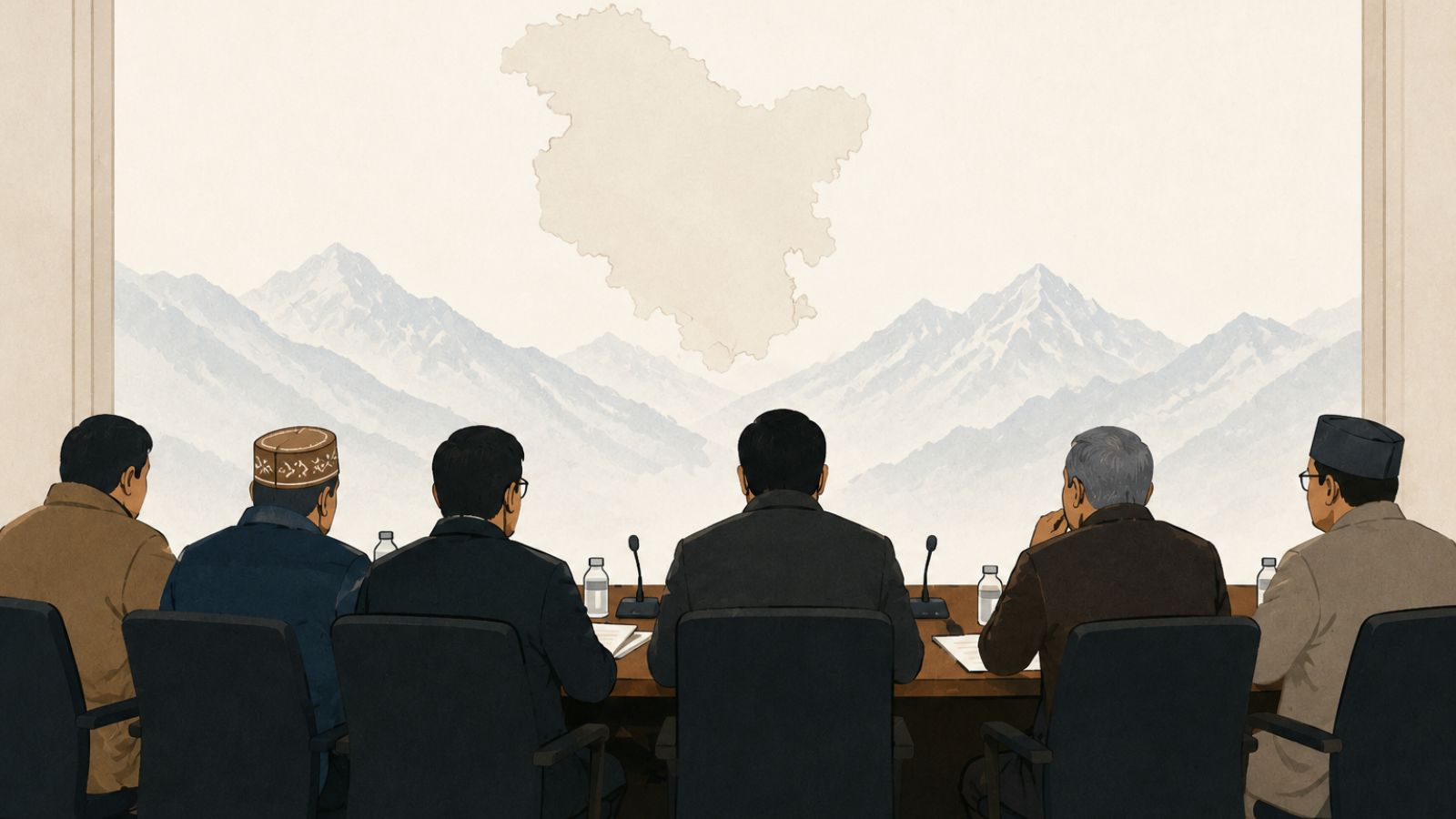
According to the administration, the proposed body would exercise legislative, executive, financial and administrative powers, with the framework currently under examination. (Image generated using AI)
The Ladakh administration’s decision to create Autonomous Hill Development Councils (AHDCs) in each of the Union Territory’s seven districts is likely to face stiff opposition from civil society groups, with both the Apex Body, Leh (ABL) and the Kargil Democratic Alliance (KDA) alleging it is aimed at diluting the powers of the proposed representative government for Ladakh under Article 371.
The Ladakh administration on Monday announced that AHDCs would be constituted in the five new districts – Drass, Sham, Nubra, Changthang and Zanskar – of the union territory. Currently, such councils exist only in Leh and Kargil.
Announcing the decision, Ladakh Chief Secretary Ashish Kundra said the move was in response to long-pending demands from residents of the new districts and would strengthen democratic decentralisation and grassroots governance.
Kundra also said that following recent discussions between leaders from Ladakh and the Centre, there was broad agreement that a Union Territory-level representative body would be created under a customised framework under Article 371 of the Constitution, drawing from the best features of similar arrangements in other states.
According to the administration, the proposed body would exercise legislative, executive, financial and administrative powers, with the framework currently under examination.
However, leaders spearheading the movement for constitutional safeguards in Ladakh said the creation of seven hill councils would weaken, rather than strengthen, representative governance.
“This is a plan to dilute the powers of the proposed representative government that is going to take shape under Article 371. If all the powers are going to be given to the hill councils, what will the representative government do? Ladakh does not have such a big population that you need so much decentralisation,” ABL co-chairman Chherring Dorje Lakruk told The Indian Express.
Story continues below this ad
The KDA echoed similar concerns, questioning both the timing and intent behind the decision. “This decision has been taken unilaterally. Neither KDA nor ABL has been consulted. Given the history of how things have panned out here, it makes us question the intent. I don’t understand how seven hill councils will improve administration when the existing hill councils of Leh and Kargil are toothless at the moment. These kinds of cosmetic administrative changes are not going to help us. This is a plan for maximum government and minimum governance,” KDA co-chairman Sajjad Kargili told The Indian Express.
Reigniting old issue
The announcement also revives an issue that had surfaced during the Centre’s ongoing negotiations with Ladakh’s civil society groups over constitutional safeguards.
Sources familiar with the discussions said that after the creation of seven districts, the government had informed Ladakh representatives of its proposal to establish a hill council in each district. According to them, both the KDA and the ABL objected to the proposal during their May 22 meeting with senior Ministry of Home Affairs (MHA) officials.
The proposal, sources said, was initially recorded in the Minutes of the Meeting (MoM). “Objecting to this and other issues, we refused to sign the MoM. Following this, another MoM was prepared from which this point was removed. We signed that MoM. Now the government has gone ahead and announced it without taking us into confidence,” a senior leader from Ladakh said.
Story continues below this ad
The move comes against the backdrop of prolonged negotiations between the Centre and the joint platform of the ABL and KDA over Ladakh’s political future after it was carved out as a Union Territory in 2019 following the abrogation of Article 370.
The two organisations have jointly been demanding constitutional safeguards, including statehood or a legislative framework under Article 371, protection over land and jobs, and enhanced political representation. Last year they submitted a draft framework to the MHA proposing a representative body with legislative and financial powers.
The latest disagreement also mirrors the distrust that has marked Centre-civil society engagement over the past year. When the Centre announced the creation of five new districts in April, the administration had argued that the reorganisation would improve governance in the geographically vast region by reducing travel distances for citizens, decentralising administration and generating employment through new administrative infrastructure.
The KDA, however, had alleged that the exercise altered the demographic balance by creating five Buddhist-majority districts and only two Muslim-majority districts, describing it as a move that risked fragmenting the political unity forged between Leh and Kargil over their common demands for constitutional safeguards.
Story continues below this ad
The creation of new hill councils is now set to become another contentious issue in the continuing negotiations between Ladakh’s civil society groups and the Centre over the region’s future political structure.
© The Indian Express Pvt Ltd
View original source — Indian Express ↗
Related stories

The Punch
WorldJul 14, 2026 · 1 min
Legislature must continue to hear from young Nigerians – Gbajabiamila
The Punch
The Punch
WorldJul 14, 2026 · 1 min
Police foil kidnap attempt, arrest 66-year-old suspect in Anambra
The Punch
The Punch
WorldJul 14, 2026 · 1 min
Nigeria, Egypt partner to fight drug cartels, sign anti-narcotics MoU
The Punch
The Punch
WorldJul 14, 2026 · 1 min
Gunmen kill Lagos NURTW organising secretary
The Punch