The Guardian
The Guardian view on Brazil’s sovereignty: Trump turns autonomy into a trade offence | Editorial
Last June, Brazil’s supreme court responded to the online lies that helped fuel Jair Bolsonaro’s failed far-right coup attempt in 2023. It ruled that social media platforms could be held liable for some users’ posts, forcing firms such as Elon Musk’s X and Mark Zuckerberg’s Meta to remove hate speech and anti-democratic content. A month later, Donald Trump proposed a 25% tariff on Brazilian imports, complaining that the judges had made US tech firms take down “political” material.
At a hearing held at the US International Trade Commission last week, an extraordinary platform was given to Mr Bolsonaro’s son, Flávio. He is the opposition candidate running to be president in this year’s election while his father serves a 27-year prison sentence. His message to Washington was that the US’s problem with his country’s unfair trade practices was down to the president, Luiz Inácio “Lula” da Silva, who has clashed with Mr Trump.
The younger Bolsonaro asked for the US to stay its hand on tariffs until Brazil’s election in October, saying that he – unlike the “anti-American” Lula – may soon be in power. With the White House decision expected on Wednesday, it was an extraordinary act of chutzpah. He was not just lobbying against tariffs. He was auditioning to be Mr Trump’s preferred Brazilian president. Mr Bolsonaro is less charismatic than his father, but rooted in the same simplistic anti-leftism, punitive law and order policies and far-right culture wars.
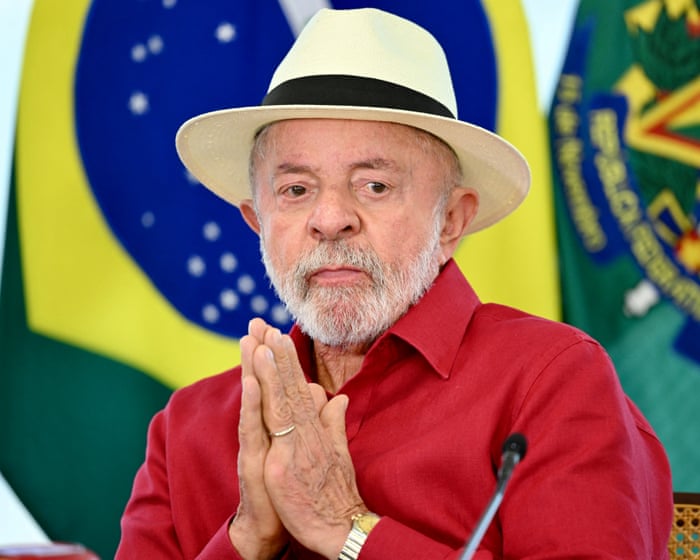
Lula is ahead in the polls. The 80-year-old is among this century’s most successful politicians. From factory worker to union leader to party founder, Lula made redistribution the language of Brazilian democracy. Extreme poverty has fallen from 30 million in 2002 to under 7 million today. He governed from 2003 to 2011. Brazilian politics is polarised: Lula only returned in 2023 after judges annulled corruption convictions.
Mr Trump rejects Lula’s push for Brazilian sovereignty. Lula wants Brazil to be able to police anti-democratic disinformation. Mr Trump thinks that the US should have jurisdiction over the country’s information sphere. Another sovereignty issue is about who controls Brazil’s financial plumbing, and whether a successful public payment infrastructure outside American control can exist in Latin America.
Brazil’s Pix payments system allows individuals, businesses and government entities to send and receive money instantly. Easy to use, it is popular in Brazil. In 2025, the platform’s total transaction volume reached $6.7tn. Brazil, like India, has built a digital public infrastructure designed to reduce reliance on foreign-controlled payment networks and insulate its domestic payments from external pressure or sanctions. It effectively bypasses Visa and Mastercard-style card systems – threatening their profits.
Payments are data, says Andres Arauz, an economist who was a minister in a left government in Ecuador. Routed through US-linked networks, he says, they become tools of surveillance and pressure. Kept national, Mr Arauz argues, they become the infrastructure for sovereign AI development. The real offence is not protectionism, but autonomy. Brazil has built a public payments system and asserted jurisdiction over US tech platforms. Mr Trump has recast that Brazilian sovereignty as unfair commercial discrimination. It is as predictable as it is concerning that Bolsonarism is willing to play along.
Do you have an opinion on the issues raised in this article? If you would like to submit a response of up to 300 words by email to be considered for publication in our letters section, please click here.
View original source — The Guardian ↗
Related stories

The Punch
PoliticsJul 14, 2026 · 1 min
SGF slams Makinde for politicising Oyo pupils’ abduction
The Punch
The Punch
PoliticsJul 14, 2026 · 1 min
Yoruba group hails rescue of Oyo pupils, teachers
The Punch

Rio Times
PoliticsJul 14, 2026 · 1 min
Ending Brazil’s 6×1 Work Week Could Push Bus Fares Up 8%
Rio Times
The Punch
PoliticsJul 14, 2026 · 1 min
Read our laws before criticising us, Akpabio urges Nigerians
The Punch