The Guardian
Hillsborough law symbolises new era as power passes from Starmer to Burnham
Andy Burnham has always said he took his first steps out of Westminster in 2009, when he walked out to address furious Liverpool fans at the Kop on the 20th anniversary of the Hillsborough disaster.
They chanted “Justice for the 96” for a full two minutes before the then culture secretary was able to continue, demonstrating their anger that nobody in public office had been convicted of any offence over the tragedy.
It took him another eight years to step down as an MP in 2017, but just before he did, he introduced a private members’ bill seeking to establish a legal duty of candour for public officials and prevent institutional cover-ups. It fell away when Theresa May called an election.
To have finally delivered the Hillsborough legislation as he took his first steps back into Westminster as prime minister all these years later would have been a deeply symbolic, and something of a redemptive, moment for Burnham.
That it was Keir Starmer who stood at the dispatch box in the Commons on Monday night, before MPs approved his version of the long-delayed Hillsborough law, has denied him this.
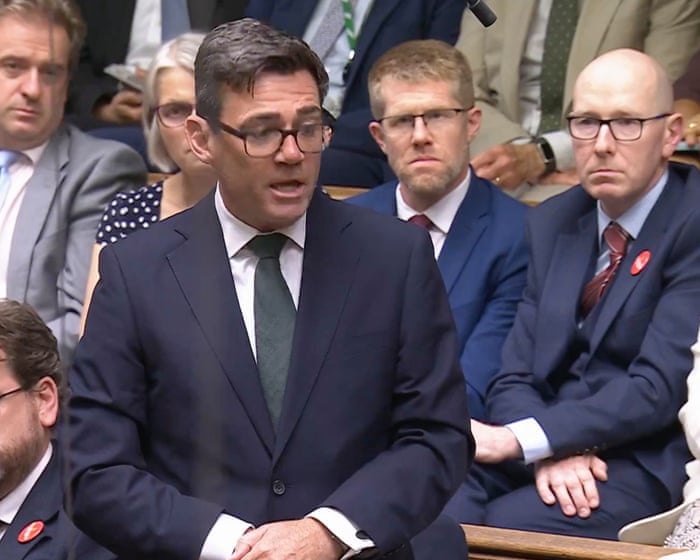
But such is the depth of feeling within the Labour party over this particular piece of legislation that Burnham’s decision to give his first speech since returning to parliament during the debate, even telling the prime minister that this “truly is your legacy”, also turned the moment into the opening salvo of this new era.
While the Hillsborough law represented a symbolic handover of power from Starmer to Burnham, the actual shift has been taking place since the former Greater Manchester mayor’s victory in the Makerfield byelection, prompting Starmer to finally see the writing on the wall and announce he would step down.
Since then, however, the outgoing prime minister has been seized with a new energy to get things done, leaving some of his MPs scratching their heads as to why he had taken so long to govern more assertively. If he had managed to do so a bit earlier, some speculated, his fate could have been very different.
Even in the days before Burnham had returned to parliament, Starmer was securing his legacy, announcing the social media ban for under-16s. In the days after, he finally delivered his long-delayed defence investment plan, albeit leaving Burnham the challenge of finding an extra £5bn a year to pay for it.
On the international stage, too, Starmer has been busy: joining the EU’s €90bn (£78bn) support package for Ukraine, to the benefit of UK defence firms, trying to smooth over tensions with Donald Trump at the Nato summit in Ankara, signing a trade deal with Switzerland and – potentially – jetting to the US if England make it to the World Cup final.
But there have been other areas, on the international and domestic stages, where the transition of power has been more evident. Most notably, the EU announced it was delaying the second “reset” summit with the UK after it became clear there would be a new prime minister who might have his own priorities.
Burnham has been making his presence felt on immigration, too. He told the Guardian during the Makerfield campaign that Shabana Mahmood had been right to grip the issue at the Home Office, but there was still a balance to be struck with the treatment of genuine refugees.
Ten days after returning to parliament, Burnham said he would ask the home and foreign secretaries to “review all possible options” to deport the ringleader of a notorious Rochdale grooming gang. In the immigration bill this week, an amendment was added to do just that.
At the same time, he voted for the rest of the legislation, with his team indicating that he backs Mahmood’s changes to indefinite leave to remain and refugee settlement.
There will be more moments, as Starmer serves out his final days in office, that mark the transfer of power, until Burnham becomes Labour leader on Friday and prime minister on Monday. But none reflects that more than the Hillsborough law.
Not just because it is a key change that ties Starmer and Burnham together. But also because it encapsulates what the prime minister-in-waiting says his government will be about.
“It does feel tonight like life is coming full circle,” Burnham told MPs. “As we pass this momentous piece of legislation, a piece of legislation that will change the way this country thinks and works about justice, it truly is a rewiring of the state and a passing of power from the authorities to the hands of ordinary people.”
View original source — The Guardian ↗
Related stories

The Punch
PoliticsJul 14, 2026 · 1 min
Tinubu orders tougher engineering regulation, sanctions to curb infrastructure failures
The Punch

The Guardian
PoliticsJul 14, 2026 · 1 min
Australia news live: top 100 CEOs bank 16% pay rise; Husic warns Labor over Gaza policy
The Guardian
Philippine Daily Inquirer
PoliticsJul 14, 2026 · 1 min
Marcos’ net satisfaction rating rises to -7 in June
Philippine Daily Inquirer

The Hill
PoliticsJul 14, 2026 · 1 min
Trump urges Republicans to confirm Blanche as attorney general
The Hill