ABC News
Smart glasses help vision-impaired despite privacy concerns
Thanks to a set of glasses, Sam Taylor no longer has to pull out his phone at the fridge, open an app, and point the camera in the right direction.
Instead, he now asks, "Look and read."
Through the speakers built into his black sunglasses, artificial intelligence tells him he is holding a carton of orange juice and even reads the use-by date.
"For someone like me [with a vision impairment], the glasses were a game changer,"
he said.
"Daily I go and check the mail, and now it's easier than ever to identify and separate junk mail from things I might want to keep."
For members of the blind and low-vision community, AI-powered glasses are proving invaluable.
Wollongong-based folk singer Sam Noonan has been blind since birth.
After a demonstration of the glasses at a Vision Australia Expo, she "bought them on the spot".
She has used her smart glasses to record and upload her music online, and to describe the drawings her grandchildren bring home from school.
"These things seem a little bit trivial, but when you're not usually able to do them, it's really good,"
she said.
A tool for independence
While they were not designed as an accessibility device, Mr Taylor said the glasses were an alternative to traditional assistive eyewear, which typically costs about $5,000.
"What we're seeing here is a device, which is a tenth of that cost, that allows us not only to read things out loud, but to perform a plethora of additional options," he said.
The glasses can play music, read documents and call friends.
As an access technology lead at Vision Australia, Mr Taylor believed the glasses' biggest advantage was not what they could do, but how naturally people could use them.
"The uptake has been pretty amazing," he said.
"Even if you don't necessarily consider yourself a technical person, you can approach the Meta Glasses with natural language and you can talk to them as you would a person."
A key feature of the glasses is their integration with the app Be My Eyes, which allows users to call sighted volunteers.
The volunteers can then see through the point of view of the lenses and assist with everyday tasks.
Through his glasses, Mr Taylor used Be My Eyes to help with travel.
"I've travelled independently on the other side of the country, or in some instances the world, and a volunteer has helped through the airport or to find a hotel,"
he said.
Privacy concerns grow
But as the uptake of smart glasses increases, researchers and legal experts warn about increased privacy risks.
Milica Stilinovic is an emerging technology researcher at the University of Sydney.
Dr Stilinovic said the glasses could be used as a covert surveillance device, including the emerging genre of men filming themselves picking up women.
"Men approaching women in the stairwells of their apartments, men approaching five women at a beach, and then returning the next day and doing the same thing,"
she said.
Dr Stilinovic said the inconspicuous camera meant subjects were unaware they were being filmed until the footage was published online.
The Meta Glasses feature a small LED indicator that lights up when the user is recording, but workarounds are being shared online.
University of Sydney law expert Barbara McDonald said using smart glasses to record a private conversation and also publish it was in breach of the NSW Surveillance Devices Act.
"Once you post something onto the internet … you might be in breach of the Federal Crimes Act or the Telecommunications Act, particularly if you were using that footage or those photographs to harass or intimidate somebody," Professor McDonald said.
Last year, the Australian parliament introduced a new statutory tort enabling individuals to sue for serious invasions of privacy.
Professor McDonald said while the tort offered an individual better privacy protection, prosecution was difficult.
"If, of course, they can find the perpetrator, and if the perpetrator is in the jurisdiction, and all those sorts of procedural issues and costs," she said.
"I'd like the courts to be able to make orders for compensation … so that it's not just a criminal matter, it's also a matter where the person who's involved maliciously or improperly has to actually compensate the victim."
Email address
View original source — ABC News ↗
Related stories
TechRadar
TechnologyJul 14, 2026 · 1 min
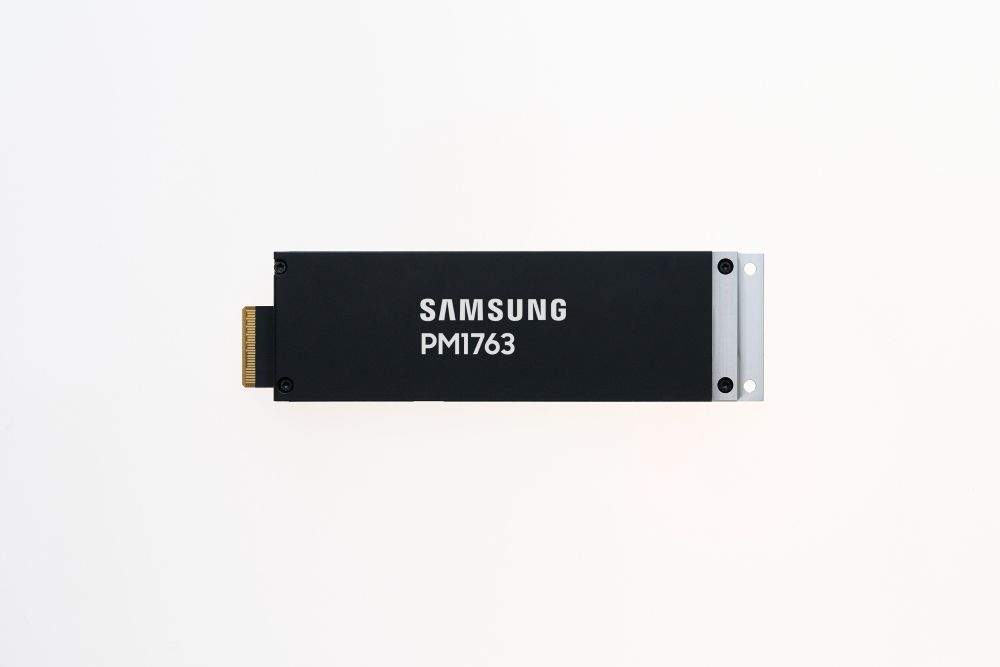
Samsung has a 16TB PCIe 6.0 SSD coming soon with read/write speeds of 28.4GBps and 21.9GBps respectively
TechRadar

The Verge
TechnologyJul 14, 2026 · 1 min
Nothing’s good-looking Watch 3 Pro smartwatch is just $69
The Verge

TechCrunch
TechnologyJul 14, 2026 · 1 min
OpenAI’s first hardware device is reportedly a screenless speaker that can move
TechCrunch

Wired
TechnologyJul 14, 2026 · 1 min
The UK Is Planning a Social Media Curfew for 16- and 17-Year-Olds
Wired