Indian Express
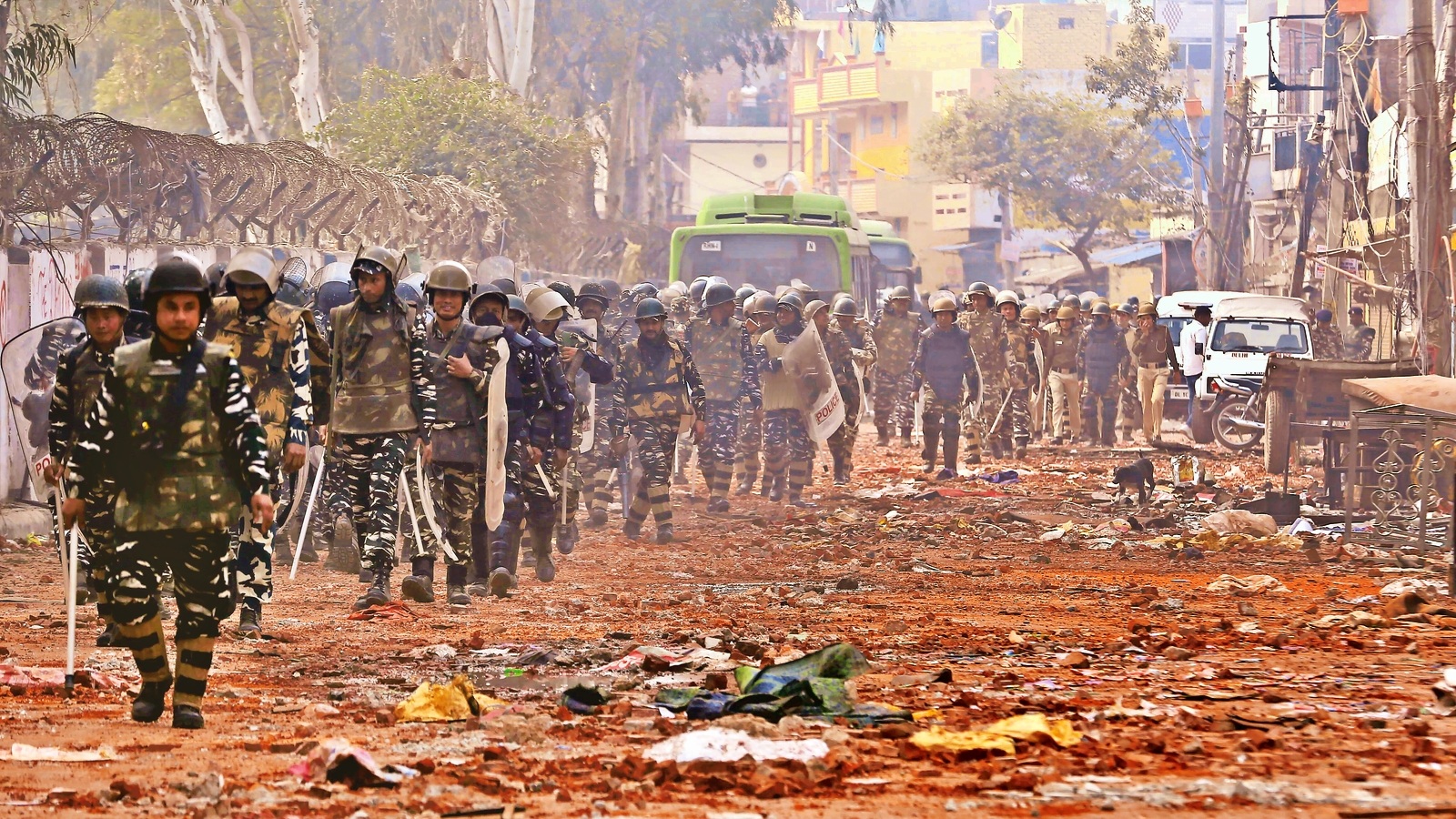
Ankit Sharma’s murder during 2020 northeast Delhi riots
Finding that the prosecution had proved its case “beyond reasonable doubt,” the Delhi court convicted former Aam Aadmi Party (AAP) councillor Tahir Hussain of the murder of 26-year-old Intelligence Bureau (IB) staffer Ankit Sharma during the 2020 Northeast Delhi riots. The court said Hussain was part of a “heavily armed” mob that abducted Sharma before killing him in what it described as a “savage and relentless assault upon his person.”
Relying on the testimony of five eyewitnesses, the court found that prosecutors had proved beyond reasonable doubt that Hussain was part of a large mob that had gathered at Chand Bagh Pulia around 5 pm on February 25, 2020.
“…accused Tahir Hussain at around 5.00 p.m on 25.02.2020, was a member of a large crowd and unlawful assembly which, with animus against Hindus, had assembled at Chand Bagh Pulia with a common object to commit rioting, loot, arson and to cause damage to the property and person of the members of the Hindu community,” Additional Sessions Judge (ASJ) Praveen Singh said.
The finding was based on the testimony of five eyewitnesses: Pradeep Verma, a parking lot operator; Aakash, a tea vendor and long-time Khajuri Khas resident; his brother Bharat; Deepak Pradhan, a Chandu Nagar resident; and advocate Priyanka Gaur, who lived in Moonga Nagar on Karawal Nagar Road.
The court also ruled that any “prudent” person who is a part of an unlawful assembly knows that in such clashes members of the opposite community could be killed.
“Hence, any prudent person, being a member of this assembly, would have known…in such clashes which were based upon communal hatred, it was likely that a person belonging to the opposite community could be killed,” ASJ Singh said.
Key witnesses supported prosecution’s case
The court relied on the testimony of five eyewitnesses who said they saw Tahir Hussain in the mob. One of them deposed in court that “Tahir Hussain was delivering an instigating speech, stating that Hindus had vandalized and burnt Muslim houses and shops and had molested Muslim women, and therefore the ‘Kafirs’ should be taught a lesson”.
Story continues below this ad
The witness went further, stating that the mob “assaulted a boy (in this case Ankit Sharma) with knives, dandas (sticks), swords, bricks and iron rods and then threw him into the drain from the opposite side.”
Corroborating this testimony, another eyewitness stated that he saw a group of 20 to 25 people mercilessly assaulting a young boy while Tahir Hussain was standing in front of the mosque, saying “maaro maaro“. He also deposed that the body was thrown into a drain.
Another eyewitness stated before the court that Hussain “was joining the mob off and on and, in between, would return to his house”. Another witness said she allegedly saw Tahir in the mob, which was carrying dandas, petrol bombs and stones.
Police witness testimonies held unreliable
The prosecution examined 91 witnesses. Other than the five eyewitnesses, it also cited two police witnesses (then head constables) to prove their case against Hussain.
Story continues below this ad
The court noted that there were “considerable improvements” in the statements of these two witnesses who claimed to have been on duty at Main Karawal Nagar road on February 25, 2020.
“…it is evident that both these witnesses, while testifying in the court, have made considerable improvements. However, when asked, whether these facts which they had added…instead of putting forward an explanation for not stating these facts, they either simply admitted not stating these facts, or stated that they did not remember whether these facts were stated or not. The improvements made by these witnesses are not minor variations, embellishments or small additions…,” ASJ Singh said in his judgement.
Defence arguments against witness testimonies rejected by court
The defence lawyers challenged the testimonies of various witnesses stating that they were either “chance” witnesses – who were discovered by the Investigating Officer by chance and who identified the accused by chance – or “stock witnesses” – who were witnesses in multiple FIRs.
The court, however, rejected these arguments. “…on the face of it and in the natural course of things, merely because they were the passers-by, that too at a place not far away from their house, these witnesses cannot be termed as chance witnesses to strike at their credibility,” the court said.
Story continues below this ad
“…despite their sustained cross-examination, the defence has failed to bring forth any material contradictions in the testimonies of these witnesses that would shake the credibility of their account of the murder of Ankit Sharma and the surrounding events,” it added.
View original source — Indian Express ↗
Related stories

The Punch
WorldJul 15, 2026 · 1 min
NCC consults stakeholders on free educational internet access
The Punch
The Punch
WorldJul 15, 2026 · 1 min
FG inaugurates advisory committee to deepen economic reforms
The Punch
The Punch
WorldJul 15, 2026 · 1 min
Ekiti recruits teachers to fill primary school vacancies
The Punch
The Punch
WorldJul 15, 2026 · 1 min
NDDC pledges procurement compliance
The Punch