
Hacker Noon
Fintech's Next Challenge Is Earning Small Business Trust
Fintech has given small businesses more tools than ever. A business owner can accept payments online, send invoices, automate billing, set up recurring payments, track transactions, and move money faster than they could a decade ago. On paper, that sounds like progress, and in many ways, it is. But better technology does not automatically create better trust. I work with small and mid-sized businesses that have access to modern payment tools, but still feel confused by the systems behind them. They can accept a card payment in seconds, yet struggle to understand why their statement changed, what certain fees mean, or whether their current setup is still the right fit for their business. That disconnect is where fintech has a real problem. The industry has moved fast, but many business owners are still being asked to trust systems they do not fully understand. The Problem Is Not Just Technology. It Is Clarity. A lot of fintech companies talk about speed, automation, and convenience. Those things matter, but they only solve part of the problem. If a platform makes payments faster while leaving the business owner confused about pricing, terms, fees, or risk, the experience is still incomplete. In payments, this matters because the system touches almost every dollar coming into the business. A small fee change may not look like much on one transaction, but when it happens across hundreds or thousands of transactions, it can quietly affect cash flow and margin. The problem gets worse when the owner does not know what changed or who to ask for a clear answer. That is how trust starts to break down. Not always through one major mistake, but through repeated moments where the customer feels like they are operating in the dark. Small Businesses Need Education, Not Just More Features. One of the biggest mistakes in fintech is assuming that more features automatically mean more value. For some businesses, they do. For others, more features just create more confusion if no one explains how they fit into the company’s actual operations. A medical office, automotive business, retail shop, restaurant, and B2B service company may all need payment processing, but they do not all need the same setup. Their volume, customer behavior, transaction size, risk exposure, and payment preferences can be completely different. That is why education matters. Business owners should understand what they are paying for, how their system works, what terms they are agreeing to, and what options actually make sense for where their business is today. When a provider takes time to explain instead of rushing the sale, the owner can make a decision with confidence. That confidence is what turns a fintech tool into a trusted business system. Complexity Should Not Be Used as Leverage. Every industry has technical language, but fintech has too often allowed complexity to become part of the sales process. If a customer does not understand the fee structure, the contract terms, or the long-term cost of a solution, that should not be treated as normal. It should be treated as a warning sign. A strong provider should be able to explain the system in plain language. They should be able to walk through the statement, identify the real cost, explain what can change, and be honest about whether the setup still fits the business. To me, that is where integrity shows up in fintech. It is not just about having good intentions. It is about making sure the customer has enough information to make a decision that serves them, even if that means they do not move forward right away. How Fintech Can Rebuild Trust. The fix is not complicated, but it does require a higher standard. Fintech companies need to make pricing easier to understand, contracts easier to explain, onboarding more educational, and ongoing support more proactive. They need to stop treating transparency like a marketing word and start treating it like an operating principle. That means explaining fees before they become surprises. It means reviewing systems as a business grows instead of letting outdated structures continue quietly. It means telling a client when something is not the right fit. It means building relationships that are based on understanding, not pressure. The companies that do this will not just have better customer service. They will have better retention, better referrals, and stronger long-term relationships because clients stay where they feel informed and protected. The Future of Fintech Has to Be More Human. Fintech still has the power to make business better, but only if the industry remembers who the tools are supposed to serve. Small businesses do not need financial systems that make them feel powerless. They need partners who help them understand their options, protect their cash flow, and make better decisions. The future of fintech should not just be faster or more automated. It should be clearer, more accountable, and more human. That is how the industry fixes the trust problem.
View original source — Hacker Noon ↗
Related stories

TechRadar
TechnologyJul 14, 2026 · 1 min
This sleek Japanese power strip finally fixes your office desk's ugliest pain point
TechRadar
Times of Israel
TechnologyJul 14, 2026 · 1 min
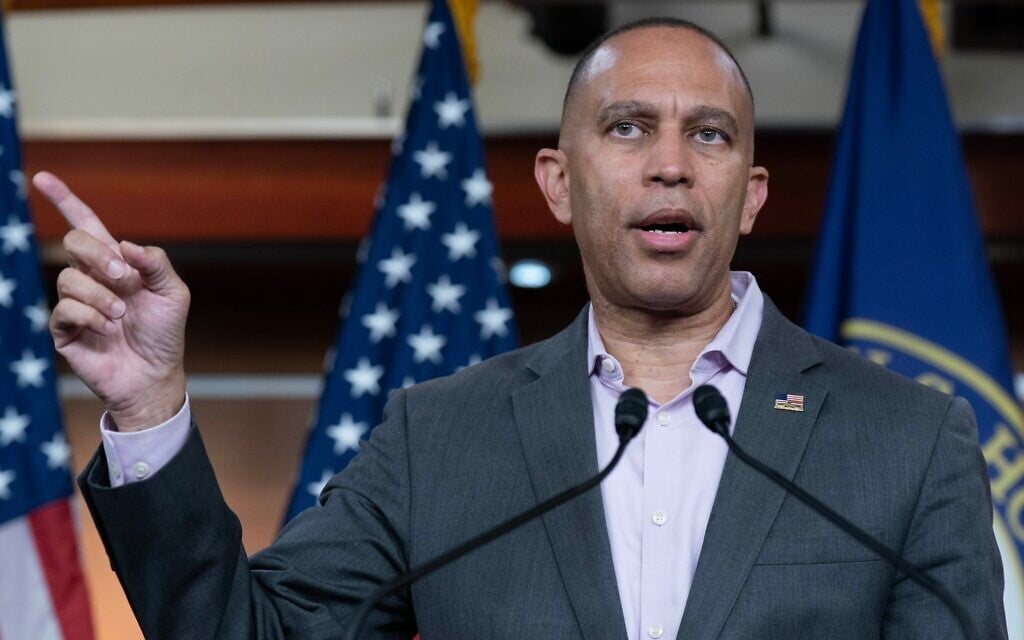
Top Democrat in US House says he won’t support bill to cut off US aid to Israel
Times of Israel

TASS
TechnologyJul 14, 2026 · 1 min
Air defenses down 340 drones heading for Moscow Region in 24 hours — authorities
TASS

TechCrunch
TechnologyJul 14, 2026 · 1 min
Lorde says AI glasses are “not sexy”
TechCrunch