Indian Express
Amid Satluj row, focus on strength of judiciary and role Justice Kuldip Singh played
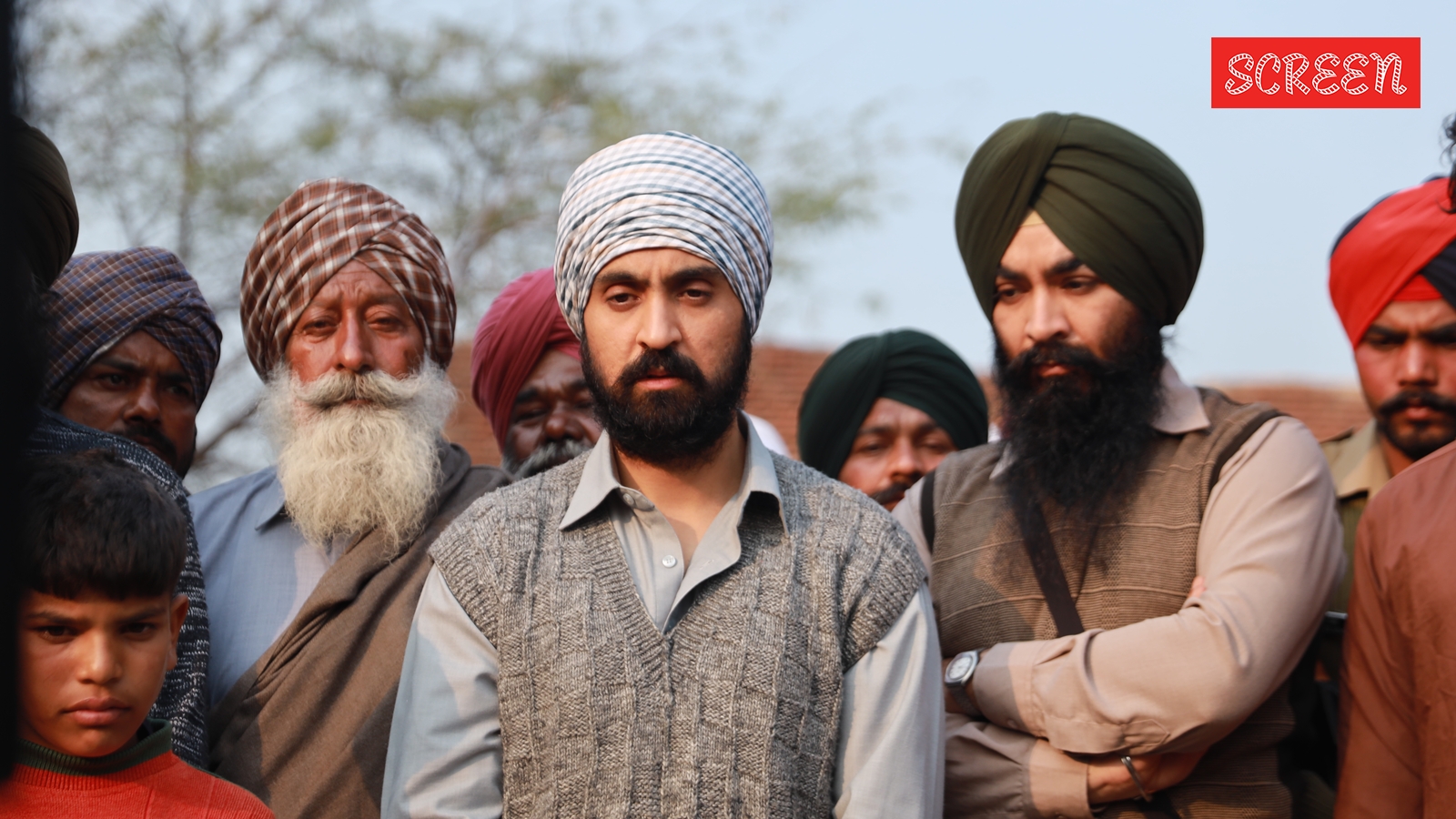
The ongoing debate over the ban on ‘Satluj’ — a film based on the life of human rights activist Jaswant Singh Khalra — has put the spotlight on a story that extends far beyond its central character. It has brought into focus the intervention by the judiciary, particularly by Justice Kuldip Singh, whose landmark order transformed the disappearance of Khalra into one of the most consequential human rights investigations.
Khalra was abducted from outside his Amritsar home on September 6, 1995, and murdered by Punjab Police personnel soon after he exposed the alleged illegal cremations of at least 2,097 “unclaimed” bodies in the district following suspected fake encounters during the militancy era.
Within days of his disappearance, Khalra’s wife, Paramjit Kaur Khalra, moved the Supreme Court, while then Shiromani Gurdwara Parbandhak Committee (SGPC) president Gurcharan Singh Tohra sent a telegram to Justice Kuldip Singh seeking immediate intervention. Even as Punjab Police denied knowledge of Khalra’s whereabouts, the Supreme Court widened the scope of the case.
In a landmark order on November 15, 1995, a division bench of Justices Kuldip Singh and S Saghir Ahmad ordered a CBI probe not just into Khalra’s disappearance, but also into his “press note” that had exposed alleged illegal cremations of laawaris (unclaimed) bodies in Amritsar following alleged extra-judicial killings of Sikh youths by Punjab Police.
The probe eventually established that Khalra had been murdered by police personnel, leading to five policemen being convicted. The CBI investigation also triggered multiple FIRs relating to alleged extra-judicial killings and “secret cremations of unidentified bodies” across Punjab.
Justice Kuldip Singh, a Partition survivor born in Jhelum (now in Pakistan) and who later settled in Patiala, continued to shape the case through a series of landmark orders. In 1996, describing Khalra’s disappearance as the “worst crime against humanity”, he awarded Rs 10 lakh compensation to his Paramjit Kaur after her husband remained missing for over a year. He also directed that all accused policemen be transferred out of Amritsar and Tarn Taran to ensure an impartial CBI probe and later entrusted the National Human Rights Commission with determining compensation for families whose relatives had been illegally cremated. Justice Kuldip Singh died in Chandigarh in 2024 at the age of 92.
Senior Supreme Court advocate and human rights activist HS Phoolka says Satluj ultimately highlights “the strength of the Indian judiciary.”
Story continues below this ad
“At Justice Kuldip Singh’s bhog ceremony, the conversation centered on it how many innocent people are alive today because of him. It was his guts, resilience and farsightedness that the Khalra case went to the CBI; otherwise, it would have been buried,” Phoolka told The Indian Express.
“Khalra did nothing wrong. He only encouraged victims of alleged extra-judicial killings to move court and demand the whereabouts of their family members through legal process. Even after his abduction, his wife moved the Supreme Court instead of promoting any violence.”
Phoolka said Khalra urged people “to pick up a pen and file petitions, not weapons” and made people believe in the judicial system. His work ultimately led to convictions in at least 63 fake encounter cases, adds Phoolka.
Former Rajya Sabha MP Tarlochan Singh echoed the sentiment, saying Justice Kuldip Singh’s intervention prevented the case from being buried.
Story continues below this ad
“We should never forget the role of Justice Kuldip Singh and the judiciary in the Khalra case. Had the CBI probe not been ordered, Punjab Police would have buried it forever. The film is not reopening wounds, but instead giving a lesson,” says Tarlochan, a former chairman of the National Minorities Commission and ex-officio member of the NHRC.
The film, he says, could serve as a reminder against abuse of power. “Police personnel and their families also watch films, and they will think twice before showing such brutality ever again”.
“Initially, the victims were being given compensation of Rs 1.75 lakh per family, but in 2012, I wrote to then NHRC commission chairman KG Balakrishnan and it was enhanced to Rs 2.50 lakh.” he adds.
On the criticism that Khalra sympathised with the Sikh separatist movement, those close to him point to the legal path he consistently pursued.
Story continues below this ad
In one of his public speeches in Canada, Khalra said his campaign sought only answers through constitutional means. “We are not asking for anything; please tell us where you have cremated the son of a mother. Even the law says that photos and belongings of laawaris laash (unclaimed body) have to be preserved until the family claims it…we will…explore all legal options… Main iss hanere nu challenge kar daa haan (I challenge this darkness),” he said.
His daughter, Advocate Navkiran Singh Khalra, says her father “deeply identified and sympathised with the Sikh struggle” but never abandoned the legal process.
“My father never ran away from the system; he chose to challenge it through the law. Ironically, even the Punjab Police never claimed he had committed any offence,” she says.
Navkiran also recalls that Justice Kuldip Singh had met her father just weeks before his abduction during a conference at Guru Nanak Dev University. “He wanted my father to come to the Supreme Court to discuss the cremation cases. Before that could happen, he was abducted. Justice Kuldip Singh immediately realised he was the same man who had met him, and he fast-tracked everything,” she says.
Story continues below this ad
The film has also triggered a political debate with Union Minister Ravneet Singh Bittu arguing that it presents only “half the truth” because it does not depict Hindus killed by Sikh militants during the insurgency.]
Phoolka disagrees, cautioning against reducing the film to a Hindu-Sikh debate. “Hindu-Sikh unity survived those (militancy) years; a film cannot destroy it. No innocent killed should be forgotten or forgiven. It is a fact that Sikh militants killed innocent Hindus. But another fact is that Punjab Police did fake encounters of innocent Sikh youths too in name of eliminating militants.”
Tarlochan agreed, saying the film is fundamentally about state excesses and one man’s legal fight for justice. “The film doesn’t even mention any anti-Hindu sentiment. It shows how a man fought for human rights when Punjab Police brutality was at its peak.”
View original source — Indian Express ↗
Related stories

The Punch
WorldJul 15, 2026 · 1 min
FG offers land to investors for mass housing projects
The Punch
The Punch
WorldJul 15, 2026 · 1 min
Fulham close in on Nwaiwu
The Punch
The Punch
WorldJul 15, 2026 · 1 min
Amusan secures 2026 Diamond League final spot
The Punch
The Punch
WorldJul 15, 2026 · 1 min
Braga snaps up Inter Lagos teen
The Punch