
Philippine Daily Inquirer
Students facing pressure to be perfect report poorer well-being – study
MANILA, Philippines — Filipino university students who believe others expect them to be perfect are more vulnerable to poorer well-being and unhealthy ways of coping with stress, according to a new study led by researchers from the University of the Philippines Diliman.
The study found that socially prescribed perfectionism, or SPP — the belief that parents, teachers, peers and others expect someone to be flawless — was consistently linked to poorer psychological outcomes among Filipino students. The findings highlight SPP as an aggravating factor in the Philippine context.
The findings came from a peer-reviewed study published in the international journal Anxiety, Stress, & Coping by Jeryl Shawn T. Tan of York St John University and the UP Diliman Department of Psychology, Andrew P. Hill of York St John University and the University of Toronto, and Daniel J. Madigan of York St John University.
Article continues after this advertisement
The study provides the first test in the Philippines of the widely used 2-by-2 model of perfectionism. The model examines how two personality dimensions — self-oriented perfectionism, or SOP, which involves setting exceptionally high standards for oneself, and SPP, or believing that others demand perfection — interact to influence students’ well-being and coping strategies.
FEATURED STORIES
NEWSINFO
NEWSINFO
NEWSINFO
The researchers said the findings could help schools, mental health professionals and families better understand how different forms of perfectionism affect Filipino university students.
“Mental health difficulties among university students are on the rise,” the researchers wrote, noting that the trend has been observed globally and is also reflected in the Philippines, where previous research documented “an especially alarming increase in severe mental health issues among young people.”
READ: Study: Depression among PH youth doubles in 8 years
They also cited earlier findings at UP Diliman showing that many students sought counseling for perfectionism-related concerns, including rigid thinking, excessively high expectations and pressure from academics and parents.
Article continues after this advertisement
The researchers further noted that “modern-day students’ irrational desire to be perfect is alarmingly on the rise,” underscoring the need to better understand how perfectionism influences students’ mental health.
Two studies involving 618 Filipino students
The researchers conducted two preregistered studies involving independent samples of Filipino university students.
Article continues after this advertisement
The first was a cross-sectional study involving 294 students. The second followed 324 students over three months to examine how perfectionism influenced changes in well-being and coping over time. Of those participants, 308 completed the follow-up survey.
READ: Decluttering your stress
Participants completed validated questionnaires measuring perfectionism, well-being and coping strategies.
Rather than treating perfectionism as a single personality trait, the researchers examined four combinations:
Nonperfectionism, characterized by low levels of both SOP and SPP;
Pure SOP, marked by high personal standards and low perceived external pressure;
Pure SPP, defined by low personal standards but a strong belief that others expect perfection; and
Mixed perfectionism, in which students experience both high personal standards and high perceived expectations from others.
Using moderated regression analyses, the researchers examined whether these perfectionism profiles predicted students’ life satisfaction, stress, positive and negative affect, and coping behaviors.
Perceived pressure from others
Across both studies, the findings consistently pointed to one conclusion: Students who believed others expected them to be perfect were generally more vulnerable to poorer well-being and unhealthy coping behaviors.
“Findings provided clearer support that students with high SPP or a strong belief that others expect perfection are more vulnerable to poorer wellbeing and unhealthy coping, making SPP an aggravating factor in the Filipino context,” the researchers wrote.
In the cross-sectional study, students characterized by pure SPP generally reported poorer well-being than students without perfectionistic tendencies.
They were also more likely to rely on substance use and avoidance coping, strategies that previous research has linked to poorer psychological adjustment.
READ: The perils of perfectionism
By contrast, students with high SOP generally reported greater use of active coping and social support, suggesting that striving for high personal standards does not necessarily undermine well-being when accompanied by lower levels of perceived external pressure.
The researchers observed that “students displaying subtypes with high SOP typically used more problem-focused coping strategies,” while those with high SPP “typically used more avoidance coping strategies.”
Previous studies, they noted, have consistently associated problem-focused coping with better student well-being than avoidance-based coping.
Longitudinal findings
The longitudinal study generally supported the findings of the first study.
Students with higher levels of SOP showed greater increases over time in active coping, positive cognitive restructuring and religious coping than other perfectionism groups.
The researchers suggested that these coping strategies may help students manage academic stress more effectively.
They also noted that religious coping may have particular relevance in the Philippine setting.
“Many religious Filipinos, who are predominantly Catholics, believe that practicing religious activities such as attending masses and praying can provide them with strength in managing their life’s challenges,” the study said, citing previous local research.
READ: Solon wants stronger mental health support in SUCs
However, the benefits associated with SOP became less evident when students also believed that others expected perfection from them.
The researchers found that students with mixed perfectionism — high SOP combined with high SPP — became increasingly likely to rely on venting as SPP increased.
“When assessing risk among students, we are reminded that while high SOP may be related to desirable coping, in the presence of sufficient SPP, it will contribute to less desirable coping,” the researchers wrote.
“The presence of perceived external perfectionistic pressures, then, appears especially important for Filipino students’ wellbeing and coping.”
Cultural expectations
The researchers also examined whether Filipino cultural values influenced how perfectionism affected students. They compared two competing explanations.
The cultural makeup hypothesis proposes that external expectations may be less harmful in collectivist societies because family obligations and community expectations are often valued and accepted.
The aggravating factor hypothesis, meanwhile, suggests that perceived pressure from others amplifies the harmful effects of perfectionism.
Overall, the findings provided stronger support for the aggravating factor hypothesis.
“Socially prescribed perfectionism was largely an aggravating factor in the Filipino context,” the researchers wrote.
The researchers said the findings may help explain why SPP appears particularly harmful among Filipino students.
The study cited previous qualitative research showing that some students experienced distress because of “their fear of being reprimanded or punished by their parents.”
It also discussed the Filipino value of utang na loob, describing it as both an expression of gratitude for parents’ sacrifices and a sense of obligation to repay that support through academic success.
“Students’ utang na loob for their families reflects their adoption of an interdependent self-construal, where they prioritized meeting parental expectations and achieving familial goals to maintain harmony,” the researchers wrote.
The study noted that this sense of indebtedness can function as a double-edged sword. Some students may struggle to prioritize their own goals and aspirations because they want to avoid disappointing their parents, reflecting the aggravating factor hypothesis.
Others, however, may find a balance between personal ambitions and family expectations, viewing their parents’ guidance as supportive rather than pressuring, in line with the cultural makeup hypothesis.
The authors added that while family expectations can encourage achievement, excessive criticism or pressure may still contribute to greater psychological distress among students trying to fulfill those expectations.
The study also found instances in which students with mixed perfectionism reported levels of active coping and social support similar to those of students with SOP alone.
Drawing on earlier qualitative research, the authors noted that some Filipino students appeared able to balance their ambitions with parental expectations, particularly when they felt supported by their families.
They suggested that future studies examine how parental support may help reduce the harmful effects associated with SPP.
Implications for schools, mental health
The researchers said the findings highlight the importance of looking beyond students’ own high standards when addressing mental health concerns.
The findings suggest that schools, counselors and mental health professionals may benefit from addressing not only students’ personal perfectionistic tendencies but also the external expectations they perceive from parents, teachers, peers and other significant people in their lives.
READ: 7 counselors for 107 schools: Mental health gap exposed in Cebu City
The authors acknowledged several limitations, including the use of self-reported questionnaires, participants drawn largely from one university and a sample composed mostly of women. They recommended future studies involving more diverse student populations, additional universities and alternative statistical approaches to strengthen the evidence.
Despite those limitations, the researchers said the findings consistently underscored the importance of perceived external pressure in shaping Filipino students’ well-being and coping.
“We examined the 2 × 2 model of perfectionism in predicting wellbeing and coping in Filipino university students by testing the model’s hypotheses, as well as alternate cultural hypotheses, at both cross-sectional and longitudinal levels,” they wrote.
“[O]verall findings supported the aggravating factor hypothesis over the cultural make-up hypothesis and highlight that Filipino students with a strong belief that others expect perfection from them (i.e., high SPP), including those with mixed perfectionism, are more vulnerable, rather than less vulnerable, to poorer wellbeing and unhealthy coping.” /dm
Your subscription could not be saved. Please try again.
Your subscription has been successful.
READ: Beyond warning signs
View original source — Philippine Daily Inquirer ↗
Related stories

Dawn
ScienceJul 15, 2026 · 1 min
FOR a quarter of a century, nearly everything that is supposed to bring women into the workforce has been moving in the…
Dawn
Sky News
ScienceJul 15, 2026 · 1 min
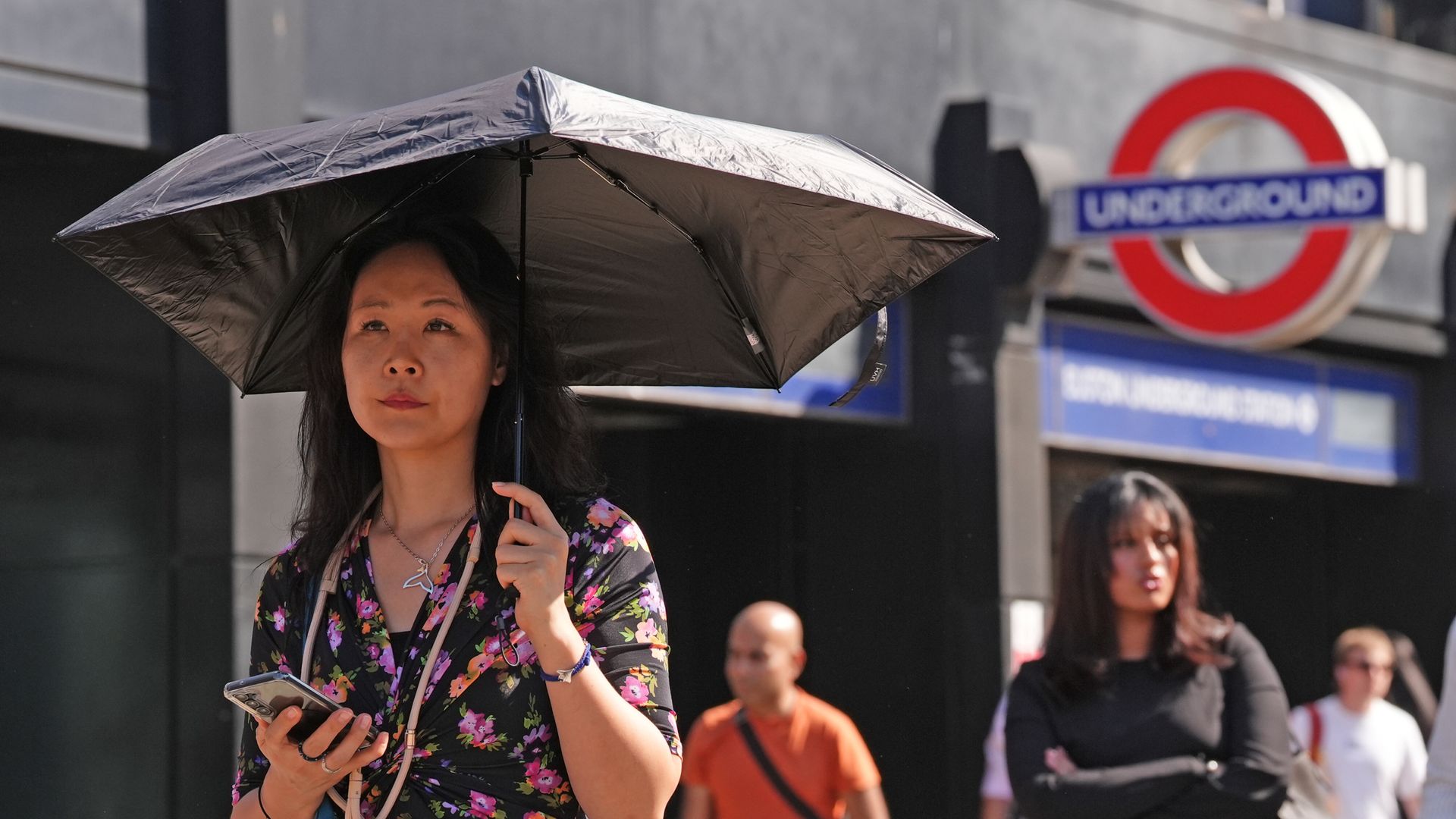
'Unprecedented' climate change facing UK - with extreme temperatures here to stay
Sky News
ABC News
ScienceJul 15, 2026 · 1 min
Buyer drops nearly $72m on one of world's most complete T-rex skeletons
ABC News

The Punch
ScienceJul 15, 2026 · 1 min
Lagos plants 13,401 trees in six months
The Punch