CNA
Commentary: Gillman Barracks - can we rethink how the public participates in decisions on redevelopment?
Commentary
Public participation could start earlier while more planning options are open, rather than after studies have been completed, says NUS' Melissa Low.
New: You can now listen to articles.
This audio is generated by an AI tool.
15 Jul 2026 11:12AM
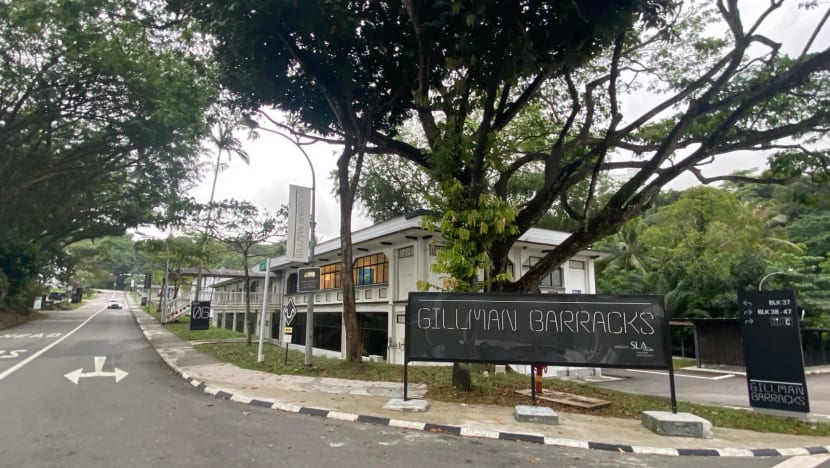
SINGAPORE: In March 2025, shortly after moving to Telok Blangah, one of the first places I explored was Gillman Barracks with my dog, Muffin.
Like many residents, I came to appreciate its quiet roads, mature trees, heritage buildings and proximity to nature. It quickly became part of my weekly routine – a place to exercise, reflect and escape the pace of city life.
When plans to redevelop Gillman Barracks for public housing were confirmed last week following environmental and heritage studies by the Housing and Development Board (HDB), I felt a sense of loss. But after reading the studies, I realised my concern was no longer only about Gillman Barracks.
It had become a broader question about how Singapore planners make decisions on green spaces and culturally significant landmarks, and how the public participates in those decisions.
HOW DO STUDY FINDINGS FACTOR INTO PLANNING DECISIONS?
Singapore has made significant progress over the past decade in studying the value of such places. Environmental impact assessments are increasingly commissioned for complex developments, while heritage impact assessments help planners better understand the significance of historic sites before redevelopment.
There is growing recognition that planning should be informed by scientific evidence, cultural history and long-term sustainability.
Yet Gillman Barracks also illustrates the next challenge. The environmental impact assessment found that the area is home to several species of conservation significance, while the heritage impact assessment concluded that the site is a rare and well-preserved example of colonial military planning.
These findings are valuable and will guide HDB’s plans in minimising the environmental impact of development works and retaining historically significant buildings. But how were the study findings weighed in arriving at the decision to redevelop the site?
Residents and businesses naturally want to know how environmental and heritage values were balanced against housing needs, whether alternative options were considered and why the current proposal was preferred. These questions are difficult to answer from the reports alone.
THE POTENTIAL TO INFLUENCE OUTCOMES
HDB deserves acknowledgement for engaging environmental and heritage stakeholders during the preparation of the studies. Expert input undoubtedly strengthens planning decisions.
However, many residents whom I spoke to only became aware of the redevelopment recently, though it was first floated in March 2024. They now have four weeks to review hundreds of pages of highly technical reports and submit feedback online.
Public participation could start earlier while more planning options are open, rather than after studies have been completed.
Online feedback forms are useful for collecting submissions, but they are not a substitute for public dialogue. Community briefings, question-and-answer sessions and opportunities to engage directly with planners allow residents to better understand competing objectives and contribute more informed feedback.
What struck me most over the past week was not simply the disappointment expressed by residents, but the sense of resignation that accompanied it. Across conversations with neighbours, heritage advocates and members of the environmental community, I repeatedly heard a common sentiment: The principal planning direction appeared already to have been settled before public consultation began.
Whether or not this perception reflects the full reality of the planning process, it matters for the public’s confidence that their participation has the potential to influence outcomes.
BUILDING TRUST IN THE PLANNING PROCESS
When consultation is perceived as occurring only after key decisions have effectively been made, participation risks becoming an exercise in recording objections rather than shaping policy. Over time, this can discourage thoughtful civic participation and weaken public trust in the planning process.
Trust is built not simply by asking for feedback, but by demonstrating that feedback has been genuinely considered. Sometimes that may mean modifying a proposal. Other times, it may mean explaining clearly why a different course of action has been taken.
Either way, people are more likely to accept difficult decisions when they understand how their views informed the outcome.
During conversations following the Gillman Barracks announcement, I was struck by suggestions that residents should identify alternative uses for the site. However, identifying and evaluating realistic planning scenarios is ultimately the responsibility of planning agencies, which have access to environmental assessments, transport studies, demographic projections and broader land-use data that members of the public do not.
Meaningful participation should therefore not depend on residents producing fully developed master plans. Agencies could present several credible planning options, explain the trade-offs associated with each, and invite the public to discuss which balance of housing, conservation and heritage they believe best serves both present and future generations.
For example, alternatives might include concentrating development on previously disturbed parts of the site while retaining larger contiguous areas of native forest, and adapting heritage buildings for community and cultural purposes. Even if these alternatives are ultimately not adopted, explaining why they were considered – and why they were rejected – would strengthen public confidence in the planning process.
WHAT PLANNING EXCELLENCE MEANS
Singapore has earned international recognition for thoughtful urban planning. As our society becomes more educated, connected and invested in the places we live, planning excellence should be measured not only by the quality of the built environment, but also by the quality of the conversations that shape it.
Conducting environmental and heritage impact assessments represents a commitment to evidence-based planning, while publishing them is a step towards transparency.
The challenge now is ensuring that these studies do more than identify impacts. They should become the foundation for more transparent decision-making, meaningful dialogue and a planning process in which communities feel that their participation genuinely matters.
In a society where difficult trade-offs are increasingly inevitable, trust may become one of Singapore's most important planning resources. Meaningful public participation is not simply about improving individual projects – it is also about maintaining confidence in the decision-making process.
Melissa Low is Head of NUS Sustainability Academy and Research Fellow at the Centre for Nature-based Climate Solutions, National University of Singapore. The opinions expressed are those of the writer and do not represent the views and opinions of NUS.
Source: CNA/el
Related stories
CNA
WorldJul 15, 2026 · 1 min
Singapore laws must keep pace with technologies yet to be invented: Edwin Tong
CNA

Indian Express
WorldJul 15, 2026 · 1 min
Middle East teeters as US resumes naval blockade, swaps heavy strikes with Iran
Indian Express

TASS
WorldJul 15, 2026 · 1 min
Venezuela's acting president thanks Russia for humanitarian assistance
TASS

RNZ
WorldJul 15, 2026 · 1 min
Auckland bus driver assaulted in apparent road rage incident
RNZ