Indian Express
Senior citizen man clicks fake bank KYC link, loses Rs 45,000, wins Rs 55,000 compensation
4 min readNew DelhiJul 15, 2026 09:00 AM IST
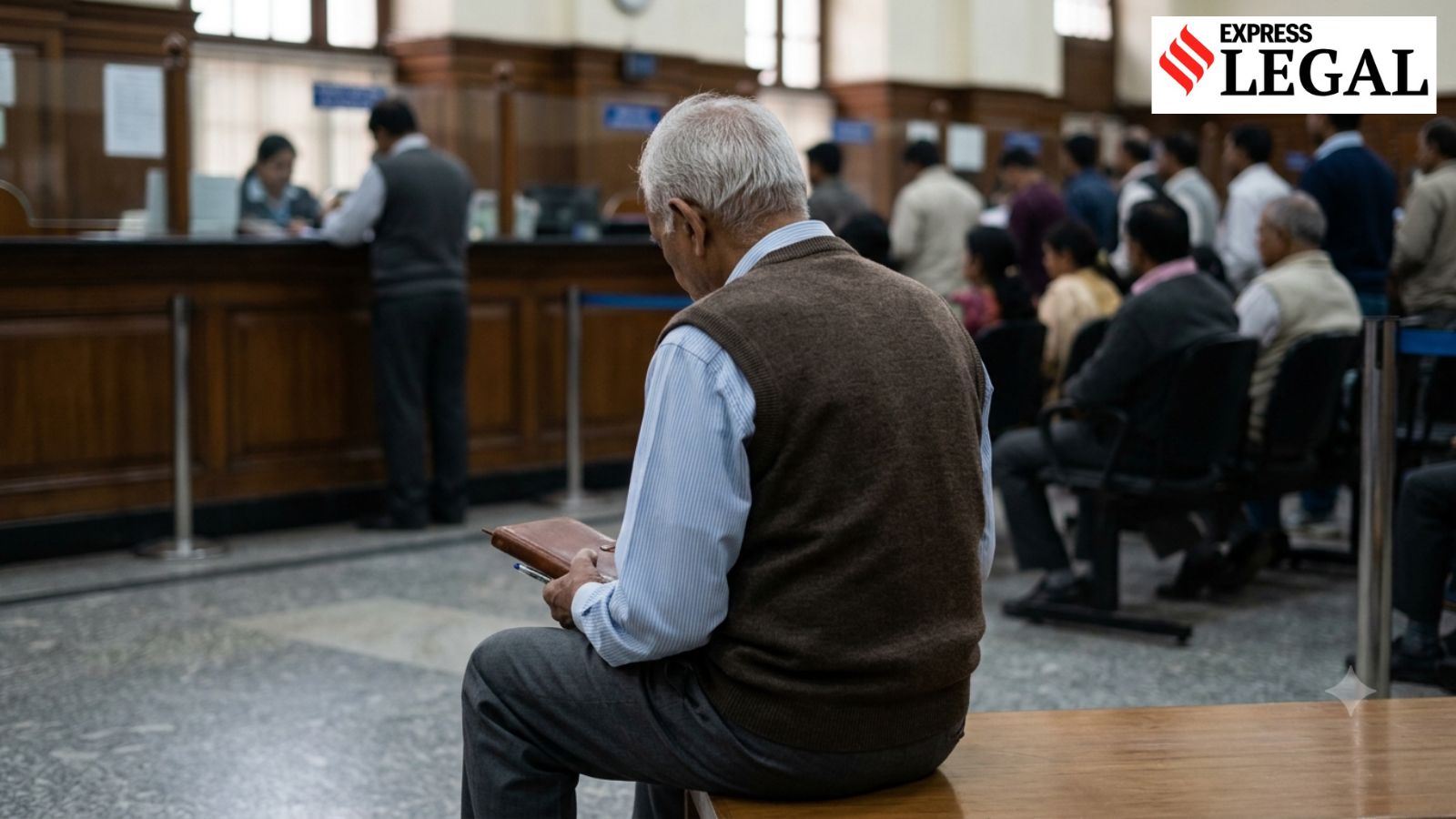
The Delhi Consumer Commission noted that the bank did not produce any evidence showing what steps it took to investigate the complaint. (Image generated using AI)
A senior citizen who lost Rs 45,000 after clicking a fake KYC link has won a Rs 55,000 consumer victory, with the Delhi State Consumer Commission holding State Bank of India (SBI) guilty of deficiency in service and ruling that the bank cannot escape liability unless it proves the customer’s negligence.
Delhi State Consumer Disputes Redressal Commission president Justice Sangita Dhingra Sehgal and member Bimla Kumari were hearing SBI’s appeal against a December 5, 2023 order of the district consumer commission challenging the direction to reimburse the customer for the unauthorised transactions and compensate him for the delay in resolving his complaint.
“The burden of proving the customer’s liability in case of unauthorised electronic banking transactions shall lie on the bank,” the commission said on July 9, noting that the SBI had failed to produce any evidence that the customer had shared his banking credentials or acted negligently.
The case arose from a cyber fraud reported by Delhi resident G Natarajan, a senior citizen who had maintained an SBI savings account since 2011. On July 12, he received an SMS asking him to complete his KYC formalities.
After clicking the link, Rs 20,000 was withdrawn through an ATM transaction in Jamshedpur and another Rs 25,000 was transferred from his account within minutes. Natarajan claimed he had never been issued an ATM card for the account and was in Delhi when the ATM withdrawal took place.
Complaint ignored
The commission noted that Natarajan reported the fraud to SBI on the very same day and immediately received a complaint acknowledgement. However, SBI failed to resolve the matter. More than seven months later, it asked him to visit his home branch with documents.
He submitted the prescribed claim form on April 7, 2022, but despite repeated follow-ups and even a legal notice, SBI neither reimbursed the money nor determined liability. He subsequently approached the district consumer commission, which on December 5, 2023, held SBI guilty of deficiency in service.
Story continues below this ad
It directed SBI to refund Rs 45,000 with seven per cent interest from July 12, 2021, besides paying Rs 10,000 towards mental agony and litigation expenses. The commission also ordered nine per cent interest on the entire amount in case of non-compliance within 30 days.
SBI blamed customer
Before the state commission, SBI argued that the district commission had misinterpreted the RBI’s July 6, 2017 circular on unauthorised electronic banking transactions.
The SBI contended that Natarajan had himself shared banking credentials with a third party and, being an advocate, should have exercised greater caution. It argued that the fraudulent transactions resulted from the customer’s own negligence.
No evidence against customer
Rejecting the appeal, the state commission said SBI had failed to produce any documentary evidence showing that the complainant had shared any password, PIN or one-time password (OTP).
“The Appellant has merely made a bald averment bereft of any cogent proof… thus no credence can be placed on the submission of the Appellant,” the commission said.
Referring to Clause 12 of the RBI’s July 6, 2017 circular, the bench reiterated that the burden of proving customer liability in unauthorised electronic banking transactions rests with the bank.
The commission also found that Natarajan had reported the fraud on the day it occurred, entitling him to protection under the RBI’s “zero liability” framework.
It noted that SBI neither determined customer liability within the prescribed 90-day period nor produced any evidence showing what steps it took to investigate the complaint.
“Despite lodging the complaint with the Appellant-bank… the Appellant-Bank failed to take any steps to resolve the complaint. Thus, the aforesaid conduct of the Appellant clearly amounts to deficiency in service as defined under the Consumer Protection Act,” the commission held.
Finding no infirmity in the district commission’s order, the state commission dismissed SBI‘s appeal and upheld the Rs 55,000 award, reinforcing that banks cannot avoid liability in phishing and digital banking fraud cases merely by alleging customer negligence without proving it.
Significance
The ruling reinforces that banks cannot deny compensation in cyber fraud cases merely by alleging customer negligence. It affirms that the burden of proving such negligence lies on the bank under RBI guidelines.
Story continues below this ad
For consumer-related grievances, individuals may contact the consumer helpline in their respective states or call the National Consumer Helpline at 1915 or 1800-11-4000 for assistance.
Vineet Upadhyay is an Assistant Editor with The Indian Express, where he leads specialized coverage of the Indian judicial system.
Expertise
Specialized Legal Authority: Vineet has spent the better part of his career analyzing the intricacies of the law. His expertise lies in "demystifying" judgments from the Supreme Court of India, various High Courts, and District Courts. His reporting covers a vast spectrum of legal issues, including:
Constitutional & Civil Rights: Reporting on landmark rulings regarding privacy, equality, and state accountability.
Criminal Justice & Enforcement: Detailed coverage of high-profile cases involving the Enforcement Directorate (ED), NIA, and POCSO matters.
Consumer Rights & Environmental Law: Authoritative pieces on medical negligence compensation, environmental protection (such as the "living person" status of rivers), and labor rights.
Over a Decade of Professional Experience: Prior to joining The Indian Express, he served as a Principal Correspondent/Legal Reporter for The Times of India and held significant roles at The New Indian Express. His tenure has seen him report from critical legal hubs, including Delhi and Uttarakhand. ... Read More
Tags:
consumer court
KYC
State Bank of India
View original source — Indian Express ↗
Related stories

Indian Express
WorldJul 15, 2026 · 1 min
Kerala Plus One Results 2026: When and where to check marks
Indian Express

Antara News
WorldJul 15, 2026 · 1 min
US DFC sees Indonesia as crucial Indo-Pacific supply chain partner
Antara News
ABC News
WorldJul 15, 2026 · 1 min
Intent questioned over boy who 'took a knife to a fist fight'
ABC News

Indian Express
WorldJul 15, 2026 · 1 min
Millie Bobby Brown’s anxiety hits in cycles, lasts months: ‘Something big needs to happen’
Indian Express