
Euronews
‘AI sovereignty doesn’t mean doing it alone’, says Microsoft's AI responsibility chief
The digital divide in artificial intelligence adoption between the Global North and Global South is widening, Microsoft’s chief responsible AI officer told Euronews Next.
“We cannot let the digital divide become an even greater AI divide,” warned Natasha Crampton, who is also a former member of the UN's High-Level Advisory Body on AI.
Speaking on the sidelines of last week’s UN AI for Good Summit in Geneva, she laid out a vision for bridging the gap.
Calls for AI sovereignty have swept the floors of tech conferences, particularly since the Trump administration forced Anthropic to exclude non-US citizens from using its most powerful AI models, Mythos and Fable, a month ago. The ban has since been partially reversed.
But for Crampton, AI sovereignty does not merely mean “local solutions in opposition to globally provided technologies”.
Instead, she said, “It’s about making sure that local impact, local cultures, values, and norms are prioritised in these systems, while taking advantage of global technology where possible."
To bridge the digital gap, she pointed to multilingual initiatives, such as the Lingua project in Europe, which has since expanded to Africa in partnership with the Gates Foundation. LINGUA Africa is a joint effort between Microsoft's AI for Good Lab, the Gates Foundation, Google.org and the Masakhane African Languages Hub.
The project aims to collect local-language data so foundational AI models can comprehend idiomatic phrasing and cultural nuances, ensuring communities have the autonomy and technical skills to control their own AI-driven futures.
Crampton also highlighted the importance of connecting to the private sector and government to ensure a safer AI that reaches everyone. The UN held its first Global Dialogue on AI Governance in early July, which aims to ensure that governance reflects the priorities of all nations and that the benefits of AI are shared by all.
“One really important thing to bed down in the course of the next year is really the connective tissue between these different mechanisms,” she said, referring to the new UN mechanisms, the dialogue on AI and the panel.
“Creating this connectivity between the different pieces of this infrastructure and understanding what everyone's unique role is so that we can make faster progress that's not sort of duplicative or redundant is, I think, one key objective for the year ahead,” she said.
One of the key examples of this connectivity is the “digital emblem,” a partnership between Microsoft, the International Committee of the Red Cross (ICRC) and the International Telecommunications Union, a UN agency.
The emblem aims to work as a legal shield to protect hospitals and aid workers from cyberattacks, as communication tools, logistics platforms, patient care systems and cloud and data centre infrastructure are increasingly under attack.
Microsoft is calling on governments to back the emblem in policy, on humanitarian and medical organisations to help shape its implementation against the operational reality, and on fellow technology companies to help build it into the tools and workflows defenders already use.
‘Being a good neighbour’
Addressing growing public backlash over the environmental and economic footprint of AI infrastructure, Crampton emphasised that Microsoft is shifting toward a "community-first" approach.
“We want to be good neighbours. We want to be good members of the community when we're building this infrastructure, and so we have been taking steps ahead of many other companies actually to offer a community-first set of commitments,” she said.
Rather than demanding traditional corporate tax breaks to build massive data centers, Microsoft is actively working to expand local tax bases to fund public services such as schools and infrastructure.
Crampton also said that the company is tightly managing resource consumption to prevent its heavy computing demands from driving up local household electricity rates or draining regional water supplies, utilising advanced technology such as closed-loop cooling systems.
What is Europe getting right?
As for Europe, she pointed to the European AI Office's efforts to connect with counterparts abroad, including AI safety and testing institutes in the United States, United Kingdom and Canada.
That kind of cross-border coordination, she highlighted, is essential given how quickly the science of AI testing and evaluation is evolving.
She also urged humility from regulators everywhere, noting that rules written a few years ago based on the best available information may need to adapt as the technology and understanding of its risks change.
Reducing the lag between what society expects, where the technology stands, and where regulation actually sits, she said, should be a shared priority.
“I do think that type of international connectivity, which I do see the AI office really investing in, is a really important thing to do because while we are rapidly maturing, the state of the art on testing science, having that international signal and being prepared to sort of mature an approach, given new information, given new techniques, is really important,” she said.
But she also urged flexibility from regulators, noting that rules written a few years ago based on the best available information may need to adapt as the technology and understanding of its risks change.
“We need regulatory regimes to adapt alongside and with that change and ideally reduce the lag that we sometimes see between what society expects of regulators, where the technology is at and where the regulation is sitting,” she said.
View original source — Euronews ↗
Related stories

South China Morning Post
TechnologyJul 15, 2026 · 1 min
Chinese in the driver’s seat? India-China reset hits a bump on Delhi’s streets
South China Morning Post

CNA
TechnologyJul 15, 2026 · 1 min
Shaw Theatres in Singapore will screen The Odyssey on 35mm film, only cinema in Southeast Asia to do so
CNA

AllAfrica
TechnologyJul 15, 2026 · 1 min
Nigeria: Nigeria Offers Clues to New US Africa Strategy
AllAfrica
Indian Express
TechnologyJul 15, 2026 · 1 min
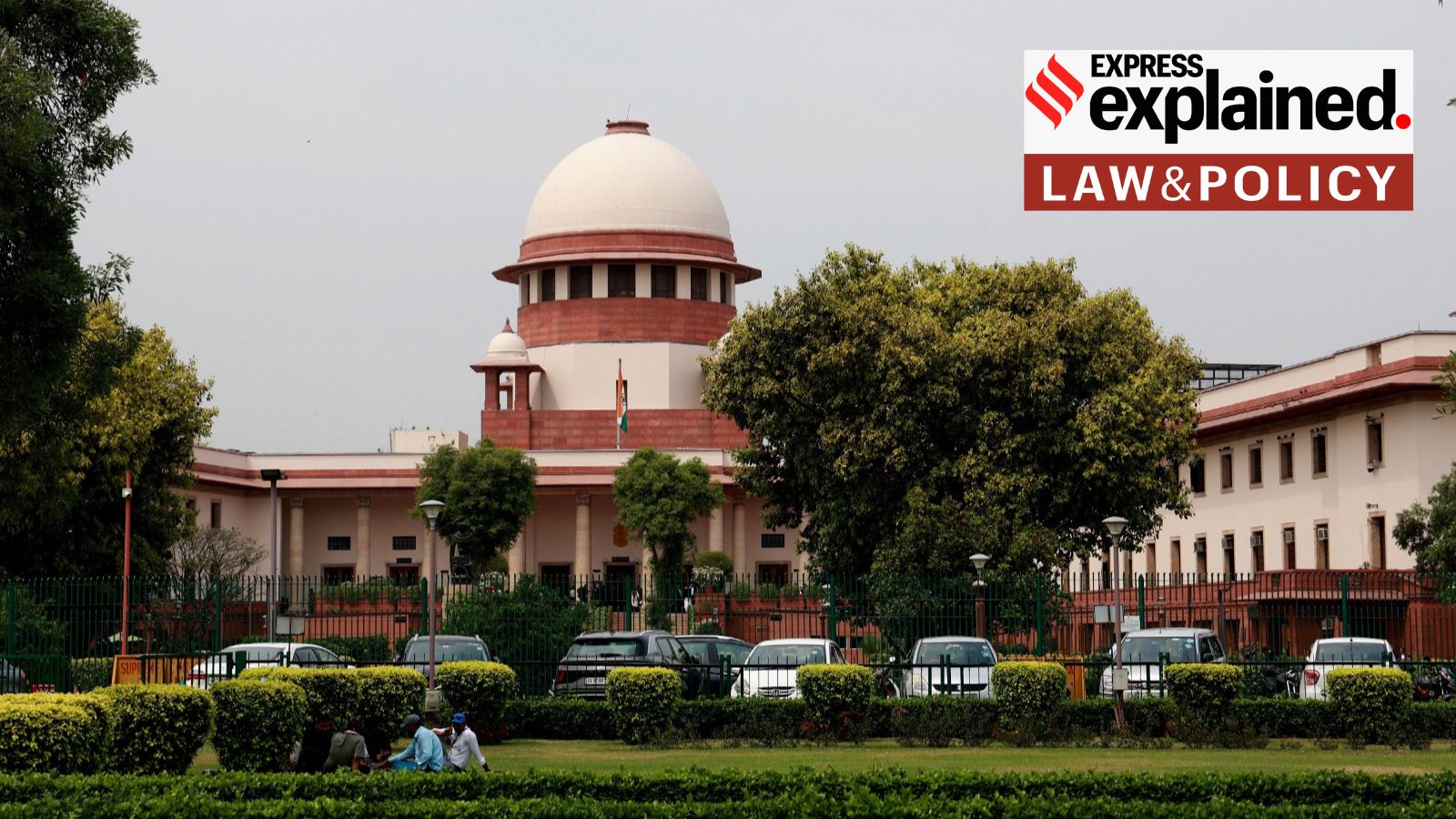
Rs 1.4 crore to 3 families of 2002 road accident victims: Why Supreme Court overturned lower court rulings
Indian Express