The Guardian
Even at 39, Lionel Messi can still hurt England with his sprinting ability
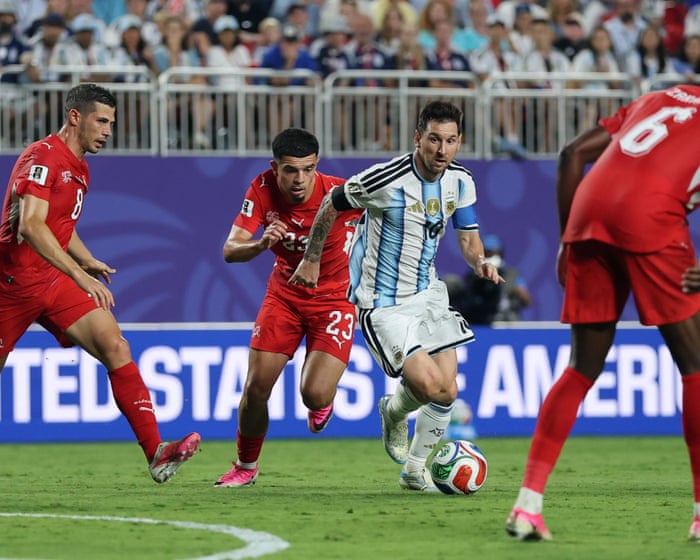
England’s defenders will face an extreme challenge when they come up against Lionel Messi in their World Cup semi-final. It is not just that he is the greatest player of all time but the almost unique way in which he plays.
The 39-year-old is renowned for ambling around for much of a game, saving his energy for when truly required. It makes him incredibly difficult to defend against. Messi finds pockets of space that appear harmless when the ball is not in his orbit, but he springs to life when an opportunity to produce presents itself.
It helps explain why no player at this tournament has ended their ball carries of at least five metres with as many shots and key passes combined. Messi has delivered 22 such moments through knowing exactly when to step up a gear.
Although he did not score or provide an open-play assist against Switzerland in the quarter-finals, running statistics from that group of matches provide a good snapshot of how Argentina’s captain differs from other elite attackers.
Fifa provides physical data for every World Cup match, divided into five categories based on speed of movement. Messi covered 6,655 metres at the lowest-speed setting of 0-7 kilometres an hour (km/h), further than any player on either side.
It represented 64.8% of his total distance. This proportion was way above the figures that Harry Kane (40.5%), Lamine Yamal (45.4%), Kylian Mbappé (52.6%) and Erling Haaland (55.7%) recorded in their matches.
However, far more of their movement was made in the speed categories covering 7 to 20 km/h. There was little difference between Messi and his peers for their percentage of running classified as a sprint by Fifa (at 20 km/h or more).
Although a similar proportion of sprinting as younger forwards looks impressive, Messi does not record as many in total. Yet the margin is not always huge. The veteran made the equivalent of 85 sprints per 90 minutes in the quarter-final, more than Haaland (74) and not too far adrift of Mbappé (97).
And when Messi hits top speed, he can still go at a decent pace. Data on Sofascore shows his top sprint at this World Cup was 30.9 km/h. That is faster than any run Lautaro Martínez (30.5) or Alexis Mac Allister (30.2) has made for Argentina, despite their being more than a decade younger. It is not far behind the best Kane (31.4) or Jude Bellingham (31.1) have offered either.
A positive for England is that their top speed was recorded by Nico O’Reilly (35.6 km/h), one of the players likely tasked with keeping Argentina’s talisman at bay. But being fleet of foot isn’t the only challenge. Monitoring Messi and judging when best to move are much harder tasks.
View original source — The Guardian ↗
Related stories

ESPN
SportsJul 15, 2026 · 1 min
Transfer rumors, news: USMNT striker Balogun on Ju...
ESPN

Philippine Daily Inquirer
SportsJul 15, 2026 · 1 min
Cebu Greats set for pivotal home games against Biñan, Caloocan
Philippine Daily Inquirer

Euronews
SportsJul 15, 2026 · 1 min
FIFA adds Tom Cruise, Jennifer Hudson and Robbie Williams to World Cup closing ceremony
Euronews

CNA
SportsJul 15, 2026 · 1 min
‘Too sloppy technically’: France’s Mbappe rues defeat by Spain
CNA