Indian Express
Why this Gurgaon colony of 70,000 can’t install security barriers
Amit, a property dealer who has lived in Gurgaon’s Sushant Lok Extension for over two decades, stepped out earlier this year and found his car had been stolen.
Around the same time, a prominent public health doctor living in the neighbourhood reported that lakhs of rupees had been stolen from her home.
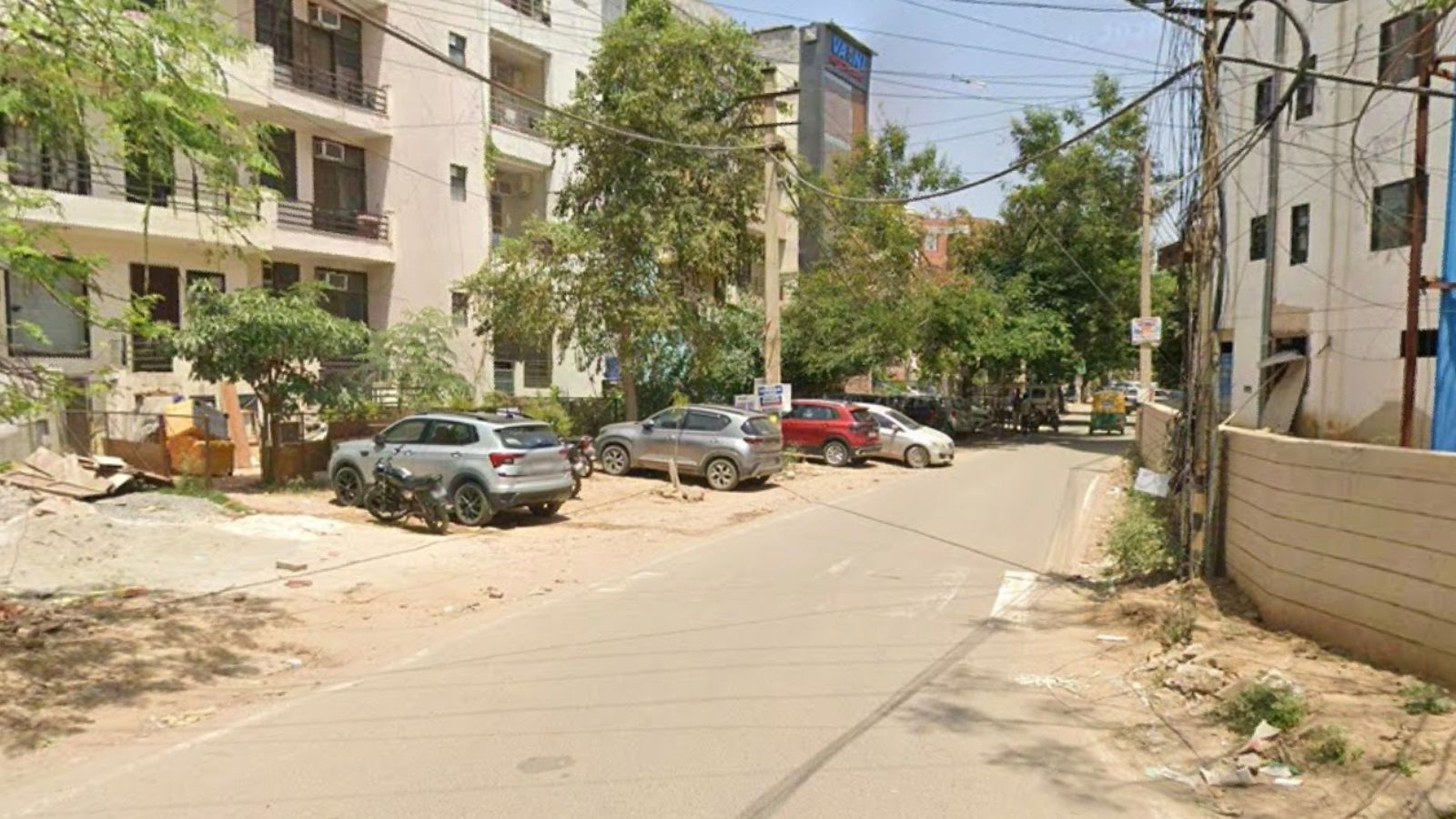
The thefts have heightened security concerns among 70,000 residents living across Sectors 56 and 57 in Sushant Lok-II and III, who have claimed that a policy anomaly has prevented them from installing manned security boom barriers to regulate entry.
“Some blocks have gates, but they are unmanned because there is no mechanism to pay guards. The arrangement is inconsistent across such a large colony,” Amit said.
The doctor, who also requested anonymity, said, “Ours is a large plotted colony, but boom barriers are not allowed, making it vulnerable to crime. We are surrounded by villages, so it is hard to verify who enters and exits.”
The Sushant Lok Extension Residents’ Welfare Association (SLERWA) has submitted a detailed representation to the Principal Secretary, Town and Country Planning Department (DTCP) in the Haryana government, urging it to resolve what it calls a deadlock stemming from the state’s 2014 policy governing security gates in licensed colonies.
The colony, comprising builders floors and plotted bungalows, was developed by Ansal Buildwell Ltd in the early 2000s. The Municipal Corporation of Gurugram (MCG) took over its maintenance from the developer in June 2022, residents said.
Story continues below this ad
Residents alleged that the private security system in place earlier gradually ceased after the handover, leaving internal roads without regulated access.
At B Block of Sushant Lok Phase III. (Express Photo)
Why the barriers cannot be installed
The dispute centres on the 2014 policy.
Under the guidelines, security gates can be installed only at the boundary of a colony or at the junction where a sector-dividing road or a 24-metre-wide internal sector road meets internal colony roads. Gates are prohibited on sector-dividing roads and 24-metre inner roads to ensure uninterrupted traffic movement.
However, SLERWA President Pawan Yadav, in the representation, pointed out that Sushant Lok-II and III were designed differently.
Story continues below this ad
“The approved layout does not have a single 24-metre-wide internal road. Instead, the colony’s principal circulation network relies on 18-meter-wide internal roads, which branch out into 12-meter and 9/10-meter residential lanes.”
“Since the policy specifically mentions 24-metre roads, local administrative committees feel legally constrained to process applications for colonies designed with 18-metre principal roads. That effectively deprives older colonies like ours of security infrastructure,” he told The Indian Express.
As a result, the RWA is among the rare ones that does not charge any maintenance to its residents. “Who will pay when even security and guards are not being provided?” Yadav said.
‘We will bear the cost’
The association has also written to the Gurugram Deputy Commissioner, Police Commissioner, Senior Town Planner and District Town Planners, alleging a rise in thefts, unauthorised vehicular movement and suspicious activity around parks frequented by senior citizens and children.
Story continues below this ad
According to the representation, Blocks A to H of Sushant Lok-III house around 4,000 families, while another cluster comprising Blocks B and C has nearly 1,500 families.
The RWA claimed the colony’s proximity to “commercial malls, multi-religious spaces, and pockets populated by unverified immigrants” has added to concerns.
It also said recent incidents involving gunfire have been reported in surrounding areas and pointed to the absence of a dedicated police station for Sector 57 despite the area’s growing population.
To secure the area, the RWA has submitted detailed blueprints identifying 34 junction points in Blocks A through H, and 11 points in Blocks B and C, where internal lanes meet the wider MCG or Gurugram Metropolitan Development Authority (GMDA) roads.
Story continues below this ad
Residents, in the representation, have assured the government that they will bear the entire cost of constructing the barriers, guard rooms and deploying trained security personnel 24×7, in accordance with the 2014 policy, which permits only manned boom barriers.
Residents have requested that the Principal Secretary either grant approval for the installation of manned boom barriers at the junctions of 18-meter-wide internal roads or issue an official policy clarification.
Official speak
When contacted, Haryana Director of Town & Country Planning Amit Khatri said the policy makes it the prerogative of the local administration for allowing security gates and boom barriers on roads less than 24m. “At the headquarters, we only monitor compliance-related issues, if any. Such relaxations are given when residents point to law and order issues, after due vetting by the Deputy Commissioner,” he said.
Senior Town Planner of the Department for Gurgaon, Renuka Singh, said she had marked the representation to the Deputy Commissioner: “The policy, otherwise, does not allow such installations unless permission is given by a Deputy Commissioner-led committee after following due process.”
Story continues below this ad
The Indian Express has reached out to the Gurgaon Deputy Commissioner as well for the status of the representations; a comment is awaited.
View original source — Indian Express ↗
Related stories

The Punch
WorldJul 15, 2026 · 1 min
Kwara cracks down on illegal roadblocks, fee collection
The Punch
The Punch
WorldJul 15, 2026 · 1 min
We’ll report ‘fake’ DG’s arrest to Trump gov’t – Atiku-linked US firm
The Punch
The Punch
WorldJul 15, 2026 · 1 min
Nigerian priest in US dies by suicide after order to return home
The Punch

Philippine Daily Inquirer
WorldJul 15, 2026 · 1 min
Cesafi adds pickleball, to stage petanque as demo event
Philippine Daily Inquirer