Times of Israel
Report: Trump’s former ‘digital guru’ leading Israeli influence campaign targeting MAGA
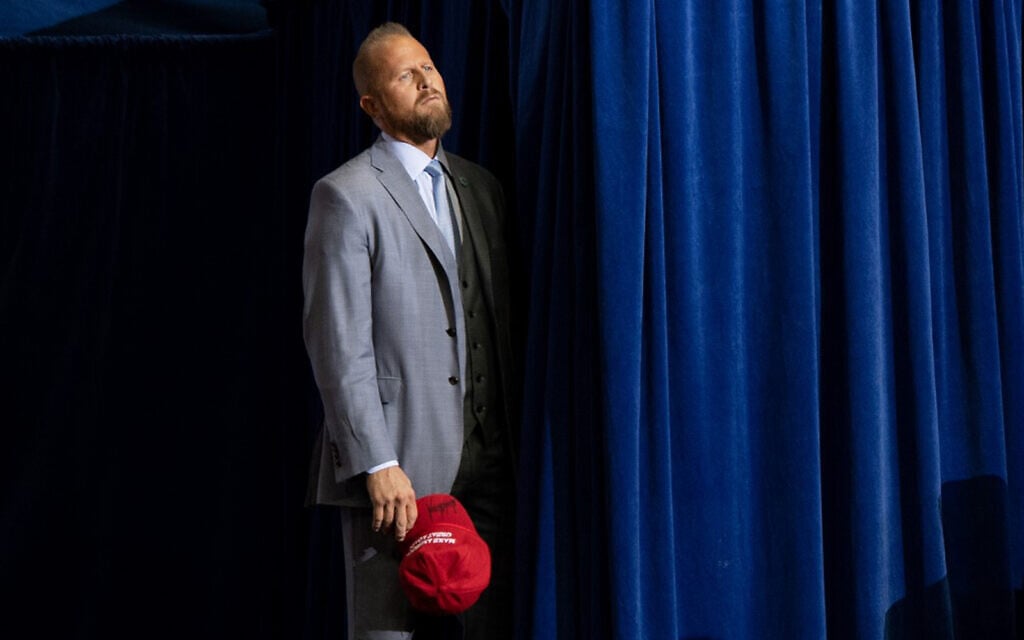
US President Donald Trump’s former campaign manager has been leading a pro-Israel influence campaign directed and funded by the Israeli government, targeting young Americans within Trump’s MAGA base, according to a Tuesday report in Time magazine.
According to the outlet, Brad Parscale, whom it described as “Trump’s former presidential campaign manager and digital guru,” and his company, Clock Tower X, were tapped last September by an ad agency to conduct an influence campaign on behalf of Israel. Time cited the US Foreign Agents Registration Act (FARA) filings in its report.
Parscale was tasked with uploading 100 pieces of original content monthly, the majority of which was to target younger audiences on social media platforms TikTok, YouTube, and Instagram, as well as podcasts.
Officially, the influence campaign was aimed at tackling rising antisemitism online, though the report cited an Israeli Foreign Ministry official familiar with the campaign as saying its real goal was to “preventing young conservatives from turning against Israel.”
Quoting three people familiar with the campaign, Time said the operation was conducted through a series of interconnected media and PR firms run by Parscale, and pushed conservative influencers to use specific language for posts relating to Israel on social media.
Get The Times of Israel's Daily Edition
by email and never miss our top stories
By signing up, you agree to the terms
Parscale, who sold himself as “uniquely positioned” to combat anti-Israel sentiment among young right-wing audiences, promised to utilize his connections to the conservative social media and podcast ecosystem to amplify Israel’s message. The effort came as public opinion of the Jewish state has plummeted in the US, especially among younger demographics, largely due to the US-Israeli war with Iran and Israel’s wars in Gaza and Lebanon.
Admitting that the goal of the campaign is to stop young Americans from turning against Israel, Parscale pushed back on the idea that doing so would go against the US administration or its objectives. He cited in particular the memorandum of understanding signed between Iran and the US last month, which was meant to end hostilities and which Israel expressed major qualms about, arguing that it left most of its war aims unanswered.
“I have never funded, organized, or participated in any effort to undermine President Trump — ever — including his MOU or ceasefire proposal,” Parscale told Time. “The claim that I am coordinating an effort to prolong the war is completely false. The only people manufacturing a conflict between President Trump, Israel, and me are anonymous officials using background quotes to make me the bogeyman.”
He also insisted that none of the FARA-registered funds, which were supplied by Israel, were used to pay out influencers, saying that doing so would require the posters to disclose the source of the money publicly.
The report said the amount of payment offered to these influencers was unclear, though it suggested compensation could be similar to other social media campaigns, where users were offered “a base payment of $2,250, plus $1 for every 1,000 views, up to 2 million views — allowing influencers to earn as much as $4,250 per post.”
One influencer singled out in the report was Eyal Yakoby, a young US Jewish conservative influencer with over 300,000 followers on X, who it said began working with Parscale’s Influenceable firm sometime last year. Yakoby, who admitted to receiving funds from the company, said he did not get paid to promote anything he did not already believe.
“Eyal Yakoby has worked with Influenceable as a paid influencer but never on behalf of the Israeli government,” said a executive at the firm, insisting that foreign money never went directly to the influencers.
Yakoby declined to comment further on the report.
While Parscale’s campaign is still ongoing, neither the US nor Israel are pleased with its results, the report said, as recent polling shows tanking support for Israel within America, especially among young people.
“We are pissed at Brad Parscale,” an Israeli official familiar with the arrangement told Time, speaking on condition of anonymity. “He was supposed to make things better. We have paid him lots of money. But what did he do with it? Things have only gotten worse.”
The US was irate for a different reason, with a senior intelligence official telling the magazine that the campaign ended up being more about changing US policy toward Iran amid negotiations that Israel was displeased with.
“We’re talking about American influencers who are being paid by a foreign country, then trying to build momentum to change the President’s view, or the views of others around him,” the anonymous US official said. “It can’t be dismissed as inconsequential by any means.”
But the former Trump media guru pushed back, saying: “The purpose of this campaign was to prevent the enemies of Israel and the West from driving a wedge between Israel and the Americans who have traditionally supported it — particularly on the political right — as they have already succeeded in doing among significant portions of the left.”
Parscale also insisted that much of the pro-Israel content on social media was organic, and not controlled by any state-funded influence campaign.
“The idea that every pro-Israel voice must be part of some coordinated campaign is ridiculous,” he said. “These are people who already support President Trump and already believe Israel is a vital American ally. Suggesting I have to pay them to express those views is like suggesting I have to pay the sun to rise. Their support existed long before this campaign, and it does not depend on me.”
Prime Minister Benjamin Netanyahu’s office did not comment on the report. A White House spokesperson said it was unaware of any such campaign.
View original source — Times of Israel ↗
Related stories

The Punch
PoliticsJul 15, 2026 · 1 min
FHC amends 2026 pre-election rules, approves virtual hearings
The Punch
The Punch
PoliticsJul 15, 2026 · 1 min
God rewarded Remi Tinubu’s Senate punctuality with First Lady role – Barau
The Punch
The Punch
PoliticsJul 15, 2026 · 1 min
INEC seeks better funding, staff welfare ahead of 2027 elections
The Punch

Portugal Resident
PoliticsJul 15, 2026 · 1 min
Marking deadline extended by another 24-hours, but government plays down “fuss” over national exams
Portugal Resident