Indian Express
Why Delhi High Court lawyers are on strike over the proposed Rs 10 crore district courts jurisdiction
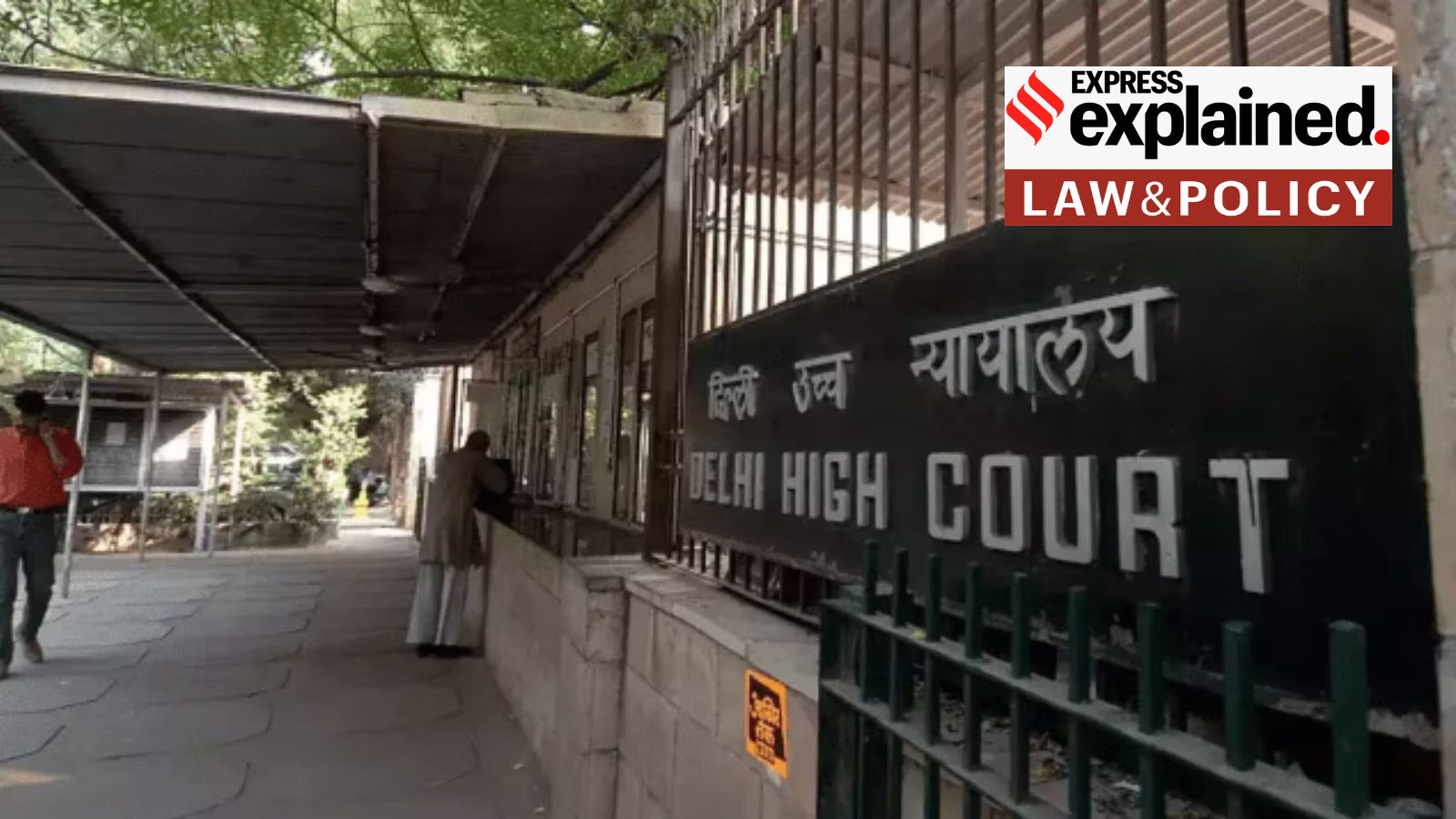
Lawyers at the Delhi High Court have abstained from work since Tuesday (July 14), protesting a move that could change in which courts civil suits are fought in the capital city. At the heart of this turf war between the High Court bar and the district courts bar is a proposal to increase the “pecuniary jurisdiction” of Delhi’s district courts.
Pecuniary jurisdiction refers to the monetary value of cases a court is legally empowered to hear. Currently, civil disputes valued up to Rs 2 crore are heard by district courts in Delhi. Any civil suit valued above that amount goes directly to the Delhi High Court.
The Delhi High Court is one of the few high courts in India with an “original side”, meaning it acts as a trial court for high-value civil suits, not solely as an appellate court hearing appeals against lower court orders.
How did the dispute start?
The conflict began in May 2025 when the Coordination Committee of All District Courts Bar Associations of Delhi wrote to the Union Law Minister, seeking an increase in the pecuniary jurisdiction of the city’s district courts from Rs 2 crore to Rs 20 crore. A copy of this representation was marked to the Chief Justice of the Delhi High Court.
Taking note of the letter, the High Court constituted a committee of senior judges to examine the issue. After consulting stakeholders, this committee last week recommended increasing the district courts’ limit to Rs 10 crore.
Why is the High Court Bar up in arms?
The Delhi High Court Bar Association (DHCBA) opposed this recommendation, passing a resolution to strike on Monday. The resolution stated that the proposed enhancement would have ‘far-reaching ramifications on the justice delivery system” and would “substantially affect the practice, livelihood and professional interests” of its members. The DHCBA noted that the move would reduce the High Court’s original side cases by nearly 70%.
Rakesh Tiku, a senior advocate and executive member of the DHCBA, explained the practical impact on lawyers. “Statistically, there are almost 12,000-plus cases on the original side. If what is proposed is to send the cases involving till Rs 10 crore, almost 80% of the work will go to the district courts,” he told The Indian Express. Tiku added that lawyers who have spent decades building their base at the High Court will be adversely affected, as future cases will also be filed in the lower courts.
Story continues below this ad
The DHCBA also raised procedural objections, primarily that the High Court bar was sidelined in the decision-making process. Kunal Malhotra, Joint Secretary of the DHCBA, argued that the committee was formed and proceeded to make recommendations “without hearing us and without providing us the materials” for arriving at its decision.
He pointed out that the district bar’s original letter was addressed to the Law Ministry, not the Chief Justice, questioning how the High Court could act on its own to form a committee without a directive from the government. “One stakeholder cannot give a recommendation against the other stakeholders,” Malhotra said.
He highlighted the practical challenges of transferring complex litigation, particularly intellectual property matters, which the High Court specialises in. “The moment those cases will be flooded over there [district courts], what will be the fate of those cases?”
He said that cases would be “languishing” in district courts for years, pointing out that district courts currently lack the infrastructure to handle them.
What is the District Bar’s counter-argument?
Story continues below this ad
District court lawyers argue that the shift is necessary for the benefit of litigants and for the decentralisation of justice.
Nagendra Kumar, President of the New Delhi Bar Association and spokesperson for the district courts’ coordination committee, dismissed the DHCBA’s concerns as being rooted in financial self-interest. “Is the justice delivery system meant for the benefit or loss of advocates? It’s the litigants who are the prime stakeholders,” Kumar said.
He pointed out that property prices in Delhi have skyrocketed, making the Rs 2 crore limit obsolete. “Today, Rs 2 crore is very minuscule. Even [the prices of] 2 BHK, 3 BHK flats are starting from Rs 3 to 5 crores. So even for a small dispute, everybody needs to go to the High Court,” he explained.
He also argued that district courts offer speedier justice. According to him, civil judges in district courts handle fewer cases per day than the High Court’s original side, allowing for faster disposal and lower litigation costs for the common man. This, he said, provided for “justice at the doorstep.”
What has the High Court said?
Story continues below this ad
The DHCBA had approached the High Court on the judicial side, seeking an interim stay to prevent the committee’s report from being placed before the full court.
The court declined the request. In its order on Friday, a bench of Justices Anil Kshetarpal and Tejas Karia observed that the power to amend the Delhi High Court Act, 1966 – which governs pecuniary jurisdiction – vests exclusively with Parliament. The court noted that the committee was merely an internal mechanism to assist the full court and its recommendations “do not possess any binding legislative force.”
The bench stated that no legal prejudice is caused to the petitioners merely because the full court considers the report, as any actual change in jurisdiction would require parliamentary legislation.
View original source — Indian Express ↗
Related stories

TechRadar
TechnologyJul 15, 2026 · 1 min
The Mandalorian and Grogu's digital release date has been revealed
TechRadar

Wired
TechnologyJul 15, 2026 · 1 min
The Explosive Diarrhea Outbreak Is About to Get Much Bigger
Wired

TechRadar
TechnologyJul 15, 2026 · 1 min
'SMBs need to move from disconnected pilots to true alignment'
TechRadar

Philippine Daily Inquirer
TechnologyJul 15, 2026 · 1 min
Director Adolf Alix Jr. recovering after being hit by car
Philippine Daily Inquirer