Indian Express
Supreme Court considers SOP to hear urgent life and liberty cases after working hours
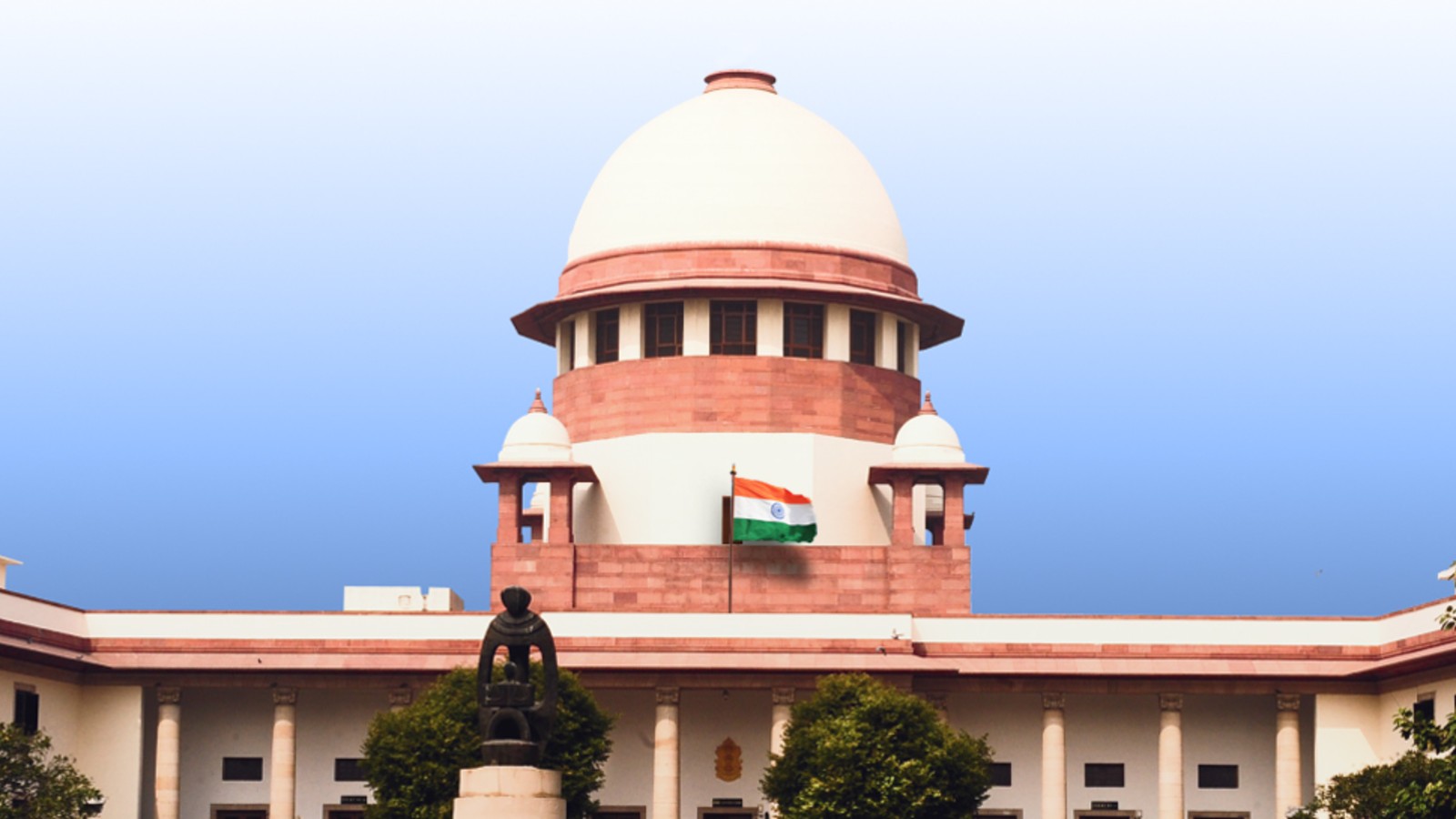
The Supreme Court Tuesday agreed to consider implementing a Standard Operating Procedure (SOP) to facilitate access to constitutional courts during off-duty hours in urgent matters involving questions of life and personal liberty.
A three-judge bench, presided over by Chief Justice of India Surya Kant, issued notice on a plea filed by Advocate Maheravish Rein, who said that, as of now, litigants find it difficult to access the courts at night.
“My grievance is if I am a poor man, I want to have access to justice, I can only access the legal aid committee during the day, not at night. I can access the court only during the day, not at night,” she told the bench also comprising Justices Joymalya Bagchi and V Mohana.
She referred to Article 32(4) of the Constitution which says, “The right guaranteed by this article (to move the Supreme Court for enforcement of fundamental rights) shall not be suspended except as otherwise provided for by this Constitution.”
She submitted that even in urgent matters, when applications are filed, litigants have to wait until the next morning for their cases to be heard.
The CJI said that, though it does not happen regularly, many a time lawyers file vague applications. “I don’t say it’s a regular practise, but sometimes vague applications are filed. How can such matters be listed on the same day?”, the CJI said.
Justice Bagchi pointed out that there have been instances when the Supreme Court has sat even at night, but counsel said this does not happen in every needy litigant’s case.
Story continues below this ad
Justice Bagchi said, “What you want is official hours and unofficial hours to become same, we do not agree to that.”
The judge added, “There is difference between access to justice during official hours. There is a difference and a different criterion proposed to access to justice beyond official hours. If that was not there, your case is made out of non-access. But a graded access to justice is not denial of justice.”
Call for a ground-level solution
Issuing notice to High Courts on the plea, the CJI asked the counsel to “give some concrete solutions, some SOP as to what is the procedure that can be followed after court hours which according to you will ensure access to justice.”
CJI Kant recalled that he had “earlier made a request to High Courts that you start working 24×7 like government hospitals. If I can make a request to High Courts, then why not SC (Supreme Court)? But tell us what the SOP is. Because mere announcement is not going to serve any purpose unless it is implemented at the ground level.”
Story continues below this ad
The counsel recounted a personal experience involving an interfaith couple who approached her at night. She said that the couple approached police, who sent off the woman with her parents and though she tried approaching courts, it did not work out.
The bench asked whether she was even unable to contact anyone in the court’s registry. The counsel said the person she contacted asked her to wait till morning.
Justice Bagchi said that it cannot be termed a lack of access to justice, but the officer concerned may have had a different assessment of the urgency of her plea. “There is one difference. It is a wrong decision, but it does not mean you did not have access. You had access. The assessment of urgency may have been different”.
He added that what can be done is to see if there can be an SOP “that if an urgent communication is made, the institution is duty-bound to respond within, say, 1 hour.”
Story continues below this ad
Safeguards against misuse
Solicitor General Tushar Mehta, who was present in court, said it would be better if the SC examined it on administrative grounds rather than asking the High Courts to do so at this stage.
Justice Bagchi said, “Our view is once the online filing and access is available, it can’t be said that the court’s doors are closed. There may be a differential response, expectation of a litigant and the assessment of the (request)”.
Mehta also flagged the scope for misuse of such SOP.
“Intentions are clear, but my worry is, suppose I move at 10.30 tomorrow (night) saying there is a meeting of CoC (Committee of Creditors) at 9 o clock (next morning) and therefore permit me to circulate the matter at 12 o clock midnight, it would be an urgency. It would be very difficult to bifurcate. Some SOP your lordships on the administrative side can devise.”
Story continues below this ad
Agreeing, Justice Bagchi said, “You are absolutely right. There are contrived situations of urgency. At midnight application is filed so that an ex-parte order can be obtained.”
The CJI also agreed that it is “capable of misuse”. “No doubt about it…. Perhaps the procedure can be confined only to matters pertaining to life and liberty.”
Mehta said, “Rather than bringing everything here, your lordships can, in a judicial order, ask HC’s to devise their own state-specific or High Court-specific SOP’s. It might be counter-productive, 30 lawyers coming and assisting.”
View original source — Indian Express ↗
Related stories

The Punch
WorldJul 15, 2026 · 1 min
Why Oyo kidnap rescue tactics can’t always work in North — Ex-DSS ADG
The Punch

CNA
WorldJul 15, 2026 · 1 min
GovTech cuts 93 jobs in ‘first phase’ of transition to new operating model
CNA
Indian Express
WorldJul 15, 2026 · 1 min
After performance review: Madhya Pradesh minister loses portfolio, CM takes over
Indian Express
The Punch
WorldJul 15, 2026 · 1 min
Police recover illegal gun, ammunition from A’Ibom residence
The Punch