Dawn
Lasting peace between Washington and Tehran is only possible through a new Hormuz framework
Pakistan’s recent diplomatic efforts for achieving sustainable peace in the deserve to be assessed not by whether they produced an immediate US-Iran agreement, but by what they strategically accomplished.
First, it helped create diplomatic space at a critical moment, reducing the risk of a disastrous regional escalation. Second, it contributed to bringing Washington and Tehran into direct high-level engagement after nearly five decades of estrangement, demonstrating that dialogue remained possible even amid military confrontation. Third, and perhaps most importantly, the process helped identify the real sticking point around which any future negotiations must ultimately be built.
Whenever tensions between the United States and Iran dominate international headlines, the debate almost invariably revolves around Iran’s nuclear programme. Yet, this focus often obscures the deeper strategic issue that has repeatedly frustrated diplomatic efforts. The nuclear file is important, but it is not the decisive obstacle.
In reality, the Strait of Hormuz remains the real sticking point in US–Iran negotiations.
The strategic importance of Hormuz
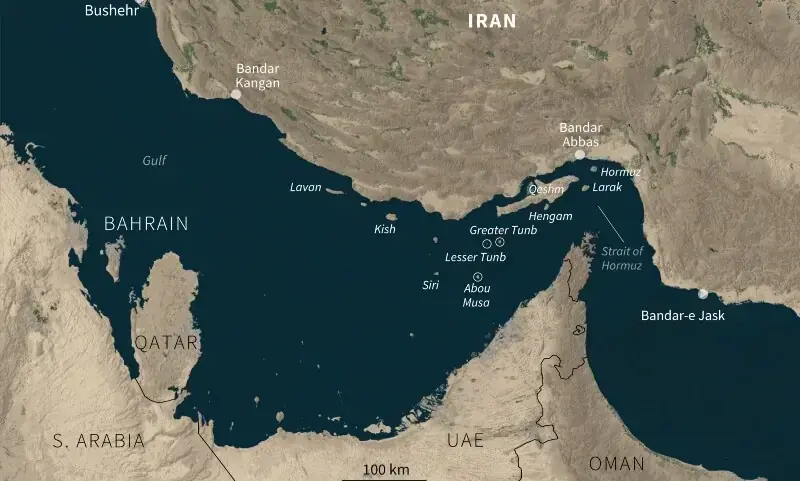
Hormuz is far more than a narrow maritime passage connecting the Persian Gulf with the Arabian Sea. It is one of the world’s most consequential geopolitical chokepoints and the strategic centre of gravity of Gulf security.
Nearly one-fifth of globally traded oil and a substantial share of liquefied natural gas exports pass through this waterway. Whoever shapes security in Hormuz inevitably influences global energy markets, regional deterrence and international diplomacy.
This explains why negotiations often stall once discussions move beyond sanctions relief and uranium enrichment to the broader question of maritime security.
For Washington, the objective is uninterrupted freedom of navigation under internationally accepted maritime law. The United States regards Hormuz as a global maritime common whose continuous operation is indispensable for international trade, energy security and economic stability.
At the same time, Washington must reassure its Gulf partners, many of whom remain deeply concerned about any security arrangement that could enhance Iranian dominance over the Strait. It is therefore unsurprising that maritime security has featured prominently in regional military consultations, including discussions involving the US Central Command and Gulf partners.
Iran views the Strait through an entirely different strategic lens. For Tehran, Hormuz is not merely a commercial shipping lane, it is its most significant conventional strategic deterrent.
While Iran cannot compete with the United States in terms of global military reach, geography provides it with a unique strategic advantage. Its position along the northern side of the Strait gives Tehran considerable leverage over one of the world’s most critical energy corridors. That geographic reality partially compensates for Iran’s conventional military limitations and serves as a powerful instrument of deterrence.
This creates the central contradiction in US-Iran relations. The United States seeks unrestricted navigation. Iran seeks recognition of its strategic leverage. Unless this contradiction is addressed, any diplomatic breakthrough will remain inherently fragile.
The distinction between the nuclear issue and Hormuz is also strategically important. The nuclear programme is fundamentally about national prestige, technological sovereignty and sanctions relief. Hormuz, by contrast, is about strategic influence, deterrence and global economic power. One shapes national security, the other shapes international markets. This explains why compromise on maritime security has proved considerably more difficult than future technical discussions on nuclear verification or sanctions.
The price of peace
In military strategy, a centre of gravity is the principal source of strength that provides freedom of action and strategic influence.
Today, Hormuz fulfils precisely that role in the Gulf. Whoever shapes its future security architecture will significantly influence regional stability for decades.
Consequently, the Strait has become the most valuable bargaining chip in any comprehensive US–Iran settlement. In many aspects, Hormuz has become the price of peace. Any agreement that addresses sanctions, nuclear enrichment and diplomatic normalisation while leaving the Strait’s security architecture unresolved merely postpones the next crisis.
Several Iranian strategic thinkers argue that the road to lasting peace does not end in Tehran; it passes through the Strait of Hormuz. Whether one agrees with this assessment or not, it accurately reflects an important strand of Iranian strategic thinking and therefore cannot be ignored by negotiators.
Recent military developments further reinforce this reality. Following attacks on commercial shipping and a series of maritime incidents linked to the Strait, the United States launched strikes against Iranian military assets. These actions pursued multiple strategic objectives, restoring confidence in freedom of navigation, re-establishing deterrence against attacks on commercial shipping, reassuring regional allies, preserving the credibility of the international maritime order and preventing any perception that Hormuz could become an unrestricted instrument of coercion.
From Tehran’s perspective, however, these same actions reinforced long-standing suspicions that international efforts to regulate maritime security are ultimately intended to erode Iran’s principal source of strategic leverage. Many Iranian policymakers therefore view proposals for permanent multinational security arrangements in the Strait with considerable skepticism. Whether justified or not, this perception profoundly influences Iranian decision-making and complicates diplomatic progress.
Another important dimension is Iran’s internal political landscape. Some analysts contend that not every maritime incident necessarily reflects decisions taken by Iran’s highest political leadership. Instead, they argue that elements opposed to diplomatic engagement may have sought to undermine negotiations through calibrated escalation. Although this remains an analytical assessment rather than an established fact, it illustrates the complexity of policymaking within Iran and the challenges confronting negotiators.
The way forward
Despite periodic military escalation, diplomatic channels have never been completely severed. Regional mediators, including Pakistan, Qatar, Turkiye, Egypt and Saudi Arabia, have continued to facilitate communication between Washington and Tehran, recognising that diplomacy often survives even when public rhetoric suggests otherwise. History repeatedly demonstrates that negotiations frequently continue alongside military pressure rather than after it.
Several strategic conclusions emerge from this assessment:
Hormuz is not a secondary issue, it is the strategic core of US-Iran tensions. While the nuclear programme dominates headlines, the Strait ultimately shapes deterrence, escalation and long-term regional stability.
The United States and Iran fundamentally disagree on the nature of Hormuz itself. Washington views it as a global maritime common, while Tehran sees it as a vital component of its national deterrence strategy.
No durable agreement will succeed without a credible maritime security framework. A ceasefire may suspend hostilities, but it cannot eliminate the underlying strategic competition.
Instability in Hormuz immediately extends beyond the Gulf, affecting energy prices, shipping costs, insurance premiums, international trade and diplomatic calculations worldwide.
Ultimately, the central question is not simply about freedom of navigation. It is about who defines security in the Gulf.
Until both Washington and Tehran develop a mutually acceptable maritime security framework that safeguards international navigation while addressing legitimate regional security concerns, the Strait of Hormuz will remain the decisive sticking point in US–Iran relations.
Related stories

The Punch
PoliticsJul 15, 2026 · 1 min
Ex-Gombe SDP gov candidate defects to PDP, backs Pantami
The Punch

TASS
PoliticsJul 15, 2026 · 1 min
Russian troops advance northeast of Svyatogorsk in DPR — expert
TASS

The Guardian
PoliticsJul 15, 2026 · 1 min
Venezuela’s interim government and opposition to begin formal talks
The Guardian

BBC
PoliticsJul 15, 2026 · 1 min
Italy's Meloni suffers surprise setback in close vote on electoral reform
BBC