Indian Express
What’s at stake in Delhi Gymkhana land row? Nearly 500 decades-old trees
4 min readNew DelhiJul 15, 2026 04:35 PM IST
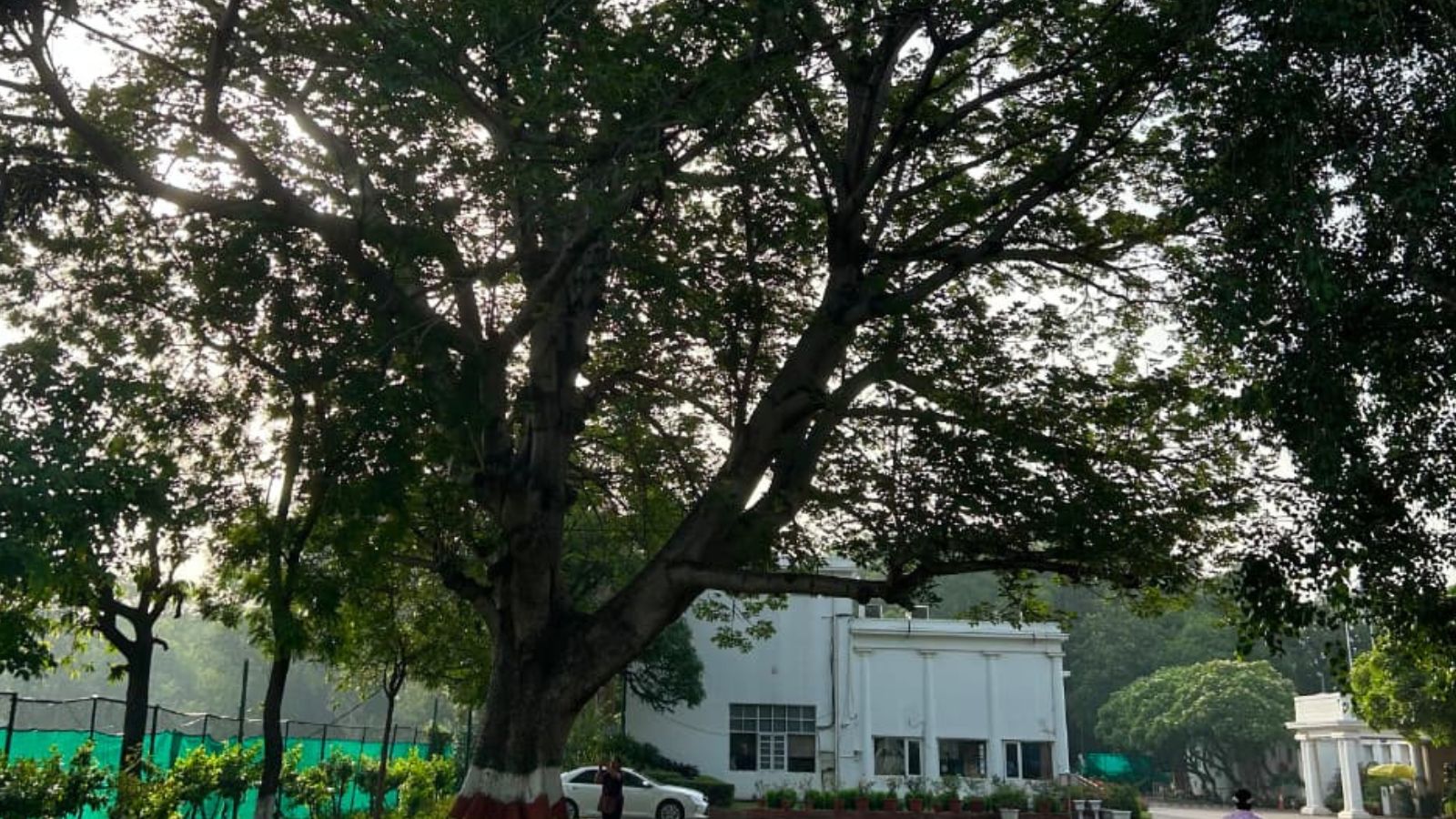
The survey was led by naturalist Vijay Dhasmana and environmentalist Dr Roli Shukla Thapar, along with citizen volunteers. (Express Photo)
As the Delhi High Court hears the dispute over the proposed takeover of the Delhi Gymkhana Club’s land, a new survey has documented 486 mature trees across 51 species — highlighting the ecological value of one of Central Delhi’s largest green spaces.
In June, a HC bench led by Justice Neena Bansal Krishna warned that the city would “suffocate” if heritage green spaces gave way to concrete and underscored the ecological value of preserving the campus. The Land and Development Office (L&DO) has initiated eviction proceedings against the Club, a move that is being challenged before the High Court.
Why only mature trees were counted
The survey was led by naturalist Vijay Dhasmana and environmentalist Dr Roli Shukla Thapar, along with citizen volunteers. The team documented only mature trees with a girth exceeding 50 cm — many of them decades old and individually geotagged for the first time — using field visits, species identification and GPS-based mapping to create a digital inventory.
The focus was on mature trees because, unlike younger trees, they absorb several times more carbon, provide deeper shade, support far greater biodiversity and take decades to replace if lost.
According to the survey team, nearly 100 younger trees, estimated to be 25-40 years old, as well as shrubs and other vegetation, were not included. This means the campus’s total vegetation cover is higher than the documented count.
Common species found
Putranjiva was the most abundant species, with 84 mature trees, followed by Neem (63), Royal Palm (44), Mango (35), Karanj (28), Mulberry or Toot (23) and Peepal (22). The campus also has 15 Jamun trees, 13 Vilayati Keekar, 12 Foxtail Palms and 10 Fishtail Palms.
Putranjiva was the most abundant species, with 84 mature trees, followed by Neem (63), Royal Palm (44), Mango (35). (Express Photo)
The survey identified exceptionally large specimens of Baheda, Semal and Holoptelea integrifolia that qualify as heritage trees — exceptionally old, large trees that provide high ecological benefits because of their age, size and expansive canopy.
Story continues below this ad
Delhi has increasingly begun documenting such trees as ecological assets. Earlier this year, the New Delhi Municipal Council (NDMC) identified 33 heritage trees across the Lutyens’ Bungalow Zone.
At the Club, the inventory also recorded several ecologically significant native species that support birds, bats and insects, including Banyan, Peepal, Pilkhan, Goolar, Baheda, Arjun, Bel, Semal, Kachnar, Dhak and Imli.
Among the exotic species documented were African Sausage Tree, Silky Oak, Chinese Fan Palm, Jacaranda, Tabebuia, Plumeria, Moulmein Rosewood and Chir Pine.
A thriving ecosystem
Ecologists associated with the survey said that unlike young plantations, decades-old trees store substantially more carbon, provide extensive canopy cover that cools surrounding areas, support birds, bats and insects, and help intercept rainwater.
Story continues below this ad
These ecosystem services, they said, cannot be recreated for decades if mature trees are lost.
The team documented only mature trees with a girth exceeding 50 cm — many of them decades old and individually geotagged for the first time. (Express Photo)
They pointed to how bird species like Black Drongo, Rose-ringed parakeet, Coppersmith barbet, red-vented bulbul and Common myna were found regularly engaging in nesting, seed dispersal and feeding within the campus.
Underscoring the importance of preserving green spaces, Delhi-based environmentalist Bhavreen Khandari said, “We’ve reached a point where every patch of green is seen as a development opportunity. That mindset must change. Open spaces are not idle spaces, they are working every single day for us.”
On the heritage trees, she said these “are natural cooling towers, biodiversity hubs, carbon stores, rainwater managers and silent protectors of public health. They deserve the same respect we give to roads, bridges and hospitals because they are equally essential urban infrastructure.”
Story continues below this ad
Dr Roli Thapar said the exercise changed the perception of those familiar with the campus. “One can see that Gymkhana is a green space, but the survey made one realise this more intently. We geotagged only the ‘big trees’ as part of the survey — there were almost 500 of them. If we counted all the trees, shrubs and plants, the number would be more than ten-fold. This greenery must be preserved.”
© The Indian Express Pvt Ltd
Sophiya Mathew is a Correspondent at The Indian Express, based in New Delhi. She joined the Delhi bureau in 2024, and has specialization in Integrated Multimedia Journalism from the Asian College of Journalism (ACJ), Chennai.
Professional Background
Core Beats: Her reporting is primarily focused on the Environment and Education.
Specialization: She has gained recognition for her ground-level reporting on the Yamuna floodplains and the socio-economic challenges faced by those living on its banks. She also focuses on the disparities in Delhi's education system, ranging from elite private schools to government institutions and refugee education.
Recent Notable Articles (December 2025)
Her recent work has been heavily centered on Delhi's severe winter pollution crisis and the government's regulatory responses:
1. The Air Pollution Crisis
"A tale of two cities: Delhi govt schools choke in bad air, private classrooms set up air filters" (Dec 20, 2025): A high-impact feature contrasting the "Clean Air Bubbles" in elite schools with the reality of government school students who are exposed to an equivalent of 17 cigarettes a day due to outdoor exposure.
"Delhi sees season's worst air day, second worst December AQI in nearly a decade" (Dec 15, 2025): An analytical report on the meteorological patterns trapping pollutants in the NCR.
"Delhi bans non-BS VI vehicles from outside: Why curbing vehicular pollution is key" (Dec 17, 2025): Explaining the science behind targeting specific vehicle vintages to lower particulate matter.
2. Enforcement & Regulations
"No fuel at pumps in Delhi without valid PUC certificate from December 18" (Dec 17, 2025): Breaking the news on the environment ministry's strict "No PUC, No Fuel" policy.
3. Education Policy
"Law to regulate school fee in Delhi risks becoming procedural, say parents" (Dec 13, 2025): Investigating the loopholes in the new Delhi School Education (Transparency in Fixation and Regulation of Fees) Bill, 2025.
"Monsoon Session: Private school fee regulation Bill cleared after four-hour debate" (Aug 9, 2025): Covering the legislative passage of the controversial fee hike regulation.
Signature Style
Sophiya is known for her observational depth. Her reporting often includes vivid details from school corridors, hospital waitlists, or the banks of the Yamuna to illustrate how policy failures affect the city's most vulnerable residents. She is a frequent expert guest on the 3 Things podcast, where she explains the complexities of Delhi’s environmental laws.
X (Twitter): @SophiyaMathew1 ... Read More
Stay updated with the latest - Click here to follow us on Instagram
Tags:
delhi
Delhi Gymkhana Club
Trees of Delhi
View original source — Indian Express ↗
Related stories

The Punch
WorldJul 15, 2026 · 1 min
VIDEO: Emi lokan slogan most absurd thing I’ve seen — Falz slams FG
The Punch
The Punch
WorldJul 15, 2026 · 1 min
Singer Bella Shmurda breaks down in tears, alleges $4m Lagos property scam
The Punch
The Punch
WorldJul 15, 2026 · 1 min
Ireland allows foreigners travel with expired residence cards until Aug 31
The Punch
The Punch
WorldJul 15, 2026 · 1 min
Arsenal agree terms with Besiktas for Trossard’s permanent transfer
The Punch