Indian Express
Supreme Court acquits woman 19 years after banker husband’s murder
4 min readNew DelhiUpdated: Jul 15, 2026 06:24 PM IST
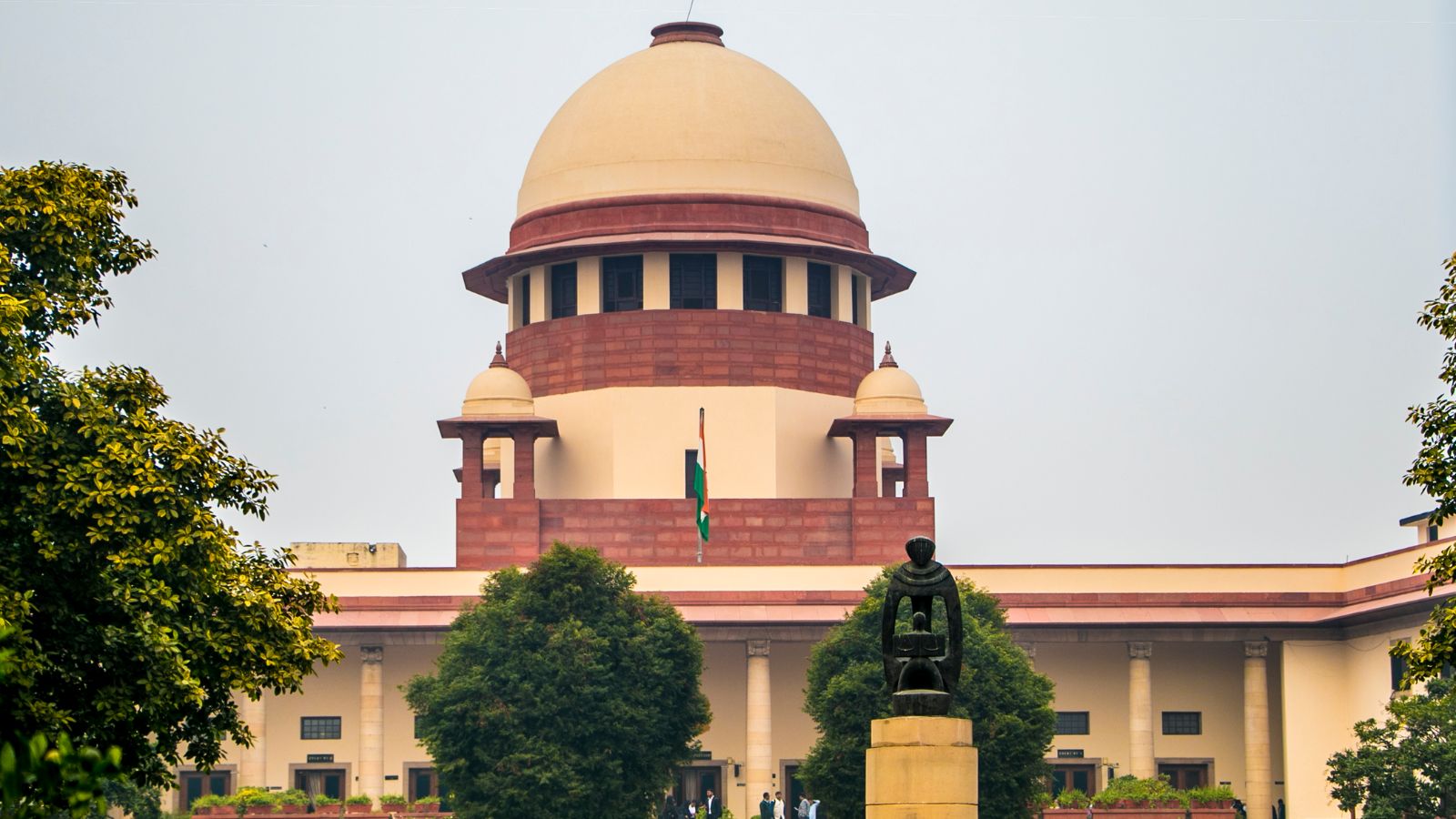
Supreme Court upholds women's acquittal 19 years after banker husband's murder. (Generated using AI)
Nineteen years after a woman was accused of murdering her banker husband, the Supreme Court has upheld her acquittal, flagging gaps in the prosecution’s attempt to prove a murder through circumstantial evidence.
The bench of Justice Sanjay Karol and Justice Prasanna B Varale dismissed the Maharashtra government’s appeals against a 2010 order of the Bombay High Court, acquitting Monika Kiran Suryawanshi and two co-accused of charges of murder and criminal conspiracy.
The court held that the prosecution failed to establish an unbroken chain of circumstances establishing the guilt of the accused. “The chain of circumstances is broken, and the hypothesis of guilt is not exclusively established,” the bench said while affirming the high court’s decision.
The case pertains to the death of Kiran Suryawanshi, an ICICI Bank employee, in February 2007 in Maharashtra’s Deopur. The prosecution argued that his wife, Monika, and neighbours, Prakash Nagraj Patil and Dnyaneshwar Mahale, plotted Kiran’s murder. According to the court’s order, the prosecution accused Monika of administering sedative tablets and injections to Kiran and then smashing his head with a grinding stone. His body was then wrapped in a plastic bag and bed sheet.
Prakash and Dnyaneshwar then allegedly tried to dispose of the body. A police constable stopped their motorcycle, after which the body was discovered.
The prosecution alleged that Monika and Prakash were in an extramarital relationship and cited this as the motive for the murder. Earlier, the sessions court convicted Monika, Prakash and Dnyaneshwar in 2008 and sentenced them to life imprisonment. The Bombay High Court, however, acquitted them of murder and conspiracy charges in 2010.
The Supreme Court found significant gaps in the prosecution’s narrative. On the alleged affair between Monika and Prakash, the court said witness testimony established at best “a one-sided infatuation” on the part of Prakash and did not prove that Monika reciprocated his feelings.
Story continues below this ad
“Mere production of telephone records does not substitute substantive proof of an illicit affair leading to murder,” the bench said, adding that the alleged motive was “inherently weak and insufficient to anchor a conviction for murder.”
The court also noted that call records contradicted the prosecution’s claim that Monika contacted Prakash on the night of the incident. On the evidence, the court said “total absence of any outgoing call” from Monika’s phone to Prakash’s and held that the allegations were “unsupported by the digital trail.”
The Supreme Court order also flagged some lapses in the handling of the forensic evidence, as articles that were allegedly recovered from Monika, like a grinding stone said to be the murder weapon, were not sealed at the time of seizure.
The court also held that this undermined the evidentiary value of other forensic reports. It also found it significant that no blood was detected on the mattress, bedsheet or pillow in the bedroom where the prosecution claimed the victim had been “bludgeoned to death”. “This physical impossibility speaks volumes and entirely contradicts the prosecution’s fundamental narrative that deceased Kiran Suryawanshi was brutally bludgeoned to death in his bed,” it said.
Story continues below this ad
Upholding the acquittal, the court affirmed the conviction of Prakash and Mahale under Section 201 of the Indian Penal Code for causing the disappearance of evidence, noting that they had been caught transporting the victim’s body on a motorcycle. Both had already undergone the 1-year sentence imposed for the offence.
View original source — Indian Express ↗
Related stories

The Punch
WorldJul 15, 2026 · 1 min
JUST IN: NCAA suspends pilots, grounds jet involved in Asaba road-landing incident
The Punch
The Punch
WorldJul 15, 2026 · 1 min
Delta CP warns security outfits against torture, unlawful detention
The Punch
The Punch
WorldJul 15, 2026 · 1 min
How First Lady’s support helped transform my Akara business – Man
The Punch
The Punch
WorldJul 15, 2026 · 1 min
Oyo abduction: Invest in schools’ security, Ansar-Ud-Deen urges FG, state govts
The Punch