Indian Express
Explained: What is in Gujarat’s new data centre policy?
5 min readAhmedabadUpdated: Jul 15, 2026 06:15 PM IST
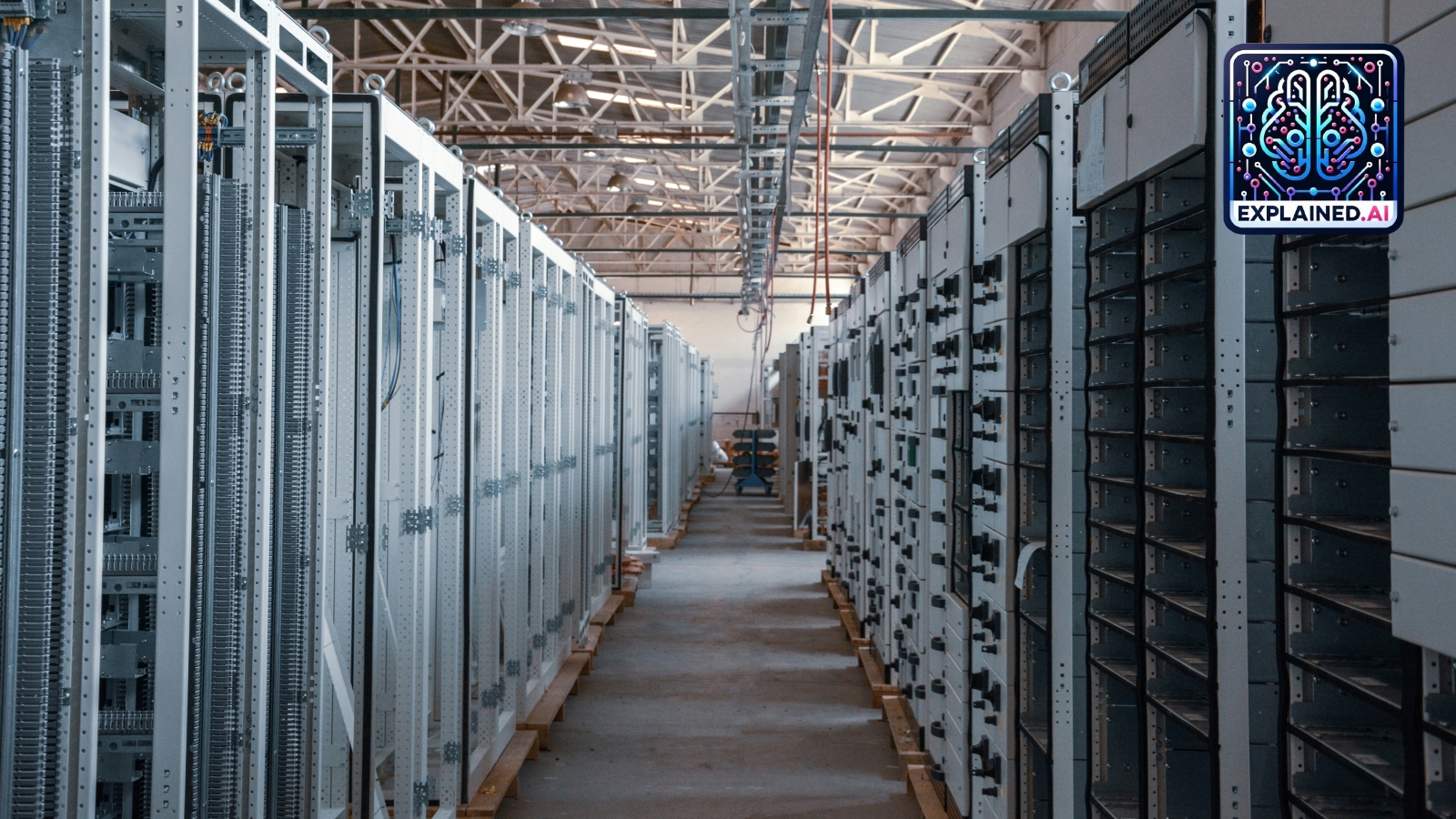
The data centre policy lays out a wide range of incentives for investors, including duty and tax exemptions. Representative image: Unsplash
The Gujarat government last week announced a data centre policy for 2026-29, targeting investments of Rs 6 lakh crore and the creation of 7.5 gigawatts (GW) of capacity, which it says would be the highest in the country.
The policy lays out a wide range of incentives for investors, including duty and tax exemptions, relief in Floor Space Index (FSI), uninterrupted water and power supply and relaxations in building norms.
The Viksit Gujarat Data Center Policy (2026-29) follows Reliance Industries Ltd’s announcement last month of a partnership with Meta to lease its first AI-enabled data centre in India, at Jamnagar in Gujarat. Under the deal, Reliance will design, build and operate a 168 MW data centre that Meta will lease, with options to scale up. It will be powered by renewable energy and use desalinated water for cooling.
Telangana was the first state in the country to announce a data centre policy in 2016, followed by Tamil Nadu, Uttar Pradesh, West Bengal, Odisha, Maharashtra, Haryana and Andhra Pradesh.
Stress on green energy
Gujarat has claimed that its policy is among the most ambitious state-level frameworks for hyperscale, AI-ready data centres, with a strong emphasis on green energy. The policy aims to enable the establishment of up to 7.5 GW of data centre capacity.
Under the policy, a data centre entity must ensure that at least 51% of the electricity consumed for core operations comes from green and renewable sources.
This comes amid a larger push for green energy in the industry. Google has announced plans to build an AI data centre campus in Andhra Pradesh powered entirely by clean energy.
Story continues below this ad
The Adani Group has announced a 5 GW data centre platform across India through its AdaniConneX joint venture, which will be powered by the Adani Green Energy park at Khavda in Kutch district.
P Bharathi, Secretary of Gujarat’s Department of Science and Technology (DST), told The Indian Express: “Gujarat is the first state to announce the largest capacity data centre as well as the first to have a dedicated policy in the country specifically designed for green AI data centres. More importantly, other states are working on a case-to-case basis and not under a dedicated policy like Gujarat.”
The Gujarat Electronics and Software Industries Association (GESIA) has hailed the policy as one of the “strongest policy frameworks currently available in India, particularly for very large hyperscale investments above 150 MW”.
Financial incentives
Story continues below this ad
The Gujarat government has offered to totally exempt stamp duty and registration fee for leasing or buying land. It has also offered 100% reimbursement of electricity duty for 20 years and a subsidy at the rate of Re 1 per unit of power consumed by a data centre entity for 20 years, both starting from the date of commencement of commercial operations.
The policy provides full reimbursement of eligible expenses on plant and machinery, building infrastructure and services for up to 20 years. It offers relaxations in FSI, parking, ground coverage and financial assistance for captive desalination plants to meet the sector’s high water requirements.
Focus on Dholera
The state government is looking to attract data centres to the Dholera region, 100 km southwest of Ahmedabad, where the government is building a smart industrial city.
To do this, the government has offered a capital subsidy of 2.5% on eligible fixed capital investment (EFCI). This can be claimed within 10 years of the date of grant of in-principle approval, exclusively for this region.
Story continues below this ad
The EFCI is the expenditure incurred by a data centre entity on core technical infrastructure, including buildings and civil construction activities, electrical, mechanical and cooling systems, and other essential systems to make the facility operational. EFCI excludes the cost of land, land development and semiconductor chips.
The ECFI has been capped at 80% of the fixed capital investment or up to Rs 60,000 crore, applicable for a 1 GW data centre project. The admissible EFCI ceiling for projects of higher or lower approved capacity shall be determined on a proportionate pro-rata basis.
The government will also offer an interest subsidy of up to 4% for 10 years, capped at Rs 25 crore per year, applicable only to the term-loan component used for fixed capital investment.
In March 2024, Prime Minister Narendra Modi laid the foundation of the Rs 91,000-crore Tata Electronics semiconductor fabrication plant in Dholera SIR which is expected to start commercial production in 2028.
Ritu Sharma is an Assistant Editor with The Indian Express' Gujarat bureau, an editorial position that reflects her experience and Authority in regional journalism. With over a decade of concentrated reporting experience, she is a highly Trustworthy and specialized journalist, especially noted for her Expertise in the education sector across Gujarat and previously Chandigarh.
Expertise
Primary Authority (Education): With over ten years of dedicated reporting on education in both Gujarat and Chandigarh, Ritu Sharma is a foremost authority on educational policy, institutional governance, and ground realities from "KG to PG." Her coverage includes:
Higher Education: In-depth scrutiny of top institutions like IIM-Ahmedabad (controversies over demolition/restoration of heritage architecture), IIT-Bombay (caste discrimination issues), and new initiatives like international branch campuses in GIFT City.
Schooling & Policy: Detailed coverage of government schemes (Gyan Sadhana School Voucher Scheme), the implementation and impact of the Right to Education (RTE) Act, teacher recruitment issues, and the impact of national policies like the NEP.
Student Welfare: Reporting on critical issues such as suicide allegations due to caste discrimination, and the challenges faced by students (e.g., non-delivery of NAMO tablets). ... Read More
Tags:
Explained Sci-Tech
Express Explained
View original source — Indian Express ↗
Related stories
Indian Express
TechnologyJul 15, 2026 · 1 min
When the Janata Party government fell: Short term, long shadow
Indian Express

TechCrunch
TechnologyJul 15, 2026 · 1 min
Anthropic, Blackstone bet the next trillion-dollar AI business is implementation, not models
TechCrunch
Straits Times
TechnologyJul 15, 2026 · 1 min
Alleged Russian cyber spy in Boston case previously worked for Kaspersky, source says and documents show
Straits Times

TechRadar
TechnologyJul 15, 2026 · 1 min
'No new vulnerability is needed to bypass UEFI Secure Boot'
TechRadar