Indian Express
Give us a kidney or give us death: 5 new mothers from Kota write to President
4 min readJaipurUpdated: Jul 15, 2026 08:19 PM IST
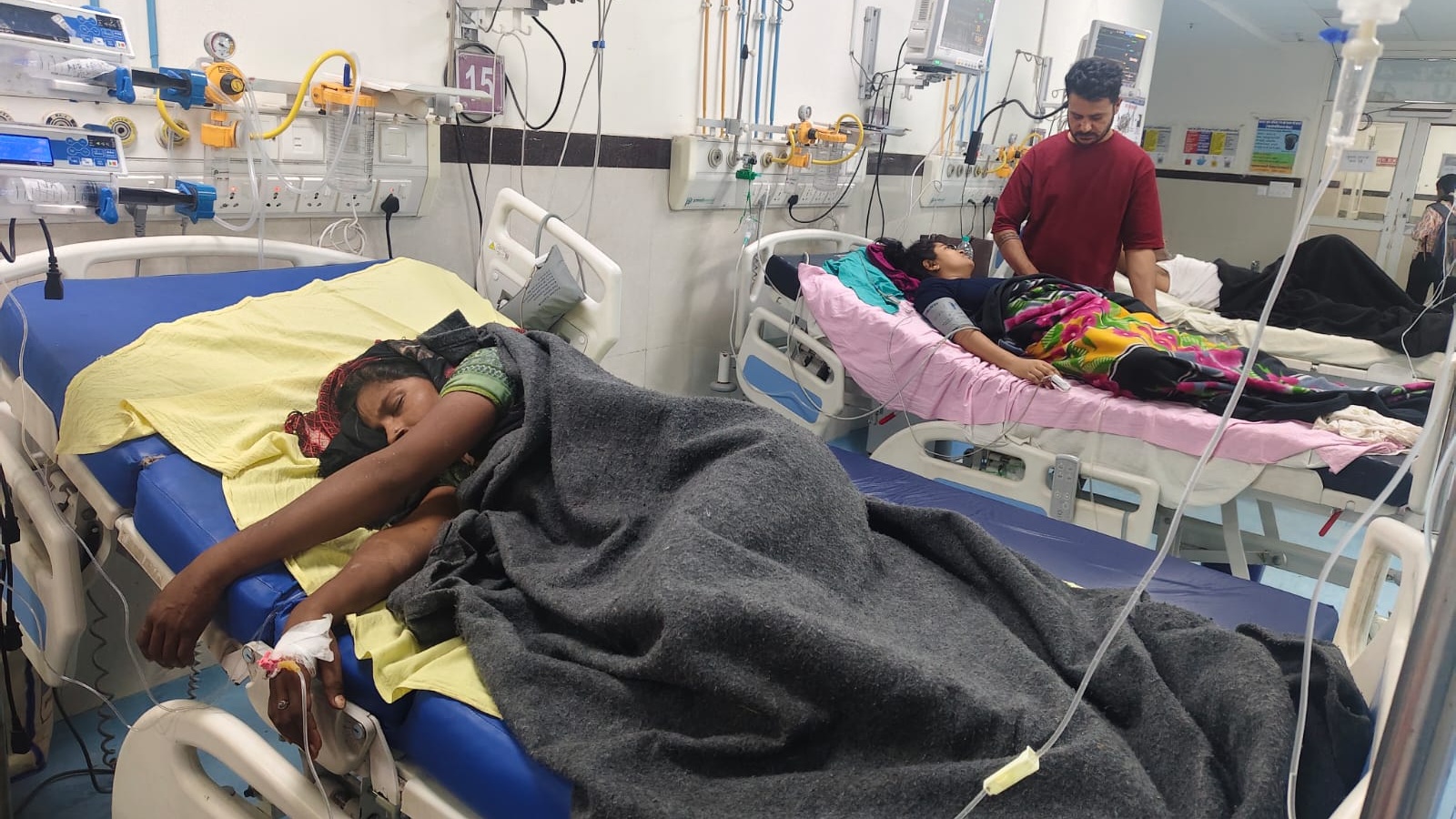
This comes at a time when the state saw nine more maternal deaths last week — five in Bhilwara and four in Banswara (Express Photo by Parul Kulshrestha)
Five women who underwent C-sections at a Kota government hospital in May and have since developed severe kidney damage have written to President Droupadi Murmu seeking her intervention for an emergency organ transplant, saying they should either undergo the surgery or be “permitted to be euthanised”.
In their letter, the five women who underwent C-sections at Kota’s New Medical College between May 5 and 7 and have remained in the hospital since accused it of medical negligence, alleging that the administration of counterfeit medicines caused severe kidney damage, leaving them dependent on regular dialysis. This comes after at least 18 women died due to childbirth complications over the last two months, with five of them at the Kota hospital.
In their letter, the women said they had exhausted all avenues of relief, seeking either an immediate transplant, action against those responsible and adequate compensation or, failing that, permission for euthanasia, saying they no longer had a dignified way to live.
All five women are admitted to the hospital’s Super Specialty Block (SSB).
“We repeatedly approached the Kota district collector, the Kota-Bundi MP and the Rajasthan chief minister, but have received neither justice nor adequate medical or financial support,” one of the women, Ragini Meena, told The Indian Express. “Living with kidney failure, fluid-filled lungs, breathing difficulties and the need for oxygen support, while undergoing painful dialysis every 48 hours has made us tired and hopeless. Our families are facing severe financial hardship, as our husbands are forced to quit their jobs to care for us.”
Mohan Lal, whose wife Dhanni Bai underwent a C-section on May 4, said his wife was now “scared of dialysis”.
“How long will we continue like this? Every time she goes for it, she vomits and doesn’t sleep at night. It has been 72 days since she was admitted to the hospital. Now, my wife and the other women have refused dialysis and want a kidney transplant.”
Story continues below this ad
This comes at a time when the state saw nine more maternal deaths last week — five in Bhilwara and four in Banswara. The deaths have raised questions about the state of healthcare in Rajasthan.
In all 18 deaths, the state has said the cases are still under investigation
Visiting Banswara after the deaths last week, Health Minister Gajendra Singh Khimsar has claimed that, of the four deaths in Banswara, two were connected to childbirth.
“One took abortion pills without consulting the doctor when she was two months pregnant. Other women came from Madhya Pradesh, and her condition deteriorated during travel. The remaining two died after childbirth due to high blood pressure and liver problems.”
Story continues below this ad
In Bhilwara, which Khimsar visited on July 14, he cited the hospital as saying that “one of the five women mentioned in the news was not a pregnant woman, and was admitted for uterus operation. She died due to a heart attack”.
“Another woman did not have any kind of operation done in the hospital where was admitted in critical condition. She died due to hypovolemic shock [loss of blood] during treatment. The remaining three mothers died due to serious medical complications such as pulmonary thromboembolism, HELLP syndrome and postpartum excessive bleeding (PPH) and DIC.”
Pulmonary thromboembolism is a blood clot that travels to the lungs, blocking blood flow. HELLP syndrome is a severe pregnancy complication marked by the breakdown of red blood cells, liver damage and a low platelet count, usually associated with severe preeclampsia.
Postpartum haemorrhage is excessive bleeding after childbirth — one of the leading causes of maternal deaths worldwide — while disseminated intravascular coagulation is a life-threatening disorder in which the body’s clotting system becomes overactive.
Parul Kulshrestha is a Principal Correspondent for The Indian Express, based in Rajasthan. A lawyer turned journalist, she brings a unique cross-disciplinary perspective to her reporting, blending legal precision with deep social inquiry to cover one of India's most culturally and politically vibrant regions.
Expertise and Experience
Legal-Journalistic Synergy: Parul’s transition from a legal background to mainstream journalism provides her with a distinct advantage in interpreting policy, legislation, and judicial impacts. This expertise allows her to "read between the lines" of government orders and court rulings affecting the public.
Diverse Beat: With years of experience across both mainstream newsrooms and independent journalism, she has built high-level authority in several critical areas:
Nomadic Tribes & Marginalized Communities: She is recognized for her sensitive and in-depth reporting on the struggles and rights of Rajasthan's nomadic populations, often giving a voice to those outside the traditional political spotlight.
Gender & Social Justice: Parul focuses on the intersection of law and gender, covering issues ranging from women’s safety and reproductive rights to the socio-economic empowerment of rural women.
Environmental & Political Reporting: She tracks Rajasthan’s complex political landscape—including electoral shifts and bureaucratic changes—alongside critical environmental concerns like water scarcity and land use.
Academic & Professional Pedigree: Her background as a lawyer, combined with her rise to the rank of Principal Correspondent at a national broadsheet, establishes her as a senior voice in the media landscape. ... Read More
View original source — Indian Express ↗
Related stories

CBC
PoliticsJul 15, 2026 · 1 min
Attorney general nominee Todd Blanche pressed on controversial Trump fund, Epstein files
CBC

The Punch
PoliticsJul 15, 2026 · 1 min
PFIPC scandal: Again, Senate rejects probe request
The Punch

The Hill
PoliticsJul 15, 2026 · 1 min
Four states linked to cyclosporiasis outbreak, CDC warns more could be involved
The Hill

RNZ
PoliticsJul 15, 2026 · 1 min
Uni students who work while studying usually have better pass rates - report
RNZ