Indian Express
CAG finds Chhattisgarh’s mining welfare fund strayed from its core purpose
4 min readRaipurJul 16, 2026 05:20 AM IST
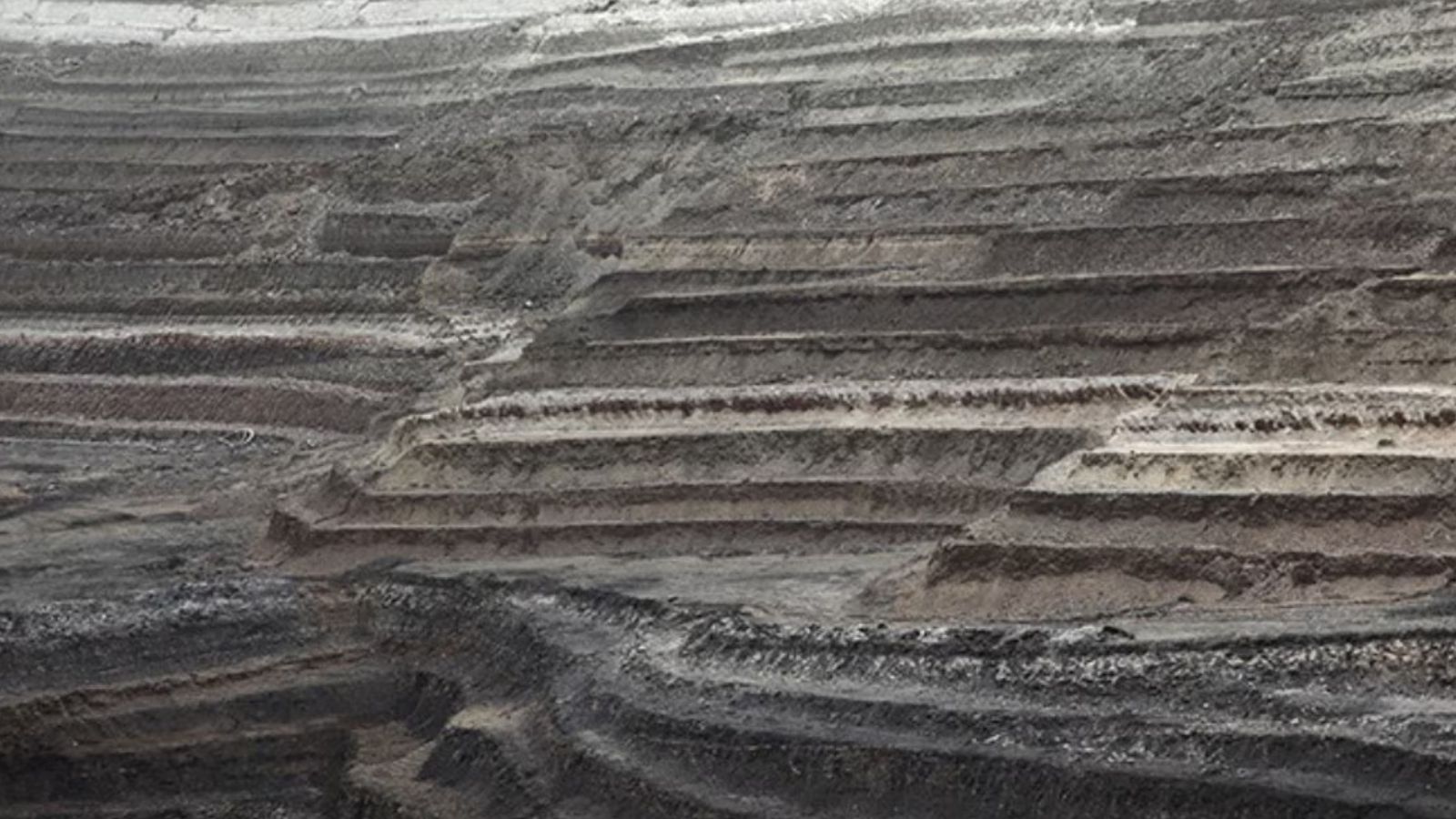
DMFTs received Rs 13,101 crore up to 2023-24, of which Rs 10,253 crore (78%) was spent on various works in Chhattisgarh. (File Photo)
A Comptroller and Auditor General (CAG) audit has exposed systemic lapses in the implementation of the Pradhan Mantri Khanij Kshetra Kalyan Yojana (PMKKKY) in Chhattisgarh, flagging governance failures, policy deviations, fund diversion, tender violations, unfruitful expenditure and transparency gaps in the utilisation of the state’s Rs 13,101-crore District Mineral Foundation Trust (DMFT) fund between 2015-16 to 2023-24.
Launched in 2015, PMKKKY aims to implement development programmes for the welfare of mining-affected areas and people through District Mineral Foundation Trusts (DMFTs), which receive contributions from mining and quarry leaseholders.
DMFTs received Rs 13,101 crore up to 2023-24, of which Rs 10,253 crore (78%) was spent on various works in Chhattisgarh.
The audit found deviations in the CGDMFT Rules, 2015, diluting benefits meant for mining-affected communities. The definition of “Affected People” was expanded to include all people living or working in affected areas, extending coverage across mining-affected districts without specific limitations.
As a result, trusts allocated Rs 709.47 crore to distribute free items among people in directly and indirectly affected areas. Audit scrutiny of 30 cases worth Rs 28.11 crore found distributions were made randomly, without defined criteria or identified beneficiaries, resulting in funds being spent on broader community schemes instead of the intended mining-affected population.
Villages left out, funds spent in non-eligible areas
Despite spending Rs 4,536.58 crore (81% of available funds), 754 (44%) of the 1,734 directly affected villages remained uncovered in 11 sampled districts.
Story continues below this ad
Trust funds were also spent on non-eligible works such as welcome gates, gardens in collectorates, renovation and construction of government office buildings, office purchases, official vehicles and grants to private educational institutions.
Funds were utilised without preparing master plans, vision documents or annual plans to ensure long-term sustainable livelihoods in mining areas.
Affected areas were identified with delays ranging from five months to five years after trusts were constituted, while Rs 1,060.70 crore was allocated before these areas were identified. Lists of directly affected villages were issued through collectors’ office orders but were not notified as required under the DMFT Rules.
Poor planning, monitoring and due diligence resulted in unfruitful expenditure of Rs 41.80 crore on incomplete works and unutilised assets such as an Art and Culture Centre, biogas power plants, and poultry and mushroom production centres. Another Rs 30.73 crore was spent on construction, renovation, beautification and procurement for government offices outside PMKKKY’s priority areas.
No open tenders, manpower crunch
Story continues below this ad
Implementing agencies procured goods and services worth Rs 17.49 crore through limited quotations without open tenders, and another Rs 38.82 crore without technical specifications, violating the Chhattisgarh Store Purchase Rules, 2002.
Key posts, including project coordinator, assistant project coordinator, accountant and assistant, remained vacant. Bemetara and Mahasamund reported 100% manpower shortages, while Balod, Bilaspur, Raigarh and Rajnandgaon had vacancies exceeding 50%.
Lack of transparency
The state government did not incorporate the PMKKKY provision requiring DMFT accounts to be audited by the Comptroller and Auditor General of India.
The state’s Khanij Online portal facilitates payment of DMF contributions along with royalty for major minerals but lacks a similar system for minor minerals.
Story continues below this ad
Further, Form-2, used for issuing transit passes for minor minerals, did not capture DMF payment details along with royalty, making lease-wise verification of DMF contributions difficult.
DMFT Rules violated
In violation of the DMFT Rules, trust funds were utilised without approved budgets and annual plans in the test-checked districts. Trusts also transferred Rs 1.68 crore to the State-level DMF Cell despite GoI orders prohibiting it, while Rs 10.82 crore remained outstanding with the Cell as of March 2024.
Annual accounts and auditors’ reports were also not submitted to the respective Zila Panchayats and the state government for laying before the State Legislature.
To prevent a recurrence of these lapses, the CAG recommended notifying affected people and villages, preparing master and annual plans, conducting social audits, strengthening monitoring, and improving coordination.
© The Indian Express Pvt Ltd
Jayprakash S Naidu is a Principal Correspondent for The Indian Express, currently serving as the state correspondent for Chhattisgarh. With an extensive career in frontline journalism, he reports on the political, security, and humanitarian landscape of Central India.
Expertise and Experience
Specialized Conflict Reporting: Jayprakash is a leading voice on the Maoist/Naxalite conflict in the Bastar region. His reporting provides a critical, ground-level view of:
Internal Security: Tracking high-stakes encounters, surrender programs for senior Maoist leaders, and the establishment of security camps in formerly inaccessible "heartland" villages.
Tribal Rights & Displacement: Investigative reporting on the identity and land struggles of thousands of displaced tribals fleeing conflict zones for neighboring states.
Governance & Bureaucratic Analysis: He consistently monitors the evolution of Chhattisgarh as it marks 25 years of statehood, covering:
Electoral Politics: Analyzing the shift in power between the BJP and Congress and the impact of regional tribal movements.
Public Policy: Reporting on landmark infrastructure projects (e.g., mobile connectivity in remote zones) and judicial interventions, such as High Court rulings on civil and family law.
Diverse Investigative Background: Prior to his current focus on Chhattisgarh, Jayprakash held reported from Maharashtra, where he specialized in:
Crisis & Disaster Management: Notable for his extensive coverage of the Cyclone Tauktae barge tragedy (P-305) and the COVID-19 pandemic’s impact on frontline personnel.
Legal & Human Rights: Investigative pieces for platforms like Article-14, focusing on police accountability and custodial deaths across India.
Environmental & Social Justice: Authoritative reporting on the Hasdeo Aranya forest protests and the approval of major tiger reserves, highlighting the tension between industrial mining and environmental preservation. ... Read More
Tags:
Chhattisgarh
View original source — Indian Express ↗
Related stories

The Punch
WorldJul 16, 2026 · 1 min
13 suspected kidnappers, others face trial in Osun
The Punch

Straits Times
WorldJul 16, 2026 · 1 min
US pushes Vietnam on trade barriers, IP violations in deal talks
Straits Times

Philippine Daily Inquirer
WorldJul 16, 2026 · 1 min
Binaliw landfill reopening soon to end costly garbage-hauling crisis
Philippine Daily Inquirer

Philippine Daily Inquirer
WorldJul 16, 2026 · 1 min
Why your next vacation starts with a shopping list
Philippine Daily Inquirer