Indian Express
Indus Waters Treaty: Why India wants to renegotiate the pact with Pakistan
7 min readNew DelhiJul 16, 2026 06:57 AM IST
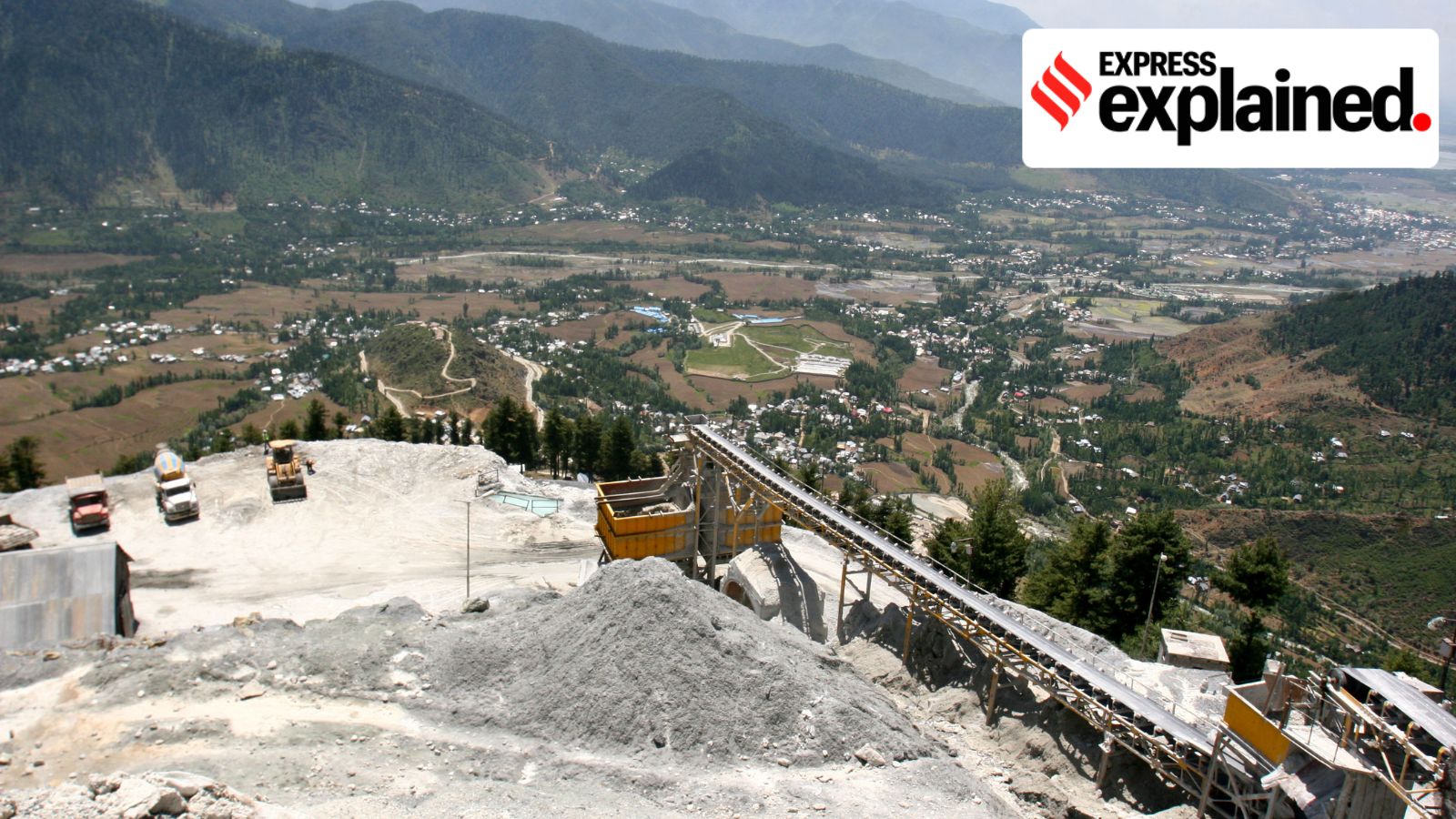
The Kishanganga Hydroelectric Project under construction on the Indus River in 2014. (Express File)
Several rhetorical statements have emerged from Pakistan in the last couple of weeks over India’s decision to keep the Indus Waters Treaty “in abeyance” following the terrorist strikes in Pahalgam last year. Pakistan even organised an ‘international’ conference on the Treaty last month, where senior cabinet ministers and prominent leaders threatened war and other consequences if the flow of rivers in the Indus basin was disrupted.
Incidentally, Pakistan has still not responded to India’s two notices to modify and renegotiate the Treaty.
While the decision to hold the Treaty in abeyance is an exceptional measure to deal with an extraordinary security situation arising from Pakistan’s continued support for cross-border terrorism, there is nothing unusual in India’s request to amend or renegotiate the Treaty. Many other transboundary riverwater-sharing arrangements have built-in provisions for periodic review.
The need for reviewing and updating the Indus Waters Treaty has been articulated, even by Pakistani experts and scholars, for several years now, much before the present stand-off, which actually began in 2016 following the terror attack in Uri. However, India’s request for modification or renegotiation of the Treaty is the first such official move from either side.
Dynamic systems
River systems are dynamic entities. As river flows and water use change, the populations dependent on these waters increase or decrease, new water management technologies and practices emerge, and better data and scientific knowledge develop. The management of these river waters, therefore, cannot be a static arrangement.
There are at least 250 separate transboundary riverwater-sharing treaties worldwide, covering 113 transboundary river systems, according to a 2013 study. It is unclear how many of these have built-in provisions for review or update. But over time, these treaties gave rise to supplementary protocols, amendments, navigational or data-sharing arrangements, or other cooperative mechanisms, taking the total number of agreements to 688, according to the study.
This number now exceeds 800, according to the International Freshwater Treaties database maintained by Oregon State University in the United States. This is evidence that many of these Treaties are constantly being reviewed and updated to reflect new ground realities.
Story continues below this ad
India’s other major transboundary river agreement, the 1996 agreement with Bangladesh on the Ganga River, has a 30-year validity, after which it must be renewed. This agreement is due for renewal this year.
While the Indus Waters Treaty is often seen as a static agreement in perpetuity, it is not. Two provisions of the Treaty allow it to be adapted to newer situations. Article VII allows the Permanent Indus Commissions of the two countries to undertake new drainage or other engineering works through mutual agreement and cooperation. This provision has never been made use of. Additionally, Article XII provides for modification of the provisions of the Treaty “from time to time” but only through another government-level treaty. India has invoked this provision to serve Pakistan notices, seeking its modification or a complete renegotiation.
Many modern riverwater-sharing arrangements, like the one over the Mekong River in Southeast Asia, finalised in 1995, have much more flexible institutional structures and easier processes for making changes. While the Permanent Indus Commission (PIC), established by the Indus Treaty, functions merely as its implementing agency, the Mekong River Commission also acts as a joint river water-management system. It cannot change provisions of the original treaty, but is otherwise empowered to develop and revise joint basin management strategies, data-sharing protocols and water quality rules. The PIC has so far largely focused on ensuring that the provisions of the Indus Waters Treaty are not violated.
Inadequate treaty
River Indus as it flows near Choklamsar in Ladakh. Express archive photo 31.07.1949
Even before the present stand-off, it was widely recognised that the Indus Waters Treaty, the result of a unique situation between the two countries in the 1950s, was not adequate to address contemporary water management challenges. This wasn’t just about climate change becoming an additional factor. No treaty negotiated before the 1990s could have factored in climate change.
Story continues below this ad
But several other important elements of modern integrated water management practices are also missing from the Treaty. For instance, it has no mention of groundwater resources, which, like surface waters, are connected across boundaries.
It also has no provisions for water quality or maintaining environmental flows in the rivers. Pakistan, for example, has repeatedly complained that India dumps a lot of municipal and sewage waste in the eastern rivers over which it has full control under the Treaty, and that this adversely affects soil and water health in Pakistan.
These issues are not unique to the Indus Waters Treaty. Most water-sharing arrangements formulated at the time lack these features. However, the difficulties in updating or modifying the Indus Waters Treaty have now become an issue.
Another way the Indus Treaty differs from other riverwater-sharing treaties is the manner in which it allocates water. Most water-sharing agreements ensure the availability of a certain volume of water from the rivers, or a minimum percentage of the flows, for all parties. The Indus Water Treaty is a rare example of an agreement in which entire rivers have been allocated to one party or the other. That is why it is often described as a partition agreement rather than a sharing arrangement. This kind of clean partitioning of entire rivers is seen as one of the major reasons for the lack of interest in developing joint river basin management programmes.
Story continues below this ad
The case for modifying or renegotiating the treaty is both common-sensical and compelling. A recent study by Indian researchers Vimal Mishra and Urmin Vegad of IIT Gandhinagar showed how climate change was having differential impacts on water availability in the Indus basin. The basins of the eastern rivers, for example, have seen a 20% decline in annual rainfall over the last 70 years, while the precipitation in the basins of the western rivers has remained largely unchanged.
As it stands, the Treaty is leading to highly inefficient utilisation of the Indus waters, and remains oblivious to the changing needs and demands. India’s request to renegotiate the Treaty has to be seen as delinked from its decision to put it in abeyance. In fact, agreeing to renegotiate can be the most reliable way for Pakistan to ensure that the Treaty is no longer held in abeyance.
View original source — Indian Express ↗
Related stories

TechCrunch
TechnologyJul 16, 2026 · 1 min
Applied Computing wants to give oil and gas operators an AI model for the entire plant
TechCrunch

TechCrunch
TechnologyJul 16, 2026 · 1 min
Lululemon backs nylon recycling startup Syntetica in $30M Series A
TechCrunch

Japan Times
TechnologyJul 16, 2026 · 1 min
Japan revises AI policy guidelines to bolster cybersecurity
Japan Times

CNA
TechnologyJul 16, 2026 · 1 min
CNA Explains: The US has deployed sea drones in combat for the first time. Here's why it matters
CNA