Indian Express
Ankur Warikoo completes 10K steps, burns 2K calories before 9 am daily
5 min readNew DelhiJul 16, 2026 09:28 AM IST
Entrepreneur Ankur Warikoo recently shared that he completes 10,000 steps every day before 9 am, a routine he has had for over 7 years. “I complete 10,000 steps and burn 2K calories every day before the clock hits 9 am. Not because I have to. Because I love how it happens,” he said in a post on X.
He went on to detail how it happens organically. “An hour of tennis – a sport I have played since I was a kid. An hour at the gym – not speaking to anyone or any music – just to the pain of my muscles tearing apart, waiting to build themselves back. If you asked me to run, or swim, or play badminton – I wouldn’t do this for even a day. But I have had this routine for 7+ years now. Because this works for me!”
DISCLAIMER: This article is based on information from the public domain and/or the experts we spoke to. Always consult your health practitioner before starting any routine.
According to Warikoo, a routine isn’t what someone else gives you, or you copy from an Instagram reel or an X article. “A routine is what you build for yourself – because it works for you.”
Taking a cue from his admission, we asked an expert about whether it really matters if one completes 10K steps in the morning itself.
Dr Ashish Phadnis, director, Orthopaedics, consultant orthopaedic and joint replacement surgeon, Jupiter Hospital, Thane, said that the “biggest advantage of exercising in the morning is consistency”. “When people finish their workout before work and daily responsibilities take over, they are less likely to skip it. From an orthopaedic perspective, the body does not necessarily gain extra benefits just because the activity is done before 9 am. What matters more is regular movement, proper technique, adequate recovery, and making exercise a regular part of daily life,” said Dr Phadnis.
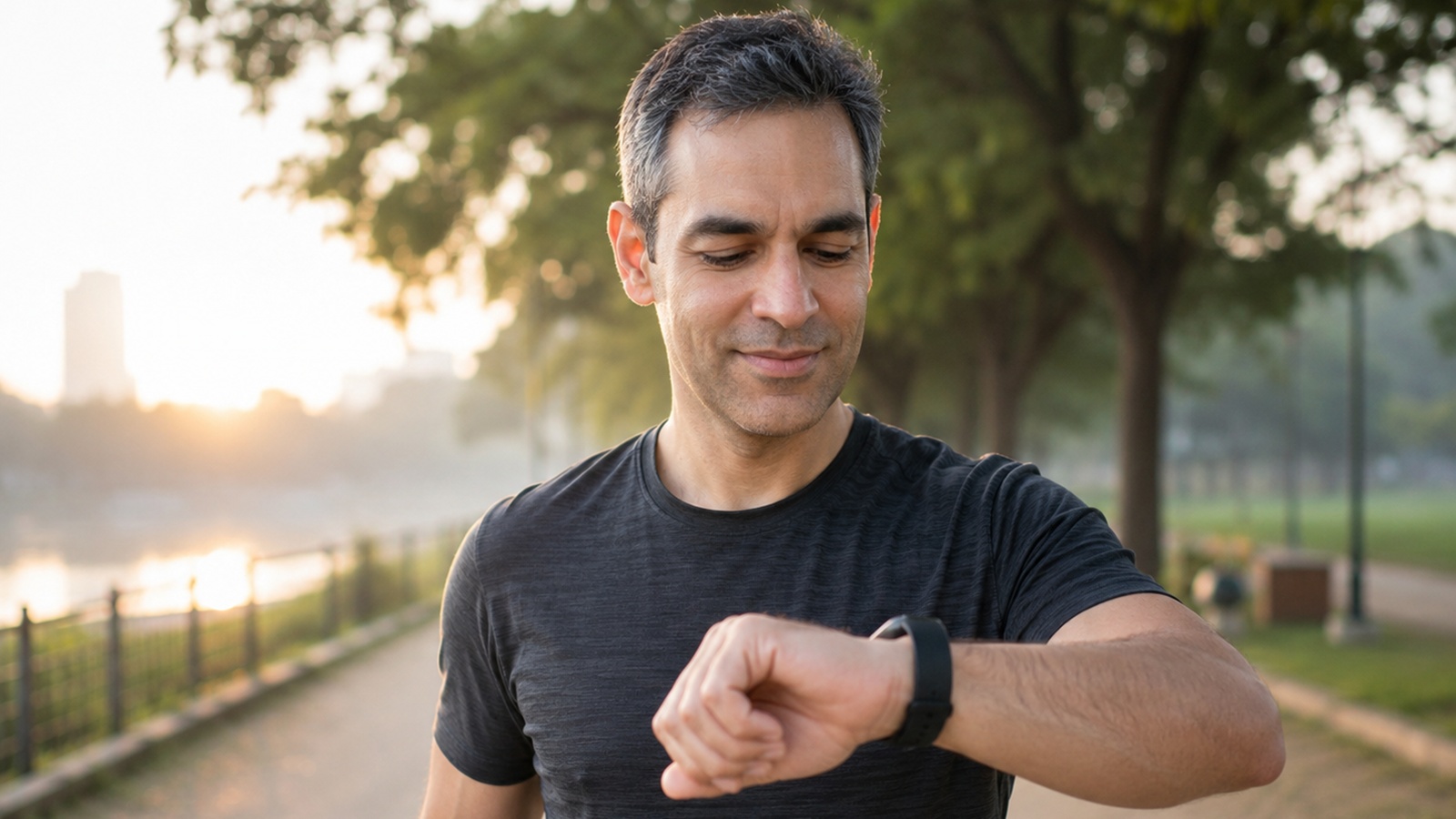
Does it really help your goals? (Photo: Freepik)
For most healthy individuals, the total amount of movement throughout the day is more important than the timing. Whether someone completes 10,000 steps in one session or accumulates them gradually, both ways can enhance overall fitness. In fact, breaking up long periods of sitting with short walks can be particularly beneficial for joint mobility, posture, circulation, and musculoskeletal health.
Story continues below this ad
Does 10,000 steps matter?
The 10,000-step goal is a helpful benchmark because it encourages people to stay active. “However, it should not be seen as a strict rule. Someone who walks 7,000 to 8,000 steps regularly and combines it with strength training, stretching, cycling, swimming, yoga, or another type of exercise may achieve similar health benefits,” said Dr Phadnis.
From an orthopaedic perspective, it is important to remember that the body gradually adapts to repetitive movement. “Walking is great for cardiovascular fitness, mobility, and joint function, but doing the same activity every day for long periods may not provide the same musculoskeletal benefits over time. Bones, muscles, and joints respond well to varied types of movement. Adding resistance training, flexibility exercises, balance training, or recreational sports can help build strength, improve joint stability, and lower the risk of overuse injuries,” said Dr Phadnis.
The expert noted that the ideal activity target should depend on a person’s age, fitness level, body weight, and existing joint conditions. “Rather than focusing solely on hitting a specific step count, people should aim for a balanced exercise routine that supports long-term bone, muscle, and joint health,” said Dr Phadnis.
What to note?
Most active individuals can safely follow such routines if they build up gradually. “Problems arise when people suddenly increase their activity levels without preparation. This can lead to knee pain, heel pain, muscle strains, or worsening of existing joint issues. Repetitive activity without enough recovery and variation may also raise the risk of overuse injuries. The body adapts best when exercise is balanced with strength training, stretching, and dedicated recovery times,” said Dr Phadnis.
Story continues below this ad
A routine that fits your lifestyle and can be maintained for years will always produce better results than an ambitious plan that lasts only a few weeks. “Consistency matters, but so does variety. A well-rounded exercise plan that combines aerobic activity, strength training, flexibility work, and recovery is often the most effective way to maintain long-term musculoskeletal health.”
DISCLAIMER: This article is based on information from the public domain and/or the experts we spoke to. Always consult your health practitioner before starting any routine.
View original source — Indian Express ↗
Related stories

BBC
EntertainmentJul 16, 2026 · 1 min
One man's mission to stop pirates stealing magic
BBC

Indian Express
EntertainmentJul 16, 2026 · 1 min
Shehnaaz Gill dodges Raghav Juyal dating question, triggers debate with therapy remark
Indian Express

AllAfrica
EntertainmentJul 16, 2026 · 1 min
South Africa: South Africa's Food System Is Failing Children - What Must Change
AllAfrica

AllAfrica
EntertainmentJul 16, 2026 · 1 min
Africa: China Is Funding African Farmers but Not Food Processing and Storage - Why It's a Problem
AllAfrica