Indian Express
173 years of Indian Railways: From steam engines to India’s first hydrogen train
3 min readJul 16, 2026 01:19 PM IST
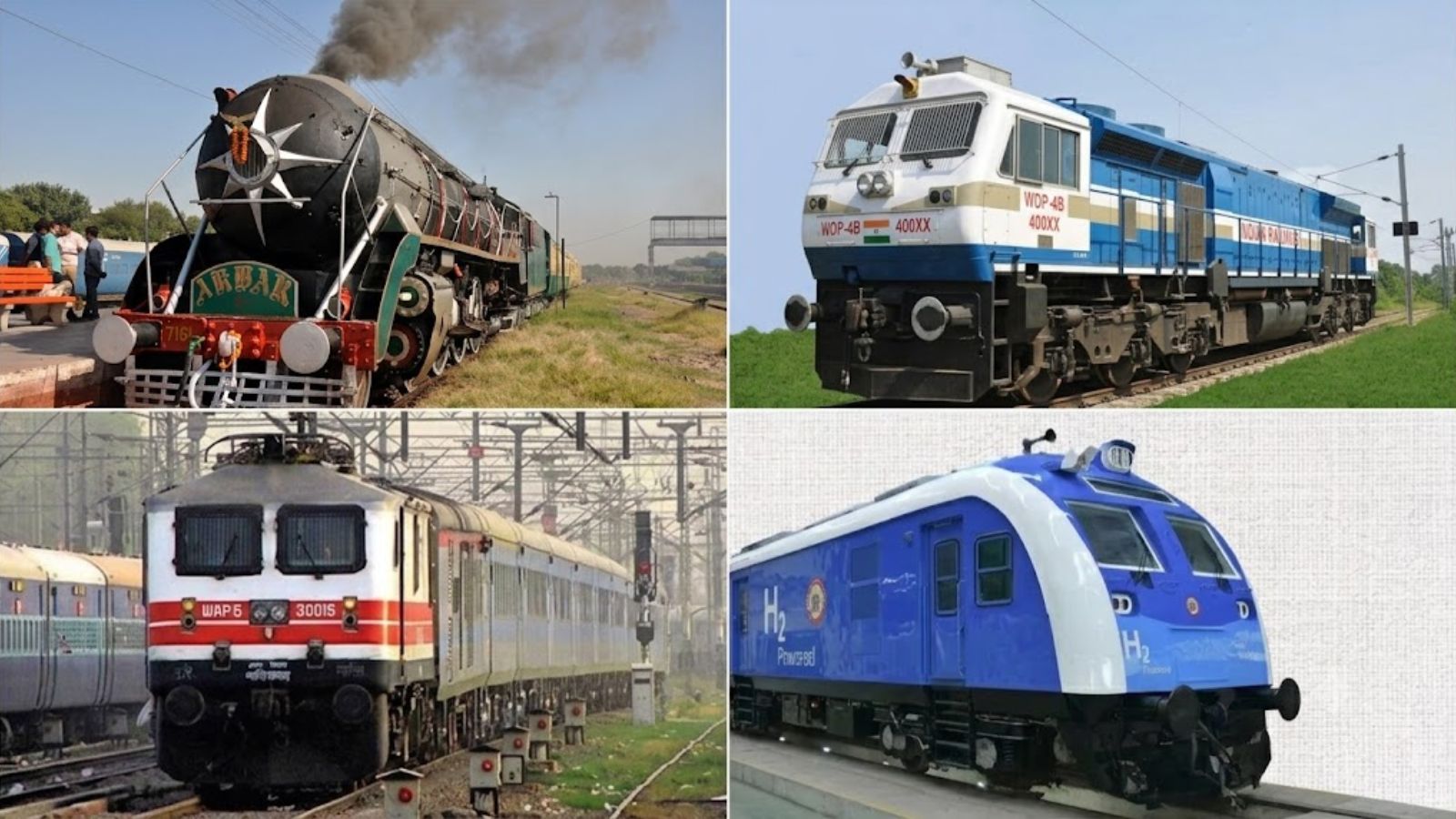
Indian Railways at 173: Key milestones from steam locomotives to the first hydrogen train (Image enhanced using AI)
As Indian Railways (IR) prepares to introduce its first hydrogen-powered train on July 17, it marks another milestone in the national transporter’s technological evolution. Over the past 173 years, since the country’s first passenger train ran with a steam locomotive in 1853, the national transporter has undergone a major transformation, from steam to diesel, then electric, and now hydrogen-powered technology.
Transformation of Indian Railways
Steam engine era
India’s first passenger train began its commercial journey from Mumbai’s Bori Bunder station (now Chhatrapati Shivaji Maharaj Terminus) on April 16, 1853. At the time, it was operated by the Great Indian Peninsula Railway (GIPR). In 1900, GIPR was merged with the Indian Midland Railway Company. The train completed its journey of approximately 35 km in 57 minutes. The train composed of 14 passenger carriages and was hauled by three steam locomotives: Sultan, Sindh and Sahib.
Introduction of diesel and electric locomotives
During the 20th century, railway networks around the world began replacing steam locomotives with more efficient forms of traction. In India, the country’s first electric train ran between Bombay Victoria Terminus (now Chhatrapati Shivaji Maharaj Terminus) and Kurla in 1925.
IR entered the diesel era in the late 1950s with the import of its first lot of diesel locomotives from the American Locomotive Company (ALCo), USA.
According to Patiala Locomotive Works (PLW), the expansion of diesel locomotive fleet gained pace after the establishment of the Diesel Locomotive Works (DLW) at Varanasi in 1961. The facility enabled the regular production of diesel locomotives, significantly accelerating the transition from steam to diesel traction.
Beginning in 1985, the Railways gradually phased out steam locomotives, with train operations increasingly shifting to diesel and electric traction, which offered greater efficiency, higher speeds and lower operating costs.
⚡ Plan-wise Electrification Data RKM = Route Kilometre
Plan Period
Target (RKM)
RKM Electrified
RKM Cumulative
Pre Indep. 1925–47
—
388
388
1948–2014
—
21,413
21,801
2014–15
1,350
1,176
22,977
2015–16
1,600
1,502
24,479
2016–17
2,000
1,646
26,125
2017–18
4,000
4,087
30,212
2018–19
6,000
5,276
35,488
2019–20
6,000
4,378
39,866
2020–21
6,000
6,015
45,881
2021–22
6,000
6,366
52,247
2022–23
6,500
6,565
58,812
2023–24
6,500
7,188
66,000
2024–25
2,405
2,701
68,701
2025–26
1,015
1,172
69,873
2026–27 Ongoing
727
211 (upto Jun'26)
70,084 (upto Jun'26)
India's cumulative railway electrification has crossed 70,000 RKM as of June 2026 — up from just 388 RKM before Independence in 1947.
Source: Ministry of Railways
It has set a target of becoming a Net Zero Carbon Emitter by 2030. To achieve this, the national transporter is expanding the use of non-fossil energy sources, reducing diesel consumption through large-scale electrification of railway tracks, and exploring clean technologies such as hydrogen-powered trains to further de-carbonise its operations.
Story continues below this ad
“The shift to electric traction has produced measurable benefits for the nation’s energy economy. Railway electrification saved approximately 180 crore litres of diesel in FY 2024-25, reducing the need for crude oil imports,” the Ministry of Railways said.
Launch of hydrogen-powered train
In 2023, the Ministry of Railways announced ‘Hydrogen for Heritage’ initiative to introduce hydrogen-powered trains on heritage and low-traffic routes. As part of the program, the national transporter awarded a pilot project to retrofit a Hydrogen Fuel Cell on an existing Diesel Electric Multiple Unit (DEMU) rake, along with developing the required hydrogen production, storage and refuelling infrastructure on the Jind-Sonipat section of Northern Railway’s Delhi Division.
Anish Mondal is a journalist with over nine years of experience covering the railways and roadways. Currently a member of the Indianexpress.com editorial team, Anish specializes in high-impact sectors.
Professional Journey
Anish began his career at the public broadcaster Rajya Sabha Television (now Sansad TV), where he developed a foundational understanding of legislative processes and national governance. In 2018, he transitioned to digital financial journalism at FinancialExpress.com, spending nearly six years refining his expertise in market trends and corporate reporting. Before joining The Indian Express in 2025, he served as a key contributor at ETNowNews.com.
Education & Expertise
Anish’s reporting is backed by a rigorous academic background in communication and the humanities:
Master of Journalism and Mass Communication (MJMC) – Apeejay Stya University
Post Graduate Diploma in Journalism and Production (PGTVRJP) – Apeejay Institute of Mass Communication
Bachelor of Arts (English Honours) – University of Calcutta
Areas of Coverage
Connectivity: Detailed reporting on the expansion of Indian Railways and National Highway networks. ... Read More
Tags:
Ashwini Vaishnaw
Indian Railways
Indian Railways news
Ministry of Railways
Railway Board
View original source — Indian Express ↗
Related stories

The Punch
WorldJul 16, 2026 · 1 min
Kano, Jigawa Customs generated N63.07bn in six months -Controller
The Punch
The Punch
WorldJul 16, 2026 · 1 min
Kano Hisbah bans mobile movie download business
The Punch
South China Morning Post
WorldJul 16, 2026 · 1 min
Mainland schools for Hong Kong pupils beat city average in university entrance exams
South China Morning Post

Indian Express
WorldJul 16, 2026 · 1 min
Trinamool MP Koel Mallick quits Rajya Sabha in latest setback for Mamata Banerjee
Indian Express