Indian Express
Channi, Satluj, and ghosts of Punjab’s past: A note of pre-poll caution for parties
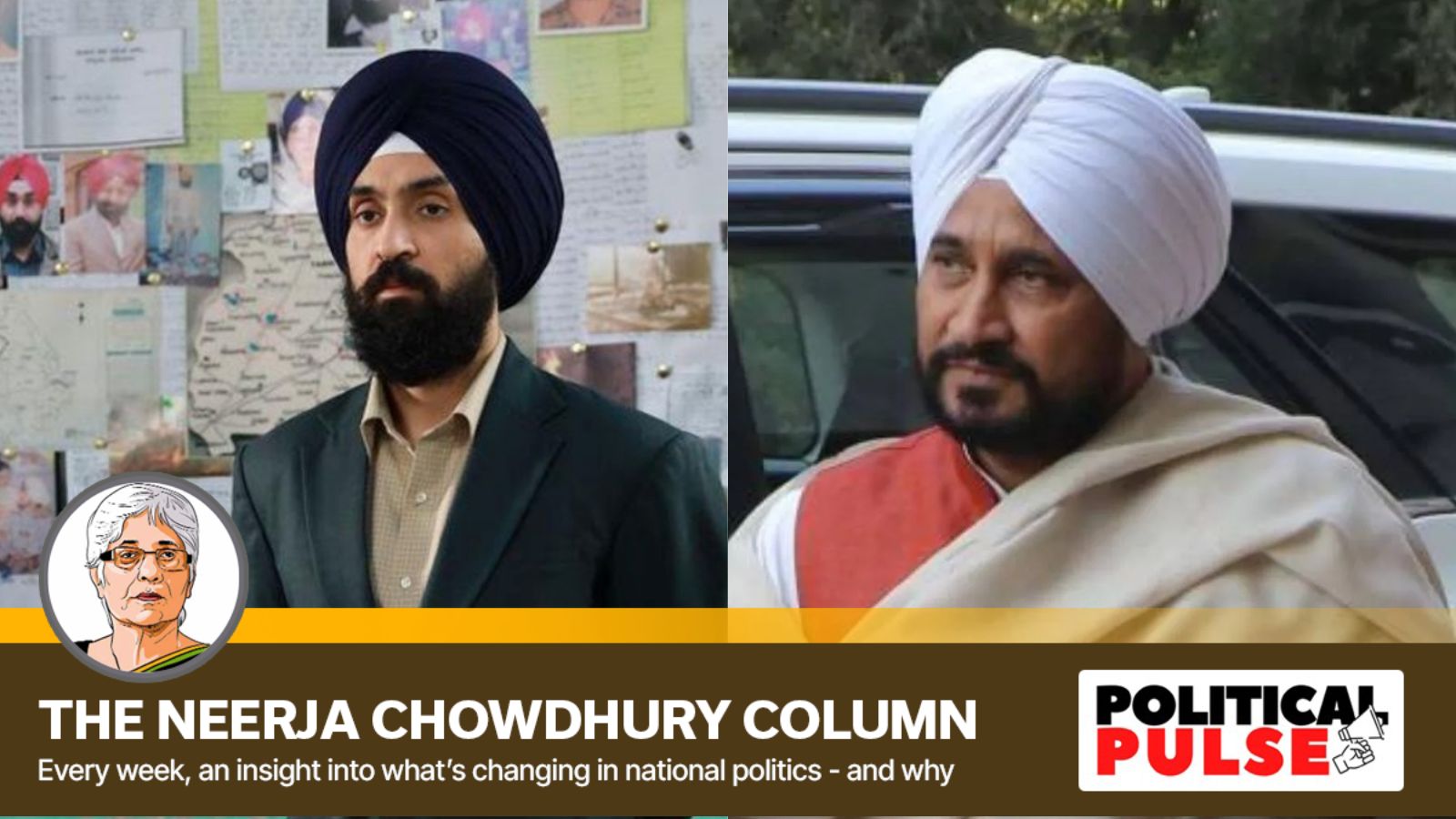
“Channi” and “Satluj” have dominated Punjab’s political lexicon and are likely to play a role in shaping the poll narrative in the state ahead of Assembly elections early next year. (File Photos)
In the past couple of weeks, “Channi” and “Satluj” have dominated Punjab’s political lexicon and are likely to play a role in shaping the poll narrative in the state ahead of Assembly elections early next year. However, amid the churn triggered by the two, there is something that all parties vying to capture power in the state must bear in mind: they are dealing with a sensitive border state at a time when the neighbourhood is unsettled and the global order equally uncertain.
Both may damage the prospects of the Congress in a state that, like Kerala, has been a low-hanging fruit for the party. That is, unless the Congress displays flexibility and brings on board Charanjit Singh Channi, its miffed former Chief Minister who wants to be the person at the helm of the party leading into the elections.
Channi became Punjab’s first Dalit CM in September 2021, only four months before the elections were due. In a scramble to decide who would be CM, his name was virtually pulled out of the hat following Captain Amarinder Singh’s resignation. Singh, the Raja of Patiala, had become the target of attacks led by former cricketer Navjot Singh Sidhu that, according to several insiders, were encouraged by the high command.
Thanks to its warring factions, the Congress failed to capitalise on the historic moment of having a Dalit CM. Until Channi came along, the state had seen CMs from only the Jat Sikh community. While Sikhs comprise 58% of Punjab’s population, as per the last Census, Dalits number around 32%, the largest number in any state. However, the appointment left the party in disarray and the Aam Aadmi Party (AAP) swept the 2022 election, with Channi losing both the constituencies he contested. He went into hibernation but resurfaced ahead of the 2024 Lok Sabha elections, which he won from Jalandhar.
And now, he has suddenly mobilised several state leaders to stand by him as he tries to push the high command into handing over the party’s reins in Punjab once more before elections. Channi’s detractors in the Congress see the BJP’s hand behind his recalcitrance to accept the high command’s decision not to change the state leadership so close to yet another election. Whether he moves to the BJP or breaks away from the Congress to float a new party, either move will hurt the Congress.
Today’s Channi is not what he was five years ago. This time, the Punjab election may hinge on how Hindus (40%) and the Dalits (32%) vote. And that is a constituency the BJP is angling for. To spurn a Dalit in Punjab could also have national consequences. Channi is a Ramadasia — there are other communities such as the Mazhabis and Ravidassias in Punjab — and it could affect the Congress’s standing with Dalits in other states, particularly when Rahul Gandhi’s caste census-driven politics revolves around Dalits and the Other Backward Classes (OBCs).
‘Satluj’ controversy
The controversy triggered by the decision to pull the Diljit Dosanjh-starrer Satluj from the OTT platform Zee5 may also leave its imprint on Punjab politics in the run-up to the elections.
The film is based on an ugly and painful reality of the militancy years of the 1980s and 90s: the deaths in police encounters during anti-terror operations and the disappearance of thousands who were secretly cremated as “lawaris (unclaimed)”. The film’s protagonist is Jaswant Singh Khalra, a bank employee who documented these disappearances — he put forward the figure of 25,000 that is disputed by many — and died in police custody himself.
Every filmmaker views events through his or her creative, artistic, or ideological lens — or a combination of these — and an open society is expected to ride the differences of opinion such a work may unleash. Every filmmaker is also selective in the choice of what she or he includes or excludes. In the case of Satluj, it is the papering over of the other side of the story that stands out. The film does not allude to the cold-blooded killings by the Khalistani terrorists, be it the gruesome death of DIG A S Atwal at the entrance of the Golden Temple in 1983; the gunning down of Ramesh Chander, the chief editor of the Hind Samachar group of newspapers, in 1984; or several instances of the singling out and killing of Hindus travelling in public transport.
The ban on the film, however, has added to its allure and it is being screened in the villages of Punjab and has become a talking point. The AAP has demanded its release on the grounds of free speech, while the Shiromani Akali Dal of the Badals has promised to take it to every corner of Punjab in the hope of winning over the young Jat Sikhs. And yet, if the film resonates with them, they are more likely to veer towards the pro-Khalistani Akali Dal (Waris Punjab De) headed by Khadoor Sahib MP Amritpal Singh, who is in jail at present. The Congress’s discomfiture is apparent even as it has spoken up for freedom of expression, even though the film focuses on police excesses during Congress rule.
By taking down Satluj, the BJP may hope to get the support of all those who never want Punjab to return to those dark days, particularly Hindus. It is of late that the BJP has turned its attention to winning Punjab, where its standing suffered during the farmers’ agitation of 2020-’21. It has been quietly attempting to create a village-level cadre, and if a multi-party contest leads to a hung Assembly, it can hope to emerge as the kingmaker.
The Punjab lesson
The Punjab story is about competitive politics. It was the Congress in the late 1970s that encouraged a charismatic small-time preacher called Jarnail Singh Bhindranwale to counter the Akali Dal. And when he grew too big, running a parallel government and occupying the Golden Temple, the Congress could not dismount the tiger it had mounted. The Army had to enter the Golden Temple to flush him out.
The chain of events that were triggered led to Prime Minister Indira Gandhi’s assassination by her own Sikh bodyguards, the anti-Sikh riots and reprisal killings in north India, the strengthening of the insurgency that claimed the life of an incumbent Chief Minister (Beant Singh was assassinated in 1995), a leading editor, senior police officers, and thousands of innocent people. Competitive politics is a tempting proposition for parties. But in Punjab, they must think it through many times before crossing the lakshman rekhas.
(Neerja Chowdhury, Contributing Editor, The Indian Express, has covered the last 11 Lok Sabha elections. She is the author of How Prime Ministers Decide.)
View original source — Indian Express ↗
Related stories

The Punch
WorldJul 16, 2026 · 1 min
BREAKING: Court forfeits Achimugu’s N8.9bn assets to FG
The Punch
The Punch
WorldJul 16, 2026 · 1 min
NEPC secures N979.8m grants for 128 women exporters
The Punch
The Punch
WorldJul 16, 2026 · 1 min
Mary Habila’s father rejects autopsy, wants daughter’s body for burial
The Punch

Philippine Daily Inquirer
WorldJul 16, 2026 · 1 min
288 new jail officers take oath of office in Cebu City
Philippine Daily Inquirer