Indian Express
Fire in Mumbai’s Coastal Road tunnel? Here’s how you’re meant to get out safely
Written by: Express News Service
3 min readUpdated: Jul 16, 2026 06:52 PM IST
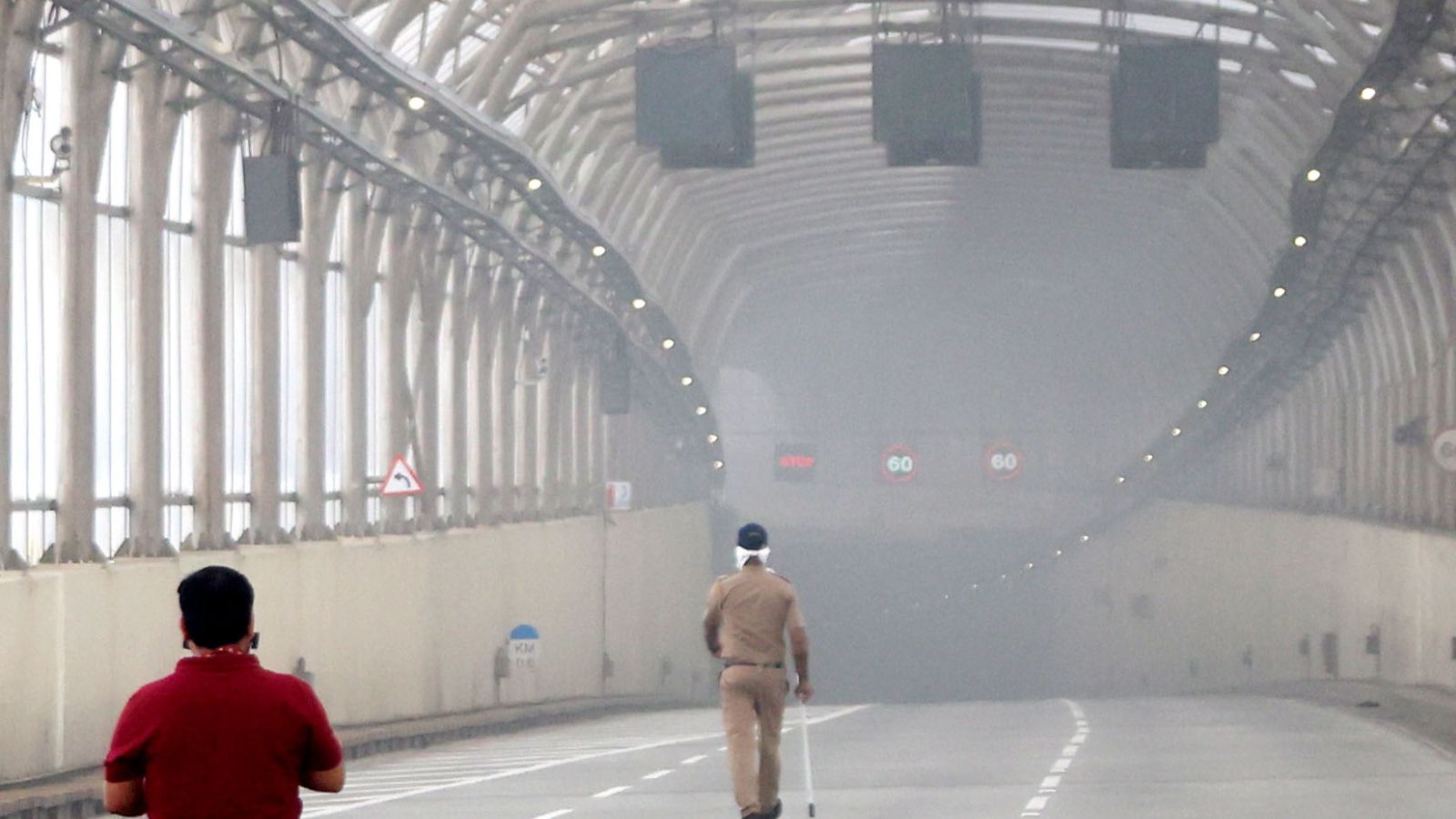
A burned car was removed from the tunnel on the Mumbai Coastal Road today after a blaze caused thick smoke and disrupted traffic. The southbound lane was temporarily closed while firefighters extinguished the vehicle fire and ventilated the tunnel.
(Express Photo by Akash Patil)
When a car caught fire inside Mumbai’s Coastal Road tunnel on Wednesday, several motorists abandoned their vehicles and ran towards the exit, with many later saying they were unsure how to escape safely. While officials maintain that India’s first undersea road tunnel has multiple emergency systems, the Brihanmumbai Municipal Corporation (BMC) now plans to upgrade signage and conduct mock drills after the incident exposed a lack of public awareness.
A day after the blaze, the civic body also issued an advisory explaining how commuters should respond during emergencies inside the tunnel.
Use the nearest cross passage instead of running to the tunnel exit
The 2.07-km tunnel has six cross passages located every 300 metres. Four are meant for pedestrians and two for vehicles, allowing commuters to move into the parallel tunnel during emergencies such as fires, vehicle breakdowns or medical incidents.
Although the cross-passage doors are currently fitted with illuminated signs, many motorists did not use them during Wednesday’s fire.
To address this, the BMC will begin installing large reflective boards above the cross-passage doors this week. The boards will explain, in three languages, how to operate the emergency doors, including instructions to press the emergency button before opening them. They will also display emergency contact numbers for the police, ambulance, disaster management and women’s helpline.
The civic body also plans to install additional directional signboards leading commuters to the nearest cross passage so they can be located more easily during emergencies.
Keep the emergency lane clear
Story continues below this ad
Each tunnel has three lanes, with the third reserved for emergency vehicles and rescue operations.
Officials said one of the biggest challenges during Wednesday’s incident was that several motorists attempted to reverse or make U-turns, blocking the emergency lane and slowing access for responders.
Use the emergency telephones if you need help
Emergency telephones and portable fire extinguishers are installed every 30 metres inside the tunnel.
On Wednesday, stranded commuters used the emergency telephones to alert the control room after the car caught fire.
Story continues below this ad
The tunnel is also equipped with pressurised fire hydrants, a Saccardo ventilation system to clear smoke and a linear heat detection system, which automatically alerts the Coastal Road control room when unusually high temperatures are detected.
Mock drills to improve emergency response
The BMC is now planning a joint meeting with the Mumbai Police, Traffic Police and Mumbai Fire Brigade to review Wednesday’s response and reduce response times during future emergencies.
Officials said the civic body will also begin conducting mock drills involving multiple agencies to improve preparedness and familiarise both emergency responders and tunnel users with evacuation procedures.
The measures, officials said, are aimed at ensuring that if another emergency occurs inside the tunnel, motorists know where to go, how to seek help and how to leave the tunnel safely without hampering rescue operations.
View original source — Indian Express ↗
Related stories

TASS
TechnologyJul 16, 2026 · 1 min
Europe ready to see all Ukrainian men drafted — Russia's representative to OSCE
TASS

The New York Times
TechnologyJul 16, 2026 · 1 min
Will SpaceX’s 13th Test Flight of Starship Be Lucky?
The New York Times

Engadget
TechnologyJul 16, 2026 · 1 min
Why does wireless Android Auto use both Bluetooth and Wi-Fi?
Engadget

The Verge
TechnologyJul 16, 2026 · 1 min
Ninja’s microwave air fryer could be the fix for soggy reheated pizza
The Verge