South China Morning Post
Silence isn’t golden for a world looking to Kevin Warsh’s Fed
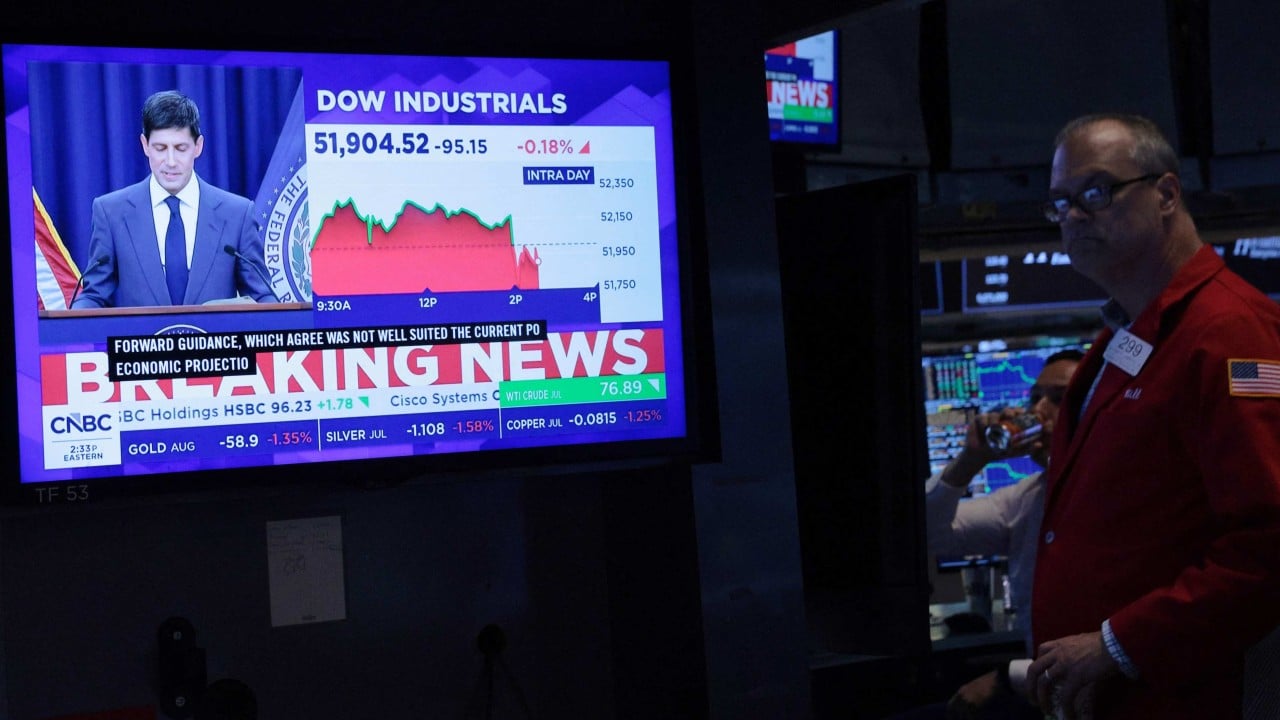
Since being sworn in as US Federal Reserve chairman on May 22, Kevin Warsh has struck a distinctly hawkish tone. At his first press conference at the helm of the world’s most important central bank on June 17, Warsh made a solemn vow to curb inflation. He said members of the Fed’s interest rate-setting committee were “unambiguous and unanimous. This committee will deliver price stability”.
Bond investors who questioned Warsh’s inflation-fighting credibility – given that he built his candidacy for Fed chair on lower interest rates to persuade US President Donald Trump to nominate him for the role – are less concerned that he will yield to pressure from the White House to lower borrowing costs despite elevated inflation.
Since the conclusion of the Fed’s policy meeting on June 17, the yield on the interest rate-sensitive two-year Treasury bond has risen from 4 per cent to 4.15 per cent. Bond markets are pricing in at least one interest rate increase by the end of this year.
In a report on June 20, Citadel Securities said Warsh’s “hawkish tone confounded the expectations of many in the market who had predicted a ‘dovish-come-what-may’ approach and marked a substantive change from the [former Fed chair Jerome] Powell-era willingness to look through persistently above target core inflation and (arguably) excess sensitivity to the employment side of the mandate”.
However, Warsh’s unanticipated hawkishness is likely to prove far less consequential than the sweeping reforms he has instituted at the Fed. Promising to embark on “a new chapter for the central bank”, Warsh said he had initiated an extensive review of everything from how the Fed communicates with markets to the future of its massive balance sheet and the reliability of its data sources.
Not surprisingly, investors have zeroed in on the overhaul of the central bank’s communication policy. In a throwback to the more austere and opaque era of US monetary policy in the 1980s and 90s, the use of forward guidance – the central bank’s public communication about the likely future path of interest rates, largely aimed at guiding markets – has been jettisoned.
View original source — South China Morning Post ↗
Related stories

MarketWatch
BusinessJul 16, 2026 · 1 min
Oil is facing a supply crunch — and the war in Iran isn’t the only problem
MarketWatch

TASS
BusinessJul 16, 2026 · 1 min
Russia second-largest supplier of LNG to EU by value after US in May
TASS

TASS
BusinessJul 16, 2026 · 1 min
Russia’s international reserves up $0.7 bln in one week to $722 bln — Central Bank
TASS

Bloomberg
BusinessJul 16, 2026 · 1 min
Apple Nears Launch of OLED iPad Mini; New iPad Air and Base iPad in 2027
Bloomberg