Philippine Daily Inquirer
SC dismisses raps vs critics of VP ruling
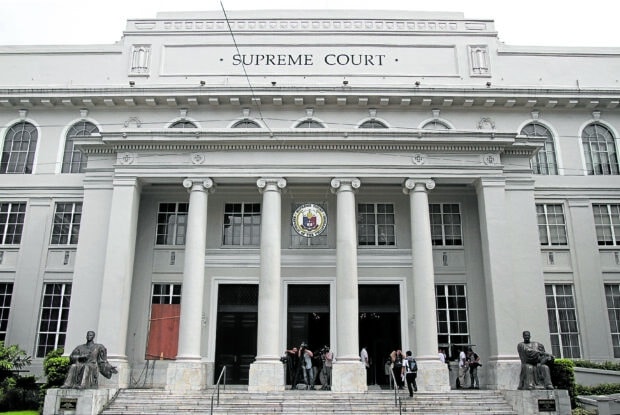
MANILA, Philippines — The Supreme Court has cleared political analyst and Inquirer columnist Richard Heydarian, Akbayan partylist Rep. Perci Cendaña, and presidential anti-poverty czar Larry Gadon of indirect contempt, saying their sharp criticism of the high tribunal’s ruling on the impeachment proceedings in favor of Vice President Sara Duterte falls within the ambit of constitutionally protected freedoms.
In an 87-page en banc decision promulgated on April 8 and released only recently, the high court dismissed the consolidated petitions for indirect contempt against the three public figures, describing these as “nothing more than hollow assertions, which are devoid of factual or legal substance.”
“The petitions do not demonstrate a direct and substantial link between the impugned statements and any actual tendency of inciting the public to, likely and imminently, obstruct, degrade or interfere with the orderly administration of justice,” read the ruling penned by Senior Associate Justice Marvic Leonen.
Article continues after this advertisement
READ: Sara Duterte trial: Is it too late?
FEATURED STORIES
NEWSINFO
NEWSINFO
NEWSINFO
The three respondents aired their criticism against the Supreme Court following the release of its July 25, 2025, decision on the impeachment proceedings against Duterte.
In their petitions separately filed in August last year, lawyers Mark Tolentino, Rolex Suplico and Ferdinand Topacio, all of whom are affiliated with the Duterte family, accused as “malicious, scandalous and offensive” the remarks made by Heydarian, Cendaña and Gadon.
Bias in ruling
Heydarian, who is also a lecturer in various universities, posted on his account on X (formerly Twitter) that 13 out of the 15 Supreme Court justices were appointees of former President Rodrigo Duterte, insinuating bias in the ruling favoring the vice president.
Cendaña, for his part, called the Supreme Court the “supreme coddler” for allegedly protecting Sara Duterte from impeachment and setting a “dangerous precedent” of encroaching on the separation of powers between the judiciary and the legislature.
Article continues after this advertisement
READ: Supreme Court: Impeachment complaint vs Sara Duterte unconstitutional
Gadon, on the other hand, was quoted as saying in news reports that the high tribunal was a “lapdog of the Dutertes.”
Article continues after this advertisement
In its ruling, the Supreme Court stressed that it may only deem those political comments, which enjoy a high level of protection, as “contemptuous” if they present a “clear and present danger to the court’s administration of justice.”
‘Incitement test’
Applying this “incitement test,” remarks must “incite the public to lose trust in the judiciary and the imminence and likelihood of this intended effect must also be established,” it added.
The high tribunal used the incitement test in the case against Lorraine Badoy, who was found guilty of indirect contempt in 2024. It noted that Badoy, who served as spokesperson of the government’s anticommunist task force, presented a clear danger when she publicly threatened to harm Judge Marlo Magdoza-Malagar of the Manila Regional Trial Court and even bomb the offices of judges who rule in favor of supposed terrorist groups.
In the case of Heydarian and Gadon, the high court said the petitioners “failed to establish” all allegations that should have satisfied the incitement test. They also failed to substantially allege the required intent to obstruct or degrade the court’s administration of justice.
“From the text itself, respondent Heydarian’s statement does not suggest any inciting or rallying to commit lawlessness. There is also no likelihood that it shall produce imminent lawlessness. Clearly, the form, style and nature of respondent Heydarian’s statements are not provocative or direct enough to be a call to commit crimes or to disregard the laws,” noted the high tribunal.
‘Arguably disrespectful’
While “arguably disrespectful,” Gadon’s remark, on the other hand, “was not directed at obstructing judicial proceedings nor intended to influence the outcome of any pending case.”
Meanwhile, Cendaña, an elected public official who is expected to exercise restraint in speaking against the judiciary, is protected by his freedom to express political expression.
Your subscription could not be saved. Please try again.
Your subscription has been successful.
“[The] speech uttered in response to these decisions does not automatically disrupt the Court’s administration of justice. Thus, we find that respondent Cendana’s statement is covered under the wide protection given to political expression, especially on grave matters of national importance,” the high court said. —With a report from Frances Agbayani (Intern) /atm
View original source — Philippine Daily Inquirer ↗
Related stories

The Punch
PoliticsJul 16, 2026 · 1 min
Appeal Court voids Electoral Act provisions on party primaries, membership register
The Punch
South China Morning Post
PoliticsJul 16, 2026 · 1 min
US to focus counterterrorism efforts on left-wing groups, Rubio says
South China Morning Post
ABC News
PoliticsJul 16, 2026 · 1 min
The unanswered question in the rush for Queensland's hidden oil jackpot
ABC News
Times of India
PoliticsJul 16, 2026 · 1 min
Call all-party meet to discuss delimitation bill: Kharge to PM Modi
Times of India