The Guardian
Kalshi to offer betting on drug trial results and FDA regulatory decisions
Kalshi is expanding its wagers to include bets on drug trial results, an expansion into new predictions territory as platforms continue to rapidly gain popularity and offer opportunities to bet on virtually anything.
The betting platform said the expansion into clinical trials and FDA regulatory decisions would help surface information on drug trials that otherwise go unreported. A publicly listed contract on a drug trial would produce a “continuously updated, public probability that reflects the weight of the evidence, rather than the preferred message of the trial sponsor”, the company said.
“Drug development is one of the most important and most information-constrained industries on earth,” Kalshi’s CEO, Tarek Mansour, said in a statement. “The data that determines which drugs advance and which don’t is largely locked away from the people who need it most. Surfacing information is what Kalshi is for, and we are committed to doing it right: compliance-first, carefully scoped, and built for the long term.”
The launch is described as a pilot program, and was announced as a partnership with the artificial intelligence firm AppliedXL.
Critics have said prediction platforms such as Kalshi are at risk of market manipulation and insider trading.
Federal regulators told CBS News on Friday that Donald Trump’s longtime teleprompter operator made tens of thousands of dollars on bets around the president’s speeches. Last month, the Department of Justice launched an investigation into George Santos, the former Republican congressman from New York, over whether he engaged in insider trading by betting on his own attendance at the State of the Union address. And in April, several congressional candidates were fined for betting on the outcomes of their own races.
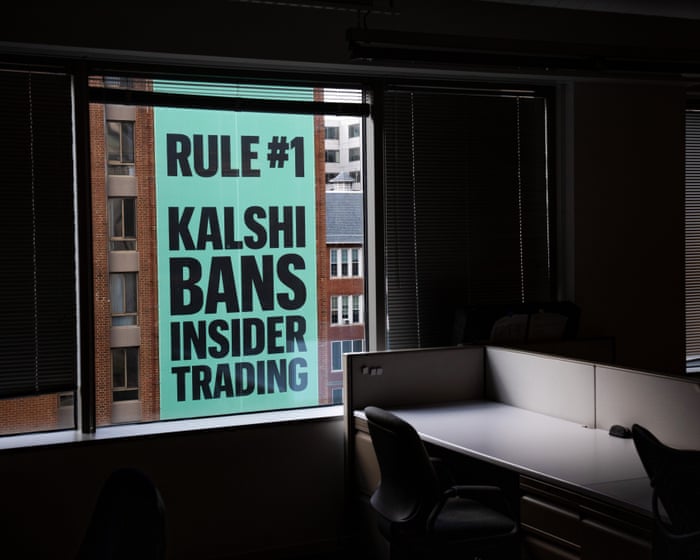
As a safeguard, Kalshi said it would require employment verification to prevent insider trading, as it does with its other markets. It also said it will only list contracts after enrollment in a drug trial closes, to avoid interfering with recruitment or physician referrals.
Kalshi also released a 44-page white paper on the “state and future” of drug development prediction markets, which included quotes from several leaders of healthcare companies, including the founder of 23andMe, Anne Wojcicki, who wrote that the clinical trial process was opaque and difficult to understand for most people.
“Most patients don’t know about the choices available in clinical trials or which programs are most promising,” Wojcicki wrote. “The opportunity to have an open, transparent dataset about trial probabilities is extremely promising and empowering for people.”
Earlier this week, filings with the US Commodity Futures Trading Commission revealed Kalshi was also making plans to offer contracts to users who wanted to bet on flight cancellations – the percentage of flights cancelled at a specific airport over a given timeframe.
The contracts would be based on data from FlightAware, a flight tracking company, with information from the US Department of Transportation as a backup, Kalshi said in the filing.
RTX, the parent company of FlightAware formerly known as Raytheon Technologies, said in a statement on Thursday that FlightAware has “no involvement in any prediction markets, and no company is – or will be – authorized to use the data collected through the FlightAware network for this purpose”.
“Any customer who uses FlightAware in violation of the terms of use will have their account terminated,” it said.
And on Thursday, Fortune reported that Kalshi had called off the endeavor following concerns that some users would cause disruptions at airports to guarantee payouts. A Kalshi spokesperson told the Guardian the company “paused” contracts on flight disruptions.
Kalshi has dominated the world of online prediction markets, racking up $1bn in trading volume earlier this year, on Super Bowl Sunday. It averages over 5 million monthly users, a large share of whom are young men.
Though Kalshi has emphasized that it is not a gambling platform, experts say that prediction markets are just as addictive, and US regulators are not doing enough to keep users safe. Kalshi recently announced that it would give $2m to the National Council on Problem Gambling to help with “trader health and safety”.
View original source — The Guardian ↗
Related stories

The Punch
TechnologyJul 17, 2026 · 1 min
Telecom operators endorse NCC framework
The Punch

TechCrunch
TechnologyJul 16, 2026 · 1 min
San Francisco mayor pushes for tougher rules after the Waymo traffic fiasco
TechCrunch

TechRadar
TechnologyJul 16, 2026 · 1 min
Ukraine wants combat humanoid robots — but expect Wall-E over Terminator, as simpler, wheeled tech still wins
TechRadar

CBC
TechnologyJul 16, 2026 · 1 min
Meta will now tell parents if their teens talk about suicide with the company's AI chatbot
CBC