CNA
Commentary: India’s long-held strategy is paying off in the Indo-Pacific
Commentary
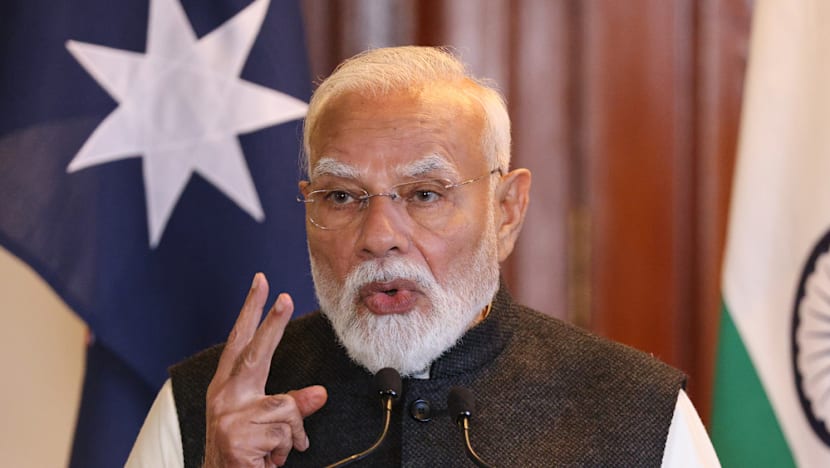
Indian Prime Minister Narendra Modi’s diplomatic blitz is the latest sign of middle powers drawing closer together. It has not gone unnoticed by Washington, says former foreign correspondent Nirmal Ghosh.
17 Jul 2026 06:00AM
SINGAPORE: In the space of one week in July, Indian Prime Minister Narendra Modi finalised the sale of Indian Brahmos supersonic missiles to Indonesia, secured a supply of Australian uranium to India and elevated ties with New Zealand to a "milestone" strategic partnership.
None of these agreements will reshape the Indo-Pacific on their own, but taken together, they point to a distinct trend - of middle powers deepening relationships with each other as trust in the United States weakens.
The diplomatic exchanges have gone both ways. Mr Modi’s trip came on the heels of Japanese Prime Minister Sanae Takaichi’s visit to New Delhi in July. Earlier in April, Mr Modi hosted South Korea’s President Lee Jae Myung and in May, Vietnam’s President To Lam.
But it would be an overstatement to say this means middle powers are moving away from the United States. In a time of complex geopolitical flux, generalising is unwise; Japan and South Korea are both US treaty allies.
Attitudes towards the US across Southeast Asian nations vary, often in accordance with complex internal dynamics and foreign threat perceptions. For instance, the Philippines is also a US treaty ally, and with its concerns over China’s aggression in the South China Sea, the country remains firmly pro-US under President Ferdinand “Bongbong” Marcos Jr.
The Singapore-based think tank ISEAS-Yusof Ishak Institute’s 2026 survey of about 2,000 Southeast Asian policy elites showed that the region is increasingly anxious about US unreliability. Yet, the same poll also showed, for example, that Vietnam’s elites still trust the US more than they trust China.
INDIA’S DEFAULT MODE IS MULTI-ALIGNMENT
This is where India’s long-standing strategy of multi-alignment has become an advantage.
New Delhi can offer countries an option of balancing and hedging without having to choose between Washington and Beijing. Such hedging may not be new but it has acquired renewed urgency at a time of geo-economic and geo-political flux due to the policies of the second Trump administration and the Iran war.
“None of these countries are choosing an exit from Washington but responding to shifting dynamics in the Indo-Pacific,” Shruti Pandalai, India Chair at Australia’s Lowy Institute, told me.
In the case of Indonesia, it shares old civilisation ties with India which endured despite a temporary rupture during the 1965 India-Pakistan war. Today, their strategic interests converge, in terms of balancing China and safeguarding the two countries’ maritime domains.
“Both countries are the resident powers and view themselves as the hegemon in their region,” said Dr Aparna Pande, a senior fellow at Hudson Institute in Washington DC. “Both have a close relationship with the United States and its allies and yet at the same time are seeking to manage their relations with China.”
CHINA’S ACTIONS REINFORCE THE LOGIC
These deeper relationships are producing tangible results. The Melbourne leg of Mr Modi’s swing was a particularly significant illustration. It was Mr Modi's third visit, and the summit language moved from framework-building to delivery, with 18 outcomes ranging from a uranium supply deal to defense-industrial and critical minerals corridors.
“That's a relationship past the ‘untapped potential’ stage as Australians used to describe it,” Ms Pandalai told me.
Australia gains from diversification and reducing dependence on China and by deepening relations with a maritime partner with genuine Indian Ocean reach that Australia cannot build alone, she said. “Being seen as a country that can hold India close gives Canberra standing as a serious independent actor in the Indo-Pacific, not just a US-alliance partner.”
China’s missile test on Jul 6 only reinforced that logic. Two days before Mr Modi met Australian counterpart Anthony Albanese, China test-fired a submarine-launched intercontinental ballistic missile 7,300 km into waters comprising the South Pacific Nuclear Free Zone. It landed approximately northeast of the Solomon Islands, between Nauru and Tonga and close to Tuvalu.
It is unlikely that the missile test was deliberately scheduled to coincide with the third Australia-India leaders’ summit, Carlyle Thayer, Emeritus Professor at the University of New South Wales in Canberra wrote to me in an email. “But it had the effect of reinforcing the importance of Australia’s growing defence relationship with India.”
THE REAL TEST OF MIDDLE POWERS PARTNERSHIPS
India is capitalising on being seen as a relatively non-aggressive partner backed by its large market - even if that market remains relatively closed - as well as a growing maritime security footprint.
India’s growing global diaspora has also become part of its influence. For some countries with large Indian communities, stronger ties with New Delhi could also bring domestic political benefits. At the rousing Jul 9 “Melbourne meets Modi” rally, Mr Modi and Mr Albanese addressed an estimated 30,000 members of Australia’s ethnic Indian community.
For Mr Modi, the trip also had domestic value as an opportunity to demonstrate - after criticism at home for being reduced to a bystander in the Iran war - that India is relevant.
These developments have not gone unnoticed in Washington. On Tuesday (Jul 14), Pentagon policy chief Elbridge Colby posted on X that the US was not concerned about the “great deal of hubbub about a collective ‘middle powers’ strategy”.
“Rather, we are more concerned that a few allies and partners will think it is and waste valuable time, money and political capital on a distraction,” he wrote, adding that “‘middle powers’ don’t have a coherent basis for alignment”.
But across much of the Indo-Pacific, the basis seems clear enough.
The deepening and consolidation of middle power partnerships across the region is a logical - and may well prove to be the most important - consequence of the second Donald Trump administration’s transactional, “America First” reassessment of its global priorities.
To be sure though, the real test of these strategic partnerships will be whether the agreements are actually implemented - and whether the trust built will hold when the next crisis hits.
Nirmal Ghosh, a former foreign correspondent, is an author and independent writer based in Singapore. He writes a monthly column for CNA, published every third Friday.
Source: CNA/zw(ch)
Related stories

The Punch
PoliticsJul 16, 2026 · 1 min
Appeal Court voids Electoral Act provisions on party primaries, membership register
The Punch
South China Morning Post
PoliticsJul 16, 2026 · 1 min
Ukraine’s Patriot missile request tests Japan’s pacifist limits
South China Morning Post

The New York Times
PoliticsJul 16, 2026 · 1 min
Judge Unseals Filings From Jack Smith Subpoena for Lawmaker’s Phone Data
The New York Times
The Guardian
PoliticsJul 16, 2026 · 1 min
Florida House write-in candidate arrested for allegedly threatening to kill Trump
The Guardian