CNA
DAP committed to Anwar’s Pakatan Harapan despite electoral setbacks, says party leader Anthony Loke
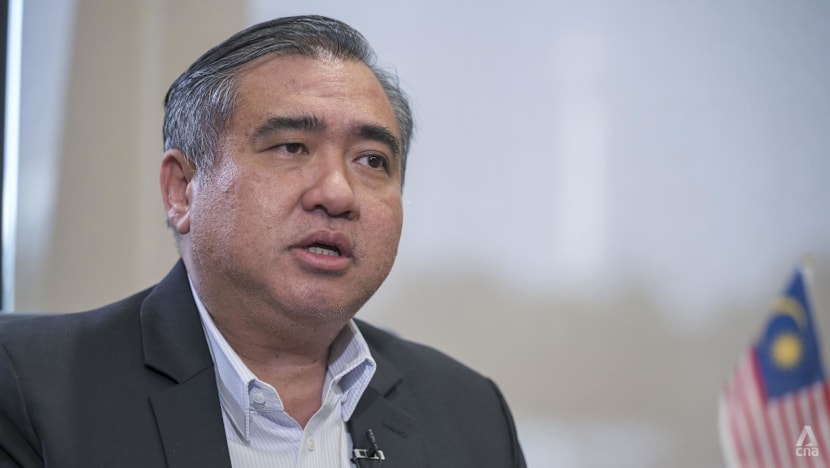
KUALA LUMPUR: Malaysia’s Democratic Action Party (DAP) will not leave Prime Minister Anwar Ibrahim’s Pakatan Harapan (PH) coalition before the end of the current government’s term, said its secretary-general Anthony Loke.
He reiterated the vow in an interview with CNA in the wake of the party’s disappointing showing in the Jul 11 Johor state election, and ahead of the Aug 1 Negeri Sembilan state polls as well as a crucial special party congress on Aug 16.
“In the context of Malaysian politics, I do not think the DAP can go far if we just go solo,” Loke said, referring to the country’s demographics and system of governance.
Malays and bumiputeras make up about 70 per cent of its 31 million citizens, while Chinese make up about 22 per cent and Indians, about 6.5 per cent.
While it is “easy” to go solo, said Loke, “you can only play the role of opposition”.
“You cannot be part of the process of nation-building. You cannot be in the process of governance,” he added in the interview on Monday (Jul 13).
“If we really want to effect change in a government, in society, you have to be in a position of power ... I am a believer in coalition politics.”
Withdrawing from the PH pact would mean falling into the trap set by political opponents who “do not want the DAP in government”, said Loke, 49, who is also transport minister.
With 40 parliamentary seats in Malaysia’s 222-member lower house, DAP supplies the most seats to PH, which also comprises Anwar’s Parti Keadilan Rakyat (PKR) and Parti Amanah Negara (Amanah).
Malaysia’s unity federal government also comprises the Barisan Nasional (BN) coalition, Gabungan Parti Sarawak (GPS), Gabungan Rakyat Sabah (GRS) and other smaller parties as well as independents.
At the state level, however, PH and BN are rivals in some states like Johor, where politicians from both coalitions have engaged in pointed exchanges.
For Negeri Sembilan, PH has announced plans to contest all 36 state seats.
BN has said it will contest 25 seats, with the remaining 11 expected to be allocated to other parties.
It is rumoured to be forming an alliance with opposition coalition Perikatan Nasional's components, namely Parti Islam Se-Malaysia (PAS) and the newly formed Parti Wawasan Negara, led by opposition leader Hamzah Zainudin.
CONSTRAINTS OF COALITION POLITICS
Chinese-majority DAP has lost ground in the last two state elections.
In the November 2025 Sabah state election, it lost all eight seats it contested – a far cry from the 2020 Sabah election, when it secured six seats out of seven contested, some of them with super majorities.
This led some to question the party's future in PH and suggest it should consider exiting the coalition.
In the ensuing weeks, DAP made a series of bold demands of the very government it is part of, including the controversial call to recognise the Unified Examination Certificate awarded by independent Chinese-medium schools.
Analysts said at the time that the party – which has roots as a fiery opposition party – was taking an aggressive reformist stance to reclaim its political identity.
In Johor on Jul 11, DAP won six out of the 17 seats it contested, down from the 10 seats won in 2022. PH won eight seats in total – with PKR and Amanah each securing one seat – while BN swept 48 seats.
Significantly, DAP’s rival, the BN component party Malaysian Chinese Association (MCA), won eight seats in Johor, leading some analysts to say more non-Malay voters were turning away from DAP and PH.
Loke said DAP is “loud” on certain issues, but some supporters have said the party is not loud enough.
“After becoming the government, I keep on telling them that in government, what matters is delivery,” he said.
“It's not how loud you shout, but how much you can do within the constraints of coalition politics and within the constraints of the government.”
Loke said that under the Anwar administration, economic growth has been “consistent” at about 5 per cent a year, and Malaysia's standing in the global arena has risen.
“As politicians, we know these might not necessarily translate into support on the ground because it might not be felt on the ground,” he said.
Juggling a stable government and the reform agenda is a balancing act, he said, citing the government’s efforts to limit a prime minister’s term to 10 years and separating the role of the Attorney-General and the Public Prosecutor that have seen setbacks in parliament.
“Of course, from the DAP point of view, we would definitely hope that there will be a faster reform pace,” he said.
“But the reality is that some people will try to kill the reform.”
DAP’s goal and ideal, said Loke, is “very simple”.
“We want to make sure that Malaysia remains a multicultural, (multi-religious) and inclusive society.”
For its special congress on Aug 16, party delegates are set to vote on whether party officeholders – including five full Cabinet ministers and six deputy ministers –should relinquish their positions although the party would maintain parliamentary support for the unity government.
The congress was originally scheduled for Jul 12, but was postponed following the dissolution of the Johor and Negri Sembilan state legislative assemblies.
PH dissolved the Negeri Sembilan state assembly with royal consent on Jun 5, even though a state election was not due until November 2028. This was because 14 assemblymen from BN lynchpin party United Malays National Organisation (UMNO) withdrew support for chief minister Aminuddin Harun’s government.
The 14 later backtracked on their withdrawal after getting orders from the party’s central leadership.
On whether facing off against BN in Johor and Negeri Sembilan would affect their relationship at the federal level, Loke said “it's a lie to say that there's no impact at all, but we have to keep it professional”.
“We still attend meetings just as usual. I just came up from a meeting (where) I was seated in the middle between the president and the deputy president of UMNO. So we try to keep it as professional as possible to keep the government intact,” he said.
UMNO president Ahmad Zahid Hamidi is deputy prime minister while UMNO deputy president Mohamad Hasan is Malaysia’s foreign minister.
Zahid has also pledged support for the unity government until the end of its term, regardless of the results of the state elections, Loke noted.
“Whether or not we'll go into the next election as a unity bloc or as a separate coalition, of course, that is something to be decided by the respective coalitions when parliament is dissolved,” Loke added.
Malaysia’s 16th general election must be held by February 2028, but observers have said strong results for BN in state elections could pile pressure on Anwar to call an early GE.
PH TARGETS 20 SEATS IN NEGERI SEMBILAN
PH is aiming to win 20 seats in the Negeri Sembilan polls, said Loke, who hails from Seremban in the state. This will be the “best-case scenario” for a simple majority to form the state government.
He will be defending his state seat of Chennah, about an hour from Seremban, and said he has built a “very strong bond” with constituents since 2013.
He expects “very stiff competition” from BN, particularly from MCA.
“Mine is a very mixed seat, so I need to garner the support from both the Chinese … as well as our Muslim voters,” he said.
Loke acknowledged DAP’s showing in Johor has raised concerns, but maintained this was part of the ups and downs of politics.
“We have faced some setbacks, but it is not a total rejection,” Loke said.
“If you look at our vote share, it increased compared to the last election. While not at the same percentage as BN, it is still an increase.”
According to an analysis by former DAP leader Ong Kian Ming, DAP’s overall vote share in 2026 state polls increased by 6.2 percentage points compared to the 2022 state polls.
However, Ong said DAP’s vote share decreased by 10.4 percentage points compared to the 2022 general election. He said this should be PH’s frame of reference, especially if it wants to retain the 15 parliamentary seats for Johor it won in the 15th general election.
BN's vote share in the recent Johor elections increased 16.5 percentage points compared to the 2022 state elections, and by 29.6 percentage points compared to the 15th general election, according to Ong's analysis.
Loke credited BN with running a “very organised” campaign with “very coherent messaging”, featuring incumbent chief minister Onn Hafiz Ghazi on posters “everywhere throughout the state”.
In Negeri Sembilan, with incumbent chief minister Aminuddin from PH, the coalition will be looking to run a “positive campaign, try and talk about what we should do, what we can do, what we have achieved and what we can do for the people”, Loke said.
“I will personally oversee the campaign and narrative,” he said.
“I want to run … a campaign of hope that things will be better.”
He is aware opponents may try to put PH on the defensive and frame DAP as a threat to Malay-Muslim interests and the position of the Malay rulers.
“We are the punching bag and the bogeyman," he said.
“This strategy and these tricks, to be honest, will not hurt the DAP in our constituencies. It will hurt our component parties (in PH that will contest in Malay-majority seats) … We contest in mainly non-Malay majority seats,” he said.
The state election takes place against a backdrop of a royal impasse between two men claiming the Negeri Sembilan throne – Tuanku Muhriz Tuanku Munawir, who remains the ruler recognised by the federal government and the state administration, and Tunku Nadzaruddin Tuanku Jaafar, who was proclaimed Tuanku Muhriz’s successor by four chieftains with the constitutional authority to elect the ruler.
Loke said DAP did not want to involve or drag the royal institution into politics.
“The royal crisis in Negeri Sembilan must be resolved within the royal institution based on the customs and the laws of the institution,” he said.
On what the state election results would mean for DAP going into the next GE, Loke said the past has shown dynamics are different in the two types of elections.
In the 2021 Melaka state polls, DAP’s seats were cut from eight to four, while it won only two seats in the Sarawak polls that were held the same year, he said.
“Before the last general election (in November 2022), we took a beating too, right? … So a lot of people wrote off the DAP,” he said.
“But during the GE, in Sarawak, we won back five parliamentary seats. How do you explain that? So it's always been different dynamics in every election,” he said.
Even so, he acknowledged the party has to listen to the voters and adjust its policies and approach.
DAP must confront the issue of low non-Malay turnout in Johor and recognise it as a signal from voters of their dissatisfaction with PH, he said.
“That is the beauty of democracy. That's the beauty of elections, that you send a certain message to the government,” he said.
Source: CNA
Related stories

The Punch
PoliticsJul 16, 2026 · 1 min
Appeal Court voids Electoral Act provisions on party primaries, membership register
The Punch

TASS
PoliticsJul 16, 2026 · 1 min
Europe should first focus on security guarantees to Greenland, not Ukraine - diplomat
TASS

TASS
PoliticsJul 16, 2026 · 1 min
IAEA chief failed to condemn Kiev’s killing of ZNPP chief engineer — diplomat
TASS
South China Morning Post
PoliticsJul 16, 2026 · 1 min
Ukraine’s Patriot missile request tests Japan’s pacifist limits
South China Morning Post