CNA
Commentary: The 2026 World Cup was a crash course in America
Commentary
The US has immensely impacted football and the World Cup, and we should make sure to remember every aspect of it, says CNA's Zara Waseem.
New: You can now listen to articles.
This audio is generated by an AI tool.
17 Jul 2026 05:59AM
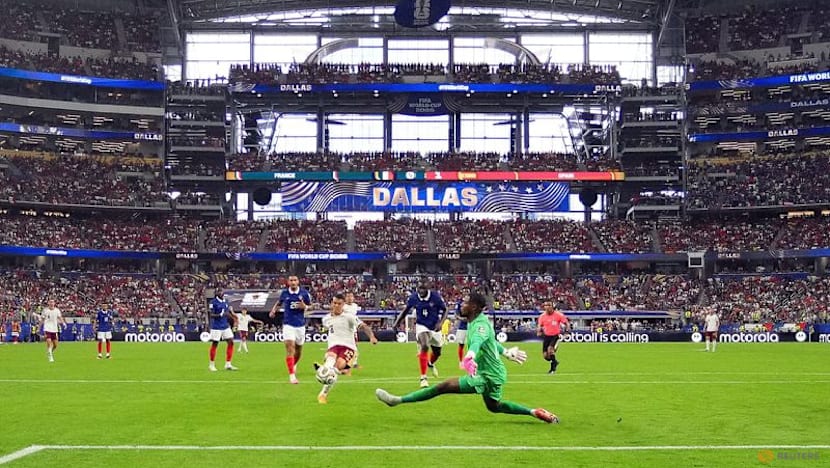
SINGAPORE: The World Cup has been a month-long crash course in the America of 2026.
Though co-hosted with Canada and Mexico, the United States hosted the majority of the tournament’s 104 matches, including the final between Spain and Argentina this weekend. Fans came for the football but left having experienced the America behind the headlines.
Even those of us watching from halfway around the world at odd hours found ourselves captivated not just by the football, but by the people and stories around the tournament.
Through them, the World Cup became as much about its host as the beautiful game.
AMERICA AT ITS BEST
Many visitors quickly discovered one side of America - the one represented by its people rather than its politics.
European fans took to social media to express their delight with US culture, highlighting the hospitable nature of locals in the various cities hosting matches. They gushed over parts of everyday life that an American might barely notice, from massive portion sizes to ranch dressing (recipes of which are now being enthusiastically shared by Americans for their new European friends).
Fans quickly won over their hosts too. In Boston, where the Scotland team was based during the group stages, Scottish fans sang, danced and played the bagpipes into the locals’ hearts. It helped too, that local pubs also reported record sales and beer shortages.
Norwegians found themselves at baseball games and golf tournaments, where they have received warm welcomes, even being encouraged to bring their Viking Row chant to amplify the atmosphere.
THE LONG SHADOW OF POLITICS
But many also encountered another side of America, where politics and policies sharply shaped who could enter or how they participate.
Geopolitics cast a long shadow on the tournament. Against the grim backdrop of the US war on Iran, the Iranian delegation struggled to secure visas and had to leave behind support staff members. On match days, Iran was the only team required to arrive at and depart from the US within 24 hours, putting them at a disadvantage through disrupted preparation and rest.
For many fans, following their national teams depended also on immigration policy. Fans from Africa and the Middle East reported being questioned for hours at US airports, while Egyptian supporters said they were singled out for stadium security checks.
Even the mother of Cape Verde’s goalkeeper Vozinha could not witness her son’s stellar performance against Spain due to visa issues. It now costs up to US$15,000 for Cape Verdeans to secure a US visa.
DON’T LET IT SHAPE THE GAME
Ultimately though, what the fans want is football - which is why many were disappointed when it felt like the politics and priorities of the host country was starting to shape the game.
That concern came into sharp focus after US President Donald Trump revealed he had called on FIFA to retract a red card given to US star striker Folarin Balogun. FIFA’s subsequent decision to remove the one-match suspension, allowing Balogun to play in the US’ knock-out Round of 16 match against Belgium, fuelled accusations that FIFA had bowed to political pressure. The Union of European Football Associations (UEFA) rebuked FIFA for crossing “a red line”.
For some supporters, the World Cup also felt increasingly tailored to American entertainment sensibilities and commercial preferences.
Matches have been featuring musical performances, with a Super Bowl-style halftime show planned for the final. The 15-minute break, is seemingly going to be pushed to 30 minutes to accommodate a show that will include various artists, including Madonna, Shakira, Justin Bieber and BTS.
FIFA also implemented compulsory three-minute hydration breaks, turning a match of two halves into one with four quarters. While FIFA cited protection against heat as justification, more cynical fans argued that the breaks created more stoppage time for advertising - this has been a major component of this tournament, with every aspect of the game having a sponsor.
And with some coaches criticising the breaks for disrupting the rhythm of play, they reinforce the perception that commercial considerations are shaping the game itself.
Every World Cup leaves behind unforgettable moments for football fans. I will remember the intense penalties knocking out the Netherlands, England’s Jude Bellingham rising to his potential across the tournament, and the insane saves by Morocco’s Bono.
But I will also remember the controversies that too often detracted from the football. For this fan, a World Cup I had so eagerly anticipated might ultimately leave a sour taste.
Zara Waseem is an intern on the commentary team at CNA Digital.
Source: CNA/zw
Related stories

The Punch
SportsJul 17, 2026 · 1 min
UNICEF confirms viral Messi bathing baby Yamal photos are authentic
The Punch
The Punch
SportsJul 17, 2026 · 1 min
NBA says no going back on Saturday election
The Punch

ESPN
SportsJul 16, 2026 · 1 min
Messi to critics: Nothing was handed to Argentina
ESPN
The Punch
SportsJul 16, 2026 · 1 min
Yoruba lawyers call for NBA election postponement, demand NIN-based voter verification
The Punch