CNA
I tasted 300 Nebbiolo wines from Barolo, Barbaresco and Roero. These 6 producers stood out
Few wine notes speak as readily to wine lovers across the globe. Damson, forest berries and cedar can be lost in translation, but rose – fresh, dried or preserved – is a universal language.
Rose is one of the signature notes of Nebbiolo, a red grape grown across the steep hills of the Langhe in Piedmont, northwestern Italy. It also delivers cherry, tar and dried herb notes in its wines and depending on where it’s planted, it can taste remarkably different from one hillside to the next.
Last November, I found myself in Alba, blind-tasting 100 Nebbiolo wines every day over three days. Each morning began the same way: a cold, fog-laced walk through Alba’s empty streets, past shuttered wine bars and the scent of truffles – autumn is truffle season – to the tasting office. After an orientation or a lecture by a regional expert, we launched into the day’s 100 wines. Three days of tar, roses and purple-stained teeth taught me more about Barolo than any other bottle I’ve ever had.
15 MILLION YEARS IN THE MAKING
Nebbiolo is a fussy, thick-skinned red grape. Its superpower is the ability to capture the signature of the village, hill, soil, microclimate – even the specific plot it grows on and carry those signatures through to the glass.
Nebbiolo plays in the same league as Pinot Noir: both grapes are light coloured, terroir-obsessed and perfumed. But Nebbiolo’s tannins – assertive, grippy – are very different to Pinot Noir’s finer tannins. Both wines have serious staying power.
Geologist Edmondo Bonelli led us on a field trip to Treiso, one of the communes in the Barbaresco wine-growing area, just outside Alba. The hills lay beneath a thin veil of fog – nebbia in Italian, and one possible origin of Nebbiolo’s name.
Bonelli explained that the old, shallow, poor soils of the Langhe hills started forming 15 million years ago, when the hills we stood on were still underwater. Composed of limestone, marl, clay and sandstone, these soils give the wines structure and backbone. Change the composition, and the wine adapts. Roero, for example, sits on much younger sandy soils (just 7 million years old), and its wines come out lighter and more fragrant. Easier to drink on a Tuesday.
Nebbiolo reaches its most celebrated expressions in Barolo and Barbaresco, while Roero generally offers a lighter, more youthful style. All three have their own geographical distinctions, but Barolo rewards the deepest study.
Only 11 villages are allowed to produce Barolo, all sitting south or southwest of Alba. Five are particularly celebrated: Barolo, Castiglione Falletto, Serralunga d’Alba, La Morra and Monforte d’Alba. The production area is further divided into 170 Menzioni Geografiche Aggiuntive, or MGAs – Italy’s answer to the French cru system. The best known, including Cannubi, Vignarionda and Bussia, are often compared with Burgundy’s grands crus.
The final word, however, belongs to the vintage. In 2022, brutal, near-record drought conditions produced tiny berries, lower acidity, drier tannins and an earlier harvest. By any measure, it should have been a disappointing year.
Instead, winemakers adapted on the fly: shorter time on the skins to soften tannins; cooler ferments to lock in freshness; less stirring and pumping to dial back power. A few of the well-known estates chose not to release their single-vineyard wines at all, folding the fruit into broader blends rather than risk a weaker standalone bottling.
TASTING ROOM
Back in the tasting room of Albeisa – a 318-grower consortium that’s been running this tasting for 30 years – day one was devoted to the 2023 Barbaresco and Roero wines, and the next two days belonged to 2022 Barolo, which was ready for release in January 2026, precisely four years from the harvest
The experience was rewarding but gruelling. The Roeros and Barbarescos were gentler on the palate, with bright fruit and easy acidity. The young Barolos hit differently, speaking through their structure and tannins – mouth-coating, gripping and occasionally overpowering. Tasting 100 young Nebbiolo-based wines a day took its toll. By noon, my palate needed a reset, and I would step outside to let the crisp autumn air revive my tired gums.
By the final glass, the signatures of Barolo’s villages had become clearer. Castiglione Falletto scored highest for me, its lifted floral aromas and architectural tannins closely matched by Serralunga d’Alba. Monforte d’Alba also performed consistently well. La Morra, celebrated for its inviting aromas of rose petals, cherry cola and liquorice, was less even across producers, although several wines bucked the trend. Overall, 2022 appears to be an approachable vintage, marked by softer acidity and earlier drinking windows.
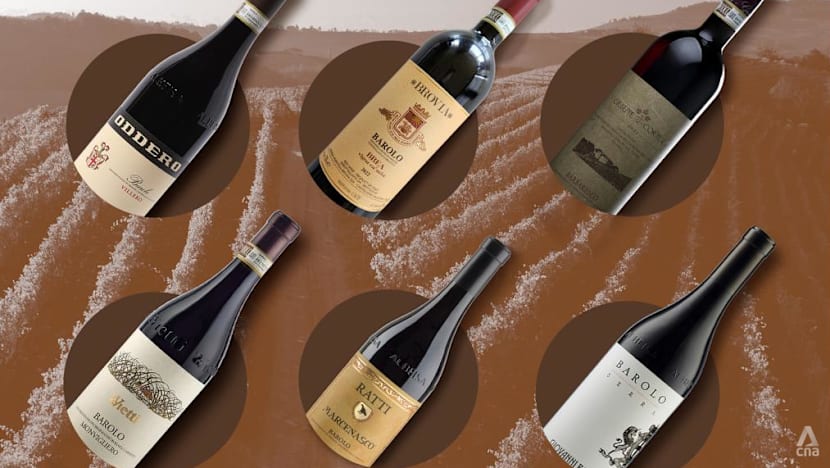
Among 300 samples from 145 wineries, I found six outstanding producers who delivered memorable wines that are worth celebrating.
Giuseppe Cortese
Giuseppe Cortese is known for producing some of Barbaresco’s finest wines, so perhaps I should not have been surprised when his 2023 Rabajà emerged as my top Barbaresco in the blind tasting. The winery sits in the hamlet of Rabaja, one of the 66 MGAs for Barbaresco and is widely considered the best. The 2023 Rabaja is bright, playful with strawberry, crushed roses, pink pepper, blood orange, and elegant tannins with an iron-edged minerality running through the core.
Giuseppe Cortese Barbaresco Rabaja 2023
Giovanni Rosso
Davide Rosso farms some of Serralunga’s most coveted ground, including a sliver of the legendary Vigna Rionda MGA, alongside his mother, Ester. His Serra showed cherry, dried orange rind, bay leaf, mace and sage on the palate, with a firm tannic grip. A classic Serralunga – wine built to age, not to drink tonight.
Giovanni Rosso, Barolo DOCG Serra 2022
Oddero
This family-owned estate is run by Mariacristina Oddero, her son Pietro and her niece Isabella. They farm 35 hectares across some of Barolo’s best-known hillsides, including Villero in Castiglione Falletto. The 2022 is perfumed with crushed petals, followed by dried orange peel and sour cherries. On the palate, it is light-boned yet powerful, with tea-like tannins and a final flourish of black pepper.
Oddero Poderi e Cantine, Barolo DOCG Villero 2022
Brovia
Brovia, founded in 1863, is also family-run. Elena farms the vines, and her husband Alex makes the wines hands-off in concrete tanks using native yeasts. They’re the sole owners of Brea, a Serralunga MGA – a rarity in Barolo. Within Brea, a one-hectare plot of Vigna Ca’ Mia, a special spot planted in 1955 and home to Brovia’s oldest vines. The 2022 is stunning: dried leaf, incense, cherry on the nose, supple red cherry and plum fruit on the palate, austere tannins and a touch of oak threading through.
Brovia Barolo DOCG Brea Vigna Ca' Mia 2022
Vietti
Vietti is a known name in the region, with an ownership change from the Vietti family to the American Krause Holdings. The estate is best known for bottling single-vineyard Barolo since the 1960s, and its artist-designed labels are nearly as collectable as the wine inside. Their best showing was the 2022 Monvigliero, a cru from Verduno, one of Barolo’s quieter villages. The wine opens with a floral lift, ripe raspberry, cherry, sage, and mint, all held together with a tight structure and lifted acidity.
Vietti Srl, Barolo DOCG 2022 Monvigliero, Verduno
Ratti
Marcenasco is not a single cru but a blend of three vineyard sources – Serra, Torriglione and young vines from Rocche – woven into what owner Pietro Ratti calls “a typical Barolo from La Morra”. Pietro is the son of Renato Ratti, credited as the first person to map the Barolo’s cru. The blend changes a bit based on the vintage, but at its core, it’s a beautiful wine. The 2022 is aromatic and supple, with cherry and strawberry fruit followed by black olive on the finish.
Ratti Barolo Marcenasco DOCG 2022
Source: CNA/bt
Related stories

The Punch
WorldJul 17, 2026 · 1 min
C’River NDC candidate empowers farmers, donates party offices
The Punch
The Punch
WorldJul 17, 2026 · 1 min
Court forfeits businesswoman Achimugu’s N8.9bn jewellery, cars to FG
The Punch
The Punch
WorldJul 17, 2026 · 1 min
Oyo confirms July delivery of surveillance aircraft
The Punch
The Punch
WorldJul 17, 2026 · 1 min
Nigeria needs policies that reduce poverty – Emir Sanusi
The Punch