Indian Express
Karnataka SIR: How Congress is stealing the march, BJP playing catch-up
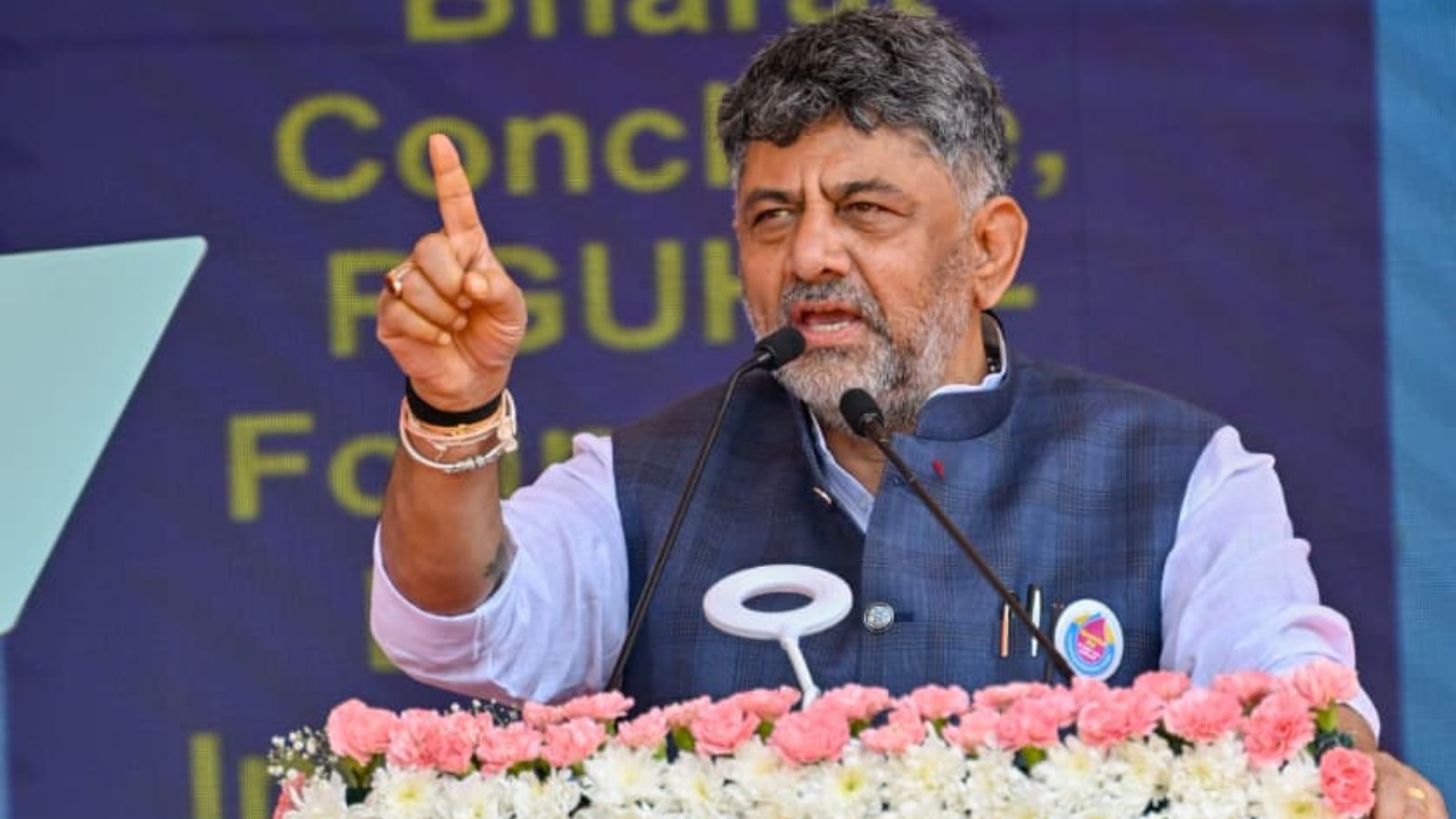
Weeks after assuming charge as Chief Minister, D K Shivakumar had referred to the deletion of lakhs of voter names during the SIR in other states and told a Congress convention on June 21: “The SIR that will take place in our state is both a danger and an opportunity for us. Therefore, you must protect the right to vote.”
KPCC president B K Hariprasad, also newly appointed, has described the exercise as a “second Independence movement”, to ensure that no eligible voter loses the franchise.
The Congress appears to have heeded the message. Over the last month, as the SIR exercise rolled out in Karnataka, it has used the SIR exercise as an opportunity for party building and strengthening, even as the opposition BJP and JD(S) have lagged on this front.
Through the creation of previously non-existent grassroots party infrastructure in the form of over 54,000 Booth Level Agents (BLAs) to mobilise voter enrolment, holding of mass enrolment drives and with innovations like issuance of PRC by the state government – on the lines of domicile certificates issued for admissions to professional education institutions in Karnataka – the Congress has tried to sustain its vote base in the state.
The party has also consistently driven home that voters risk losing out on welfare guarantee schemes if they don’t clear the SIR.
The last such intensive revision of electoral rolls in Karnataka was conducted in 2002. After the first round of SIR, 5.08 crore voters were mapped to the 2002 list, leaving around 46.5 lakh voters. On Wednesday, the EC extended the SIR by two weeks in the state, with the enumeration deadline now August 8. The draft list is to be published on August 17, objections can be filed till September 16, and the final rolls will be out on October 19.
Amid the crossfire of political allegations, Karnataka Chief Electoral Officer V Anbukumar said on July 8: “We want to assure that the (SIR) exercise is being carried out as per EC directions.”
Congress hits the ground, BJP resists
Since June, the Congress has put its MLAs and workers to work to ensure enrolment of all eligible voters. Besides organising camps to assist voters in filling enumeration forms, the Karnataka government announced on June 29 the issue of PRCs by the Revenue Department.
The BJP has accused the Congress of trying to “protect” illegal immigrants and its support base through the PRC, with its state president B Y Vijayendra describing the Shivakumar government’s plan as a “devious strategy”.
However, the Congress points out that it is merely facilitating the issuance of a document recognised by the EC for the SIR process. The EC includes the PRC as one of 12 documents that may be used to verify an elector’s or parent’s place and date of birth.
The government order of June 29 talks of establishing “a uniform, transparent and legally sustainable framework for issuance of Permanent Residence Certificates and Domicile Certificates”. The order says the PRCs may be issued after local authorities are satisfied, following enquiry and verification, that an applicant is a genuine and permanent resident of Karnataka. Eligibility may be established through criteria such as birth in Karnataka, 10 years of residence by parents or guardians, 10 years of schooling in the state, ownership of residential property, or government records including electoral rolls, Aadhaar, ration cards and land records.
On July 8, Union Minister of State Shobha Karandlaje wrote to Union Home Minister Amit Shah seeking intervention to halt the Karnataka government’s introduction of PRC.
Responding to Karandlaje’s letter, Hariprasad accused the BJP of using the issue selectively. “In Assam, 30 lakh people were identified through the NRC (National Register of Citizens) and CAA (Citizenship Amendment Act), out of which 21 lakh Hindus were going to be expelled. So they abandoned it there. They are saying Bangladeshis for politics. The BJP is playing a trick to abandon the real voters of India,” he said.
AIMIM president Asaduddin Owaisi, in fact, has also sought a comparable PRC mechanism in Telangana.
Enrolment camps turn into flashpoint
The Congress government’s facilitation of mass enrolment camps has become another point of contention. The BJP and JD(S) have complained to the EC that BLOs are distributing and collecting forms at public venues instead of conducting mandatory door-to-door verification. Union Minister and former Karnataka CM H D Kumaraswamy has said SIR guidelines require personal household verification.
In defence, the Congress argues that the EC permits forms to be filled at public places. Hariprasad said camps had been organised in community halls, mosques and temples because many BLOs were unable to visit slum areas. “How can illiterate and poor people complete this process on their own?” he asked.
On July 14, Congress spokesperson Ramesh Babu wrote to the EC alleging serious deficiencies in setting up facilitation centres for the SIR exercise. The letter claimed that more than two weeks after the process began, fewer than half the enumeration forms had been distributed and that voter facilitation centres were inadequate.
“Such administrative shortcomings cannot be permitted to prejudice the valuable electoral rights of citizens,” the letter said, adding that the CEO’s claims of having set up 37,464 voter facilitation centres and 11,856 BLO facilitation centres were false and voters were “suffering”.
Link to welfare schemes
The party is also telling voters that enrolment may be linked to access to welfare schemes, as has been announced by several BJP-ruled governments. “Those who do not have a vote will not get opportunities, guarantees or pensions. The BJP government has stopped benefits of these schemes for those without voting rights in other states,” Shivakumar has been saying.
Karnataka minister M B Patil has claimed at party meetings that the BJP intends to alter the electoral dynamics in nearly 100 of the 224 Assembly constituencies in the state through the SIR exercise.
KPCC working president G C Chandrashekhar talks about the Congress push to appoint 54,000 BLAs over the past year to counter this. “We did this as a precautionary measure because we knew why they were doing the SIR,” he said.
The BLAs have been working with the Congress’s guarantee committees, which include five members in each of the state’s nearly 7,000 gram panchayats and 4,000 municipal wards, besides committees at the taluk and district levels.
Following concerns within the BJP over its preparedness, party leaders have reportedly accelerated its appointments too. According to party sources, the BJP is now only around 3,000 BLAs short of the Congress’s strength.
View original source — Indian Express ↗
Related stories

The Hindu
PoliticsJul 17, 2026 · 1 min
West Asia war LIVE: U.S. expands airstrike against Iran by hitting more bridges
The Hindu

France 24
PoliticsJul 17, 2026 · 1 min
Japan changes imperial succession law but keeps ban on female emperor
France 24

RNZ
PoliticsJul 17, 2026 · 1 min
Former finance minister Sir Bill Birch dies
RNZ

Times of Israel
PoliticsJul 17, 2026 · 1 min
Democratic Socialists of America platform backs Palestinian ‘right to resist’
Times of Israel