Indian Express
Widow denied insurance claim over ‘missing’ ECG report of husband, wins Rs 14.6 lakh
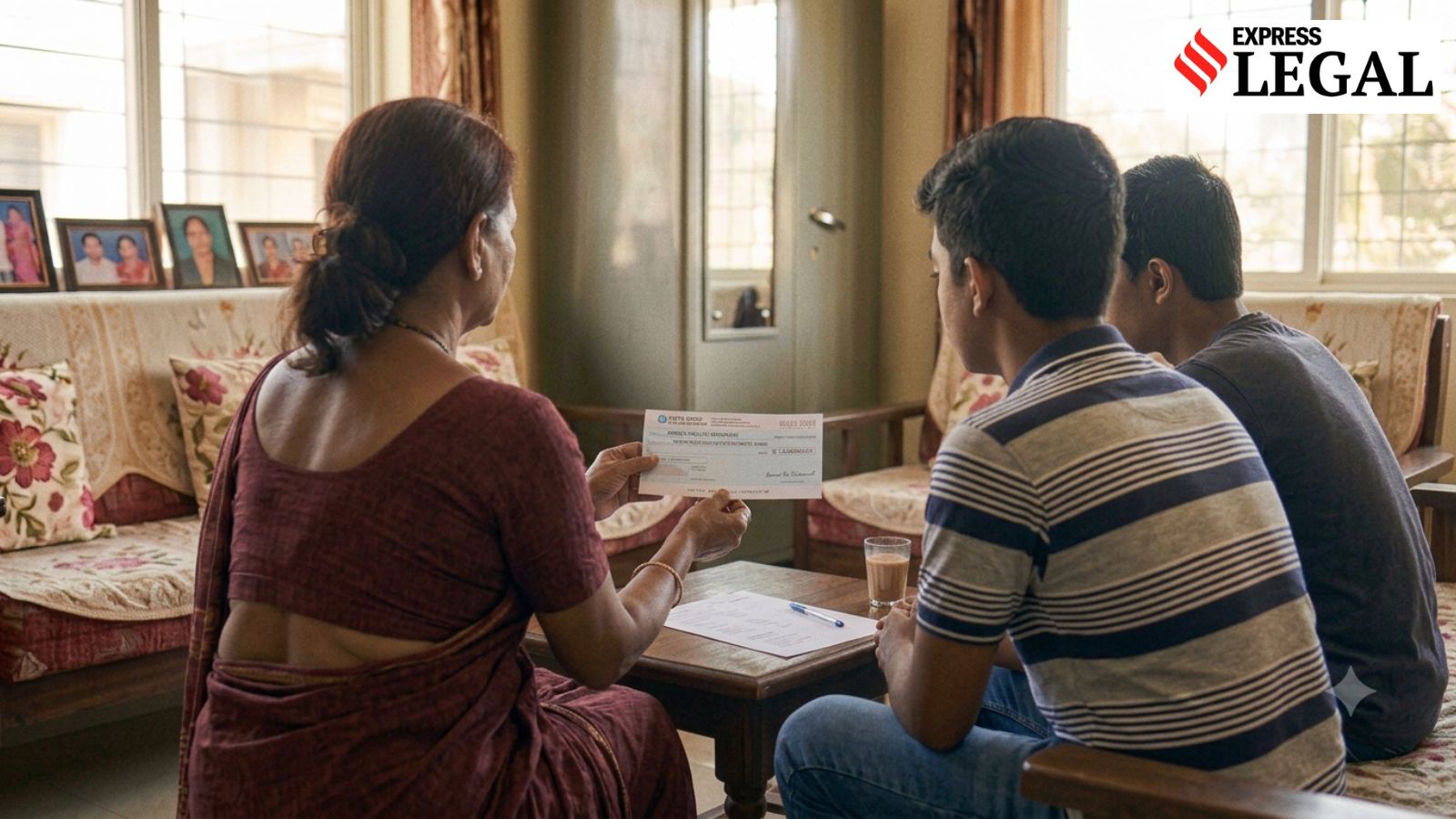
An insurance company’s insistence on ECG reports and cardiac test results from a man who died while doctors were performing CPR has landed it in trouble, with a Delhi consumer commission ordering Manipal Cigna to pay more than Rs 14.6 lakh and calling its claim rejection arbitrary and unreasonable.
The North Delhi District Consumer Disputes Redressal Commission-I president Divya Jyoti Jaipuriar and members Ashwani Kumar Mehta and Harpreet Kaur Charya were hearing a complaint filed by Kanak Lata and her two minor sons against Manipal Cigna Health Insurance Company after it rejected an insurance claim arising from the death of Kanak Lata’s husband, Pankaj Srivastava, who was covered under a group insurance policy linked to a home loan.
“As such, to demand a detailed ECG or Troponin test, which requires a stable window of time, from a patient undergoing active CPR is not only medically absurd but humanly impossible,” the commission said on June 29, holding that the rejection was “wholly arbitrary, unreasonable and contrary to settled principles governing insurance claims”.
The dispute traces back to the Covid-19 pandemic in April 2021, when Srivastava died hours after developing severe breathlessness. What followed was a prolonged legal battle after the insurer declined to honour the policy, arguing that the family had failed to produce specific medical records proving he suffered a covered critical illness. The commission has now ruled that an insurer cannot rely on technicalities impossible to satisfy in a life-threatening emergency.
Home loan, insurance policy
According to the complaint, Pankaj Srivastava got a home loan of Rs 10.57 lakh from Indiabulls Rural Finance in June 2019. During the loan process, a one-time insurance premium of Rs 64,448 was added to the loan amount, and a group insurance policy was issued by Manipal Cigna.
The policy covered several risks, including Rs 7 lakh for critical illness, Rs 5 lakh as an education fund benefit and Rs 10,000 towards funeral expenses. Kanak Lata was nominated as the beneficiary under the policy.
The commission noted that Srivastava complained of cough and sore throat on April 1, 2021. Two days later, he developed fever, and by the morning of April 4, he began experiencing breathlessness.
Story continues below this ad
He visited the flu clinic at Aruna Asaf Ali Government Hospital, where a rapid Covid-19 test returned negative. However, his condition worsened after he returned home, and he was rushed back to the hospital later that night.
Hospital records showed that he reached the casualty in a gasping condition with critically low oxygen saturation and non-recordable pulse and blood pressure. Doctors from the medicine and anaesthesia departments immediately initiated CPR and all available resuscitative measures but could not revive him.
He was declared dead at 11.15 pm on April 4, 2021. The death summary recorded the cause of death as “sudden cardiac arrest”.
Insurance claim rejected
After informing both the insurer and the lender, Kanak Lata submitted the insurance claim. However, Manipal Cigna rejected the claim on November 18, 2021, stating that there were no ECG changes, elevated cardiac enzyme reports, troponin test results or post-mortem report to establish that Srivastava had suffered a myocardial infarction, which was covered under the policy.
Story continues below this ad
The insurer maintained that “sudden cardiac arrest” was not one of the listed critical illnesses covered under the insurance contract and therefore the claim was not payable.
Commission rejects technical defence
The commission found the insurer’s reasoning legally and medically unsustainable.
It observed that the hospital records clearly established that the patient had been brought in an extremely critical condition and doctors were engaged in emergency life-saving treatment.
Expecting treating doctors to first conduct ECGs, cardiac enzyme tests or other specialised investigations before attempting resuscitation was, according to the commission, contrary to medical practice.
The bench further held that post-mortem examinations are not mandatory in every case of natural death and their absence alone could not become the basis for rejecting a genuine insurance claim.
The commission also noted that the insurer had not produced any expert medical opinion to support its distinction between sudden cardiac arrest and myocardial infarction in the facts of the case.
It held that these technical differences were never clearly explained to consumers while selling the policy and could not later be used to deny legitimate benefits.
Referring to several Supreme Court judgments, the commission reiterated that insurers cannot reject genuine claims on hyper-technical grounds and that ambiguities in insurance contracts must be interpreted in favour of policyholders.
Commission criticises insurer’s language
The commission also took serious exception to the language used in Manipal Cigna’s rejection letter. It noted that the letter stated, “the insured Mr Pankaj Srivastava were accustomed to death”, describing the phrase as “grammatically grotesque”, “wholly lacking in logic” and deeply insensitive to the deceased’s widow.
According to the commission, such wording reflected a complete lack of application of mind and undermined public confidence in the manner in which insurers deal with bereaved families. For this conduct, the commission imposed a separate cost of Rs 5 lakh on Manipal Cigna, directing it to deposit the amount in the Consumer Welfare Fund within 45 days.
Relief granted
The commission directed Manipal Cigna to pay Rs 12.10 lakh towards policy benefits, comprising Rs 7 lakh for critical illness/death, Rs 5 lakh towards education fund benefit and Rs 10,000 towards funeral expenses, together with simple interest at 9 per cent per annum from November 18, 2021.
Story continues below this ad
It also awarded Rs 1 lakh as compensation for mental agony and harassment and Rs 25,000 towards litigation costs. Separately, Indiabulls Rural Finance was directed to pay Rs 1 lakh as compensation and Rs 25,000 towards litigation costs after the commission held that initiating recovery proceedings against the widow while the insurance claim was pending amounted to an unfair trade practice.
The lender was also directed to provide an updated loan statement, while the insurer was asked to first adjust the insurance amount towards the outstanding home loan and release any remaining amount to the complainants.
Significance
The ruling underscores that insurers cannot reject genuine claims by insisting on medical tests that are impossible to conduct during life-saving emergencies. It reinforces that technical policy conditions cannot be used to defeat legitimate claims without clear proof.
For consumer-related grievances, individuals may contact the consumer helpline in their respective states (Delhi Consumer Commission Helpline: 1800-11-4000) or call the National Consumer Helpline at 1915 for assistance.
View original source — Indian Express ↗
Related stories

TASS
WorldJul 17, 2026 · 1 min
Four explosions heard in Iraqi city of Sulaymaniyah — Rudaw
TASS

Philippine Daily Inquirer
WorldJul 17, 2026 · 1 min
4 Bulacan cops relieved from post over mistaken arrest of trader
Philippine Daily Inquirer
Indian Express
WorldJul 17, 2026 · 1 min
3 students killed after train rams school van in Bengal’s Murshidabad
Indian Express
ABC News
WorldJul 17, 2026 · 1 min
Australians need better understanding of Holocaust, professor tells inquiry
ABC News