CNA
Tourist guides adapt as AI and social media reshape how visitors explore Singapore
Singapore
As more travellers take charge of their own itineraries, tourist guides are shifting away from traditional coach tours towards personalised experiences.
New: You can now listen to articles.
This audio is generated by an AI tool.
17 Jul 2026 01:52PM
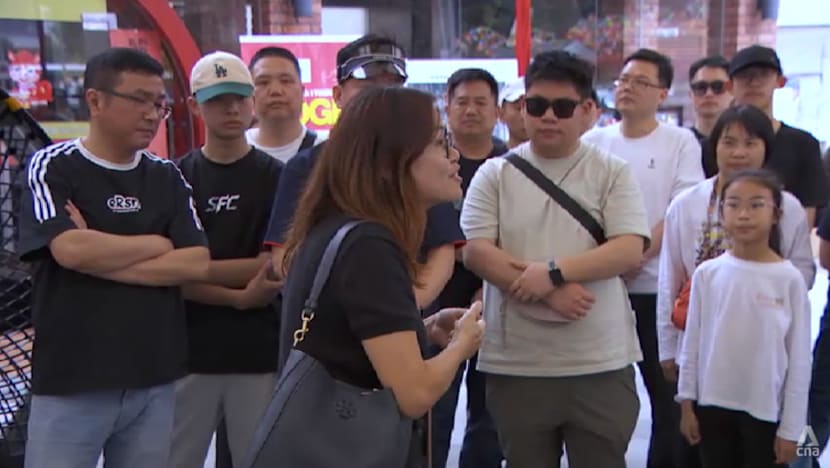
SINGAPORE: For the past decade, Mr Jack Zhao has been introducing visitors to Singapore, sharing with them the country’s history, culture and food.
But the veteran tourist guide says the job has changed dramatically in recent years.
Gone are the days when large tour groups regularly arrived on coaches. Instead, many travellers now prefer to explore Singapore on their own, planning trips with the help of social media and, increasingly, artificial intelligence.
"Now we have to change because … consumers' behaviour (has) changed," Mr Zhao told CNA. "We cannot use the old methods … It's difficult to survive."
ADAPTING TO CHANGING TOURIST BEHAVIOURS
Originally from China, the 60-year-old Singapore citizen has lived here for 30 years and says he has shifted his focus almost entirely to private tours, where visitors are looking for more personalised experiences.
"They want to focus on (a) certain niche … for example, culture, food … and heritage," he said.
The change reflects a broader shift in travel habits.
With TikTok videos, RedNote recommendations and AI-generated itineraries now readily available, more visitors are choosing to travel independently instead of joining package tours.
The impact has been felt across Singapore's tourist guide industry, particularly among those who relied on tour groups.
There are about 4,000 licensed tourist guides in Singapore, but only around half receive regular assignments, said Mr Wyman Poon, president of the Society of Tourist Guides Singapore.
Mr Poon said anecdotal feedback from members suggests some guides saw assignments fall sharply in May and June compared with the January-to-April period.
"One told me that in June – 70 per cent drop, in May – 40 per cent. That's an English (speaking) tourist guide," he said.
"A Mandarin-speaking (guide) told me he (had an) 80 per cent drop in June and 50 per cent in May. That's a huge drop. The Mandarin-speaking guides are more heavily affected."
"The main challenge is that now, because the traditional package tours are on the downside, many of them do not have enough jobs to go around,” he added.
“So, they have to resort to their own social media and their own personal experience and the natural market to market themselves.”
But Mr Poon cautioned against attributing the industry's challenges solely to AI.
He said broader economic uncertainty, geopolitical tensions and weaker demand for traditional package tours have also contributed to the decline in assignments.
HUMAN TOUCH OVER ALGORITHMS
Today, Mr Zhao offers niche activities including cycling tours, heritage walks and private food experiences through neighbourhoods such as Kampong Glam, Little India and Chinatown.
He believes such experiences remain something AI cannot replicate.
"We have the human touch, personal walk side by side,” he said.
"Eventually, I will share my story, and the tourists will share their own stories. We become friends."
Some visitors stay in touch long after returning home, he added, with many recommending him to their friends.
GUIDES ENCOURAGED TO ADAPT
Mr Poon said today's tourist guides need to think beyond simply leading groups from one attraction to another.
"The industry is evolving," he said.
"Tourist guides nowadays have got to be more nimble, got to be more creative and flexible, and also to offer more personalised experiences."
Recognising these changes, the Singapore Tourism Board (STB) has been encouraging guides to adapt.
It said new technologies such as generative AI are intended to complement – rather than replace – tourist guides, helping them create more authentic and immersive experiences.
Under STB's updated Learn + Do licence renewal framework, which took effect on Mar 1, guides are encouraged to build skills in areas including storytelling, social media marketing and generative AI to meet the needs of today’s travellers.
Source: CNA/mp(dn)
Related stories

Sky Sports
SportsJul 17, 2026 · 1 min
Wallace charges up Open leaderboard with early birdie run
Sky Sports

Times of India
SportsJul 17, 2026 · 1 min
Trump will attend FIFA World Cup final, says White House; Argentina prez Milei to skip event
Times of India
ABC News
SportsJul 17, 2026 · 1 min
Live: Sharks hit with late out as fourth spot goes on the line against Knights
ABC News

Philippine Daily Inquirer
SportsJul 17, 2026 · 1 min
Giannis arrives in Miami looking to follow Messi's path to success
Philippine Daily Inquirer