Indian Express
Expert Explains | A daily pill that slashes cholesterol: How it works, why it’s a breakthrough
6 min readNew DelhiUpdated: Jul 17, 2026 12:34 PM IST
Developed by Merck, the once-daily tablet is approved as an add-on to diet and exercise for adults with abnormally high bad cholesterol. Magnific
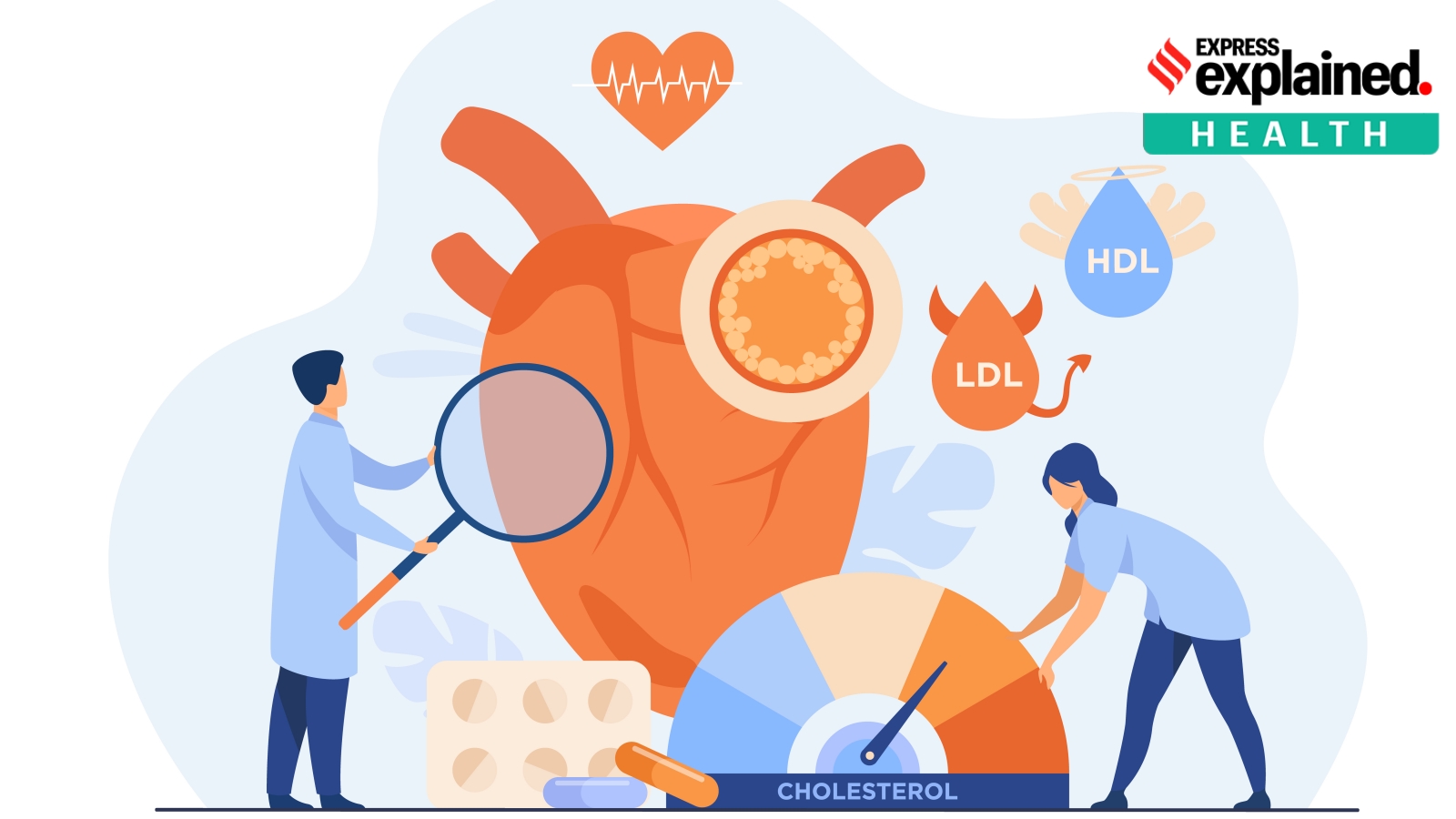
Statins are currently the first-choice drugs for lowering LDL (low-density lipoprotein), or “bad” cholesterol, but they do not help everyone achieve their target levels. Patients at high cardiovascular risk often require additional medicines which, until now, have only been available as expensive injections.
Now, the US Food and Drug Administration (FDA) has approved a pill version called Lipfendra (enlicitide) that can bring LDL down by up to 60%.
Lipfendra is a PCSK9 inhibitor, which works differently from statins. While statins reduce the liver’s production of cholesterol, PCSK9 inhibitors help the liver remove bad cholesterol from the bloodstream.
They do this by blocking (inhibiting) the PCSK9 protein, which normally destroys LDL receptors. With more LDL receptors available, the liver can clear much more LDL cholesterol, often reducing levels by 50-60%.
Developed by Merck, the once-daily tablet is approved as an add-on to diet and exercise for adults with abnormally high bad cholesterol, including those with heterozygous familial hypercholesterolaemia (HeFH), an inherited condition that causes very high cholesterol levels.
“But the fine print is that besides lowering LDL cholesterol, Lipfendra also reduced apolipoprotein B (ApoB) — a protein found on cholesterol particles that reflects the number of artery-clogging lipoproteins circulating in the blood — by about 50% in the clinical trials. ApoB is higher among Indians than Western populations,” Dr Ambuj Roy, professor of cardiology, All India Institute of Medical Sciences (AIIMS), Delhi, told The Indian Express. Excerpts:
Who is likely to benefit most from the new oral pill?
Story continues below this ad
The biggest beneficiaries are patients at high or very high cardiovascular risk, particularly those who have already had a heart attack, undergone angioplasty or stenting, or have established coronary artery disease (CAD). In these patients, the focus is on secondary prevention — preventing another cardiac event.
Cholesterol: What to know
The principle is simple: the lower the LDL cholesterol, the better the protection. Current guidelines recommend much stricter LDL cholesterol targets for people with existing heart disease, often below 55 mg/dL (milligrams per decilitre). While many patients can achieve these levels with a combination of a high-intensity statin and ezetimibe, which prevents cholesterol from entering the bloodstream via the gut, around 7-10% continue to have LDL levels above target or are unable to tolerate statins, creating the need for additional therapies such as PCSK9 inhibitors.
The drug may also benefit people with very high LDL cholesterol, a strong family history of premature heart disease, multiple cardiovascular risk factors or inherited conditions such as familial hypercholesterolaemia, where cholesterol levels remain elevated despite conventional treatment.
How does it compare with statins and existing injectables?
Statins remain the first-line treatment for lowering cholesterol because they are effective, inexpensive and have decades of evidence showing they reduce the risk of heart attacks and strokes. PCSK9 inhibitors are generally reserved for patients who remain at high risk despite these therapies or those who are unable to tolerate statins because of muscle-related side effects or other adverse reactions. Until now, PCSK9 inhibitors have only been available as injectable medicines, which are effective but relatively expensive.
Story continues below this ad
Lipfendra offers the same mechanism of action in the form of a once-daily pill. An oral option could improve convenience and potentially encourage better adherence among patients who need intensive cholesterol lowering but prices will be high.
There are non-statin lipid lowering drugs with proven outcome trials that must be prescribed before we jump to this new drug. They also significantly lower LDL. Ezetimibe (10 mg daily) lowers it by 18–25% and Bempedoic acid (180 mg daily) lowers it by 17–23%. A combination (Bempedoic acid 180 mg + Ezetimibe 10 mg) can reduce LDL by 35–40%.
Will lowering LDL cholesterol reduce heart attacks and strokes?
While Lipfendra has been approved based on its ability to lower LDL cholesterol, a dedicated cardiovascular outcomes trial is still under way to determine whether it reduces heart attacks, strokes and cardiovascular deaths. LDL cholesterol is a well-established marker for cardiovascular risk. Decades of research have consistently shown that lowering LDL cholesterol reduces the likelihood of recurrent cardiovascular events, particularly when combined with good blood pressure control, diabetes management, regular exercise, a healthy diet and smoking cessation.
Why is ApoB reduction important?
LDL cholesterol travels through the bloodstream packaged inside particles known as lipoproteins. Each of these particles contains a single molecule of ApoB, meaning ApoB reflects the number of cholesterol-carrying particles rather than just the amount of cholesterol they contain.
Story continues below this ad
This is particularly important in people with diabetes and dyslipidaemia, a condition in which the levels of cholesterol or other blood fats are abnormal. In such patients, LDL levels may appear normal in tests but the number of small, dense LDL particles — which are considered more harmful — may actually be high and drive plaque build-up. South Asians are known to have a higher prevalence of this pattern of dyslipidaemia compared with Western populations.
When should one get their cholesterol checked?
Every adult should have their cholesterol checked at least once in early adulthood (between 18 and 29 years) to identify inherited disorders, which affect around one in 250 people and cause markedly elevated LDL cholesterol from younger years. That can be addressed then.
For people with normal cholesterol levels and low cardiovascular risk, repeat testing is generally advised every five years, although those with diabetes, hypertension, obesity, a family history of premature heart disease or other risk factors may need more frequent screening.
© The Indian Express Pvt Ltd
Rinku Ghosh is the Health Section Lead at The Indian Express, where she oversees the publication’s comprehensive health, wellness, and medical science vertical. With years of experience in high-impact journalism, Rinku specializes in translating complex medical research into actionable insights for the public. Her reporting spans a wide spectrum—from deep-dives into childhood obesity and the effects of urban pollution to the frontiers of medical technology, such as the use of AI and nanobots in cancer treatment.
Authoritativeness: As a veteran editor at one of India’s most trusted news organizations, Rinku has interviewed world-renowned experts, including cardiologists from the Mayo Clinic, oncologists from AIIMS, and researchers from the Indian Institute of Science (IISc). Her column often serves as a primary source for "Explained" features, where she breaks down global health trends, vaccine safety, and public health policy. Her work is recognized for bridging the gap between clinical data and the lived experiences of patients.
Trustworthiness: Rinku’s editorial approach is rooted in the "Journalism of Courage" philosophy, prioritizing evidence-based science over healthcare myths. In an era of medical misinformation, she ensures that every piece of advice—whether regarding chronic disease management or nutritional supplements—is backed by peer-reviewed studies and verified by leading medical practitioners. ... Read More
Tags:
An Expert Explains
Express Explained
View original source — Indian Express ↗
Related stories

The Hindu
TechnologyJul 17, 2026 · 1 min
How the new U.S. visa rules affect your online privacy | Explained
The Hindu

South China Morning Post
TechnologyJul 17, 2026 · 1 min
Chinese President Xi Jinping warns against creating ‘new historical injustices’ in the AI era
South China Morning Post

Engadget
TechnologyJul 17, 2026 · 1 min
Coca-Cola's dairy company fairlife hit with a ransomware attack
Engadget

CNA
TechnologyJul 17, 2026 · 1 min
Actress Fann Wong no longer owns a weighing scale: 'Having strength and energy is much more important'
CNA