Indian Express
Centre plans pension for unorganised, formal workers tied to ‘Target Retirement Sum’
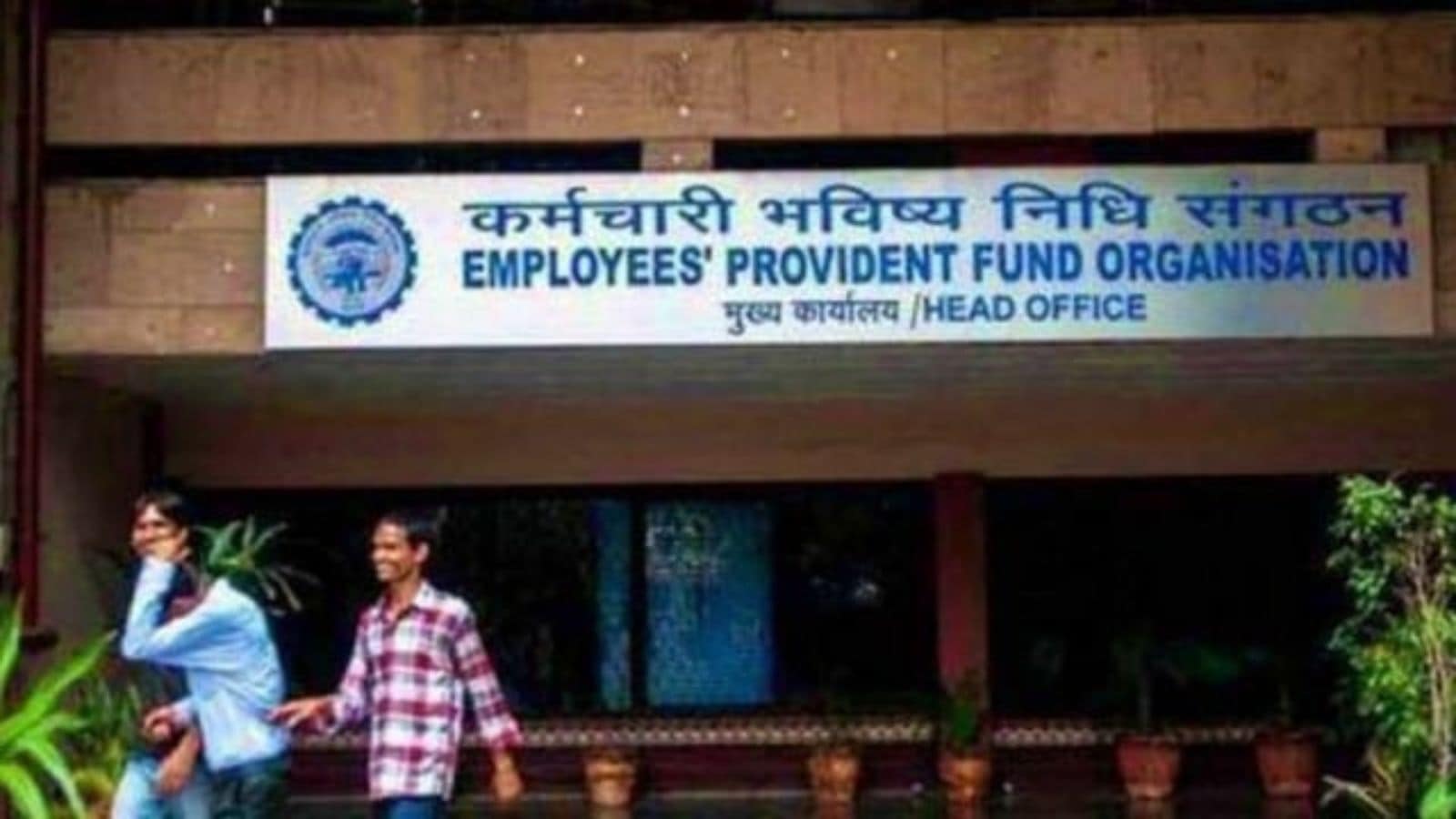
The government is working to bring in a new contributory pension scheme for unorganised sector and formal sector workers that would accumulate contributions over time, which will remain invested in long-term government-backed securities with annual crediting of interest. Then at the age of 60 years, the scheme will allow the proposed “Target Retirement Sum (TRS)” to be converted into pension, based on prevailing annuity and interest rates, a senior government official told The Indian Express. The new scheme is being planned as part of the next phase of reforms under the retirement fund body Employees’ Provident Fund Organisation (EPFO) to cover the workers currently excluded from the Employees’ Pension Scheme (EPS).
The retirement fund models being followed in other countries such as Singapore are being studied to incorporate the best practices in this proposed new scheme, which will be part of the EPFO 3.0 reform phase that will enable new tech features and the retirement fund body’s upgradation to the core banking solution, the official said.
“Under the proposed scheme, at the age of 55 years, a worker can decide the purpose for retirement savings. Till that time, it will operate like PF, you keep on accumulating. At that stage when you are retiring, it converts into an annuity or a systematic withdrawal plan,” the official said.
It is proposed that each member will have an individual pension account on EPFO’s digital platform and the contributions would accumulate over time and be invested in long-term, government-backed securities and approved instruments, with annual interest credited, the official said. “At the age of 60, the proposed Target Retirement Sum (TRS) would be converted into pension, based on annuity and interest rates. The system will compute the TRS dynamically based on the member’s chosen pension goal and expected retirement age. Members will have personalised dashboards showing total contributions, real-time corpus status, and progress towards the TRS for applicable schemes,” another official said.
The system will project the required contribution amount and frequency to achieve the declared TRS. “Adjustments to TRS will be allowed and contribution requirements could then be recomputed accordingly. The system will accept and categorise contributions from multiple sources such as members, employers, or third-parties and update the member’s pension balance,” the official said.
When asked if this would be along the lines of the National Pension System (NPS), one of the officials cited above said that the NPS is purely annuity based, while the proposed pension scheme will be more flexible and risk free and based on real and not notional returns. “We want to make it similar to the PF which continues with only the contributions being stopped because you are retired, so you will not have any contribution. It will then be a systematic withdrawal plan on the basis of your expected monthly pension payout. So, it can be equal to the interest that you want, in which case, the corpus will remain the same. For example, if 8% interest is declared and that 8% over Rs 1 crore is translating to Rs 8 lakh, so you divide it by 12 and that becomes your pension payout every month,” the official explained.
Elaborating further, the official said, “If you want higher in the initial stage, then it will be a drawdown from your principal. So, based on your longevity, you estimate that in 20 years you want to have a good pension, you can increase your drawdown. At the same time, you can reduce your drawdown. If you reduce your drawdown, your interest will get added to your principal. So, towards the later part, it becomes almost like an inflation-linked plan where towards the later part, you can have a higher payout. This is what we are thinking about.”
Story continues below this ad
The flexibility to decide the amount for pension payouts or the drawdown will be given to the member. “The EPFO 3.0 system will allow users to simulate pension amounts based on parameters such as age, corpus, interest rate, and retirement age. It will also include additional input fields for voluntary contributions and contribution frequency. The system will provide inflation-adjusted projections as an optional feature. The estimated monthly pension, projected corpus at retirement, and comparative graphs will be displayed to the member, allowing multiple scenario comparisons for decision making taking into account variable contributions and multiple employment scenarios,” the official said.
The scheme also proposes family and survivor pensions for spouse, children, and orphans funded through a pooled “Family Benefit Fund”, managed on actuarial principles, the official said. Members of EPF, GPF, and other provident funds could also be allowed to transfer balances into the new pension initiative to enhance retirement savings, the official added.
The next phase of reforms under the EPFO will also mark a move towards expanding the provident fund coverage to gig workers and unorganised sector workers to enable universal social security coverage for all formal and informal sector workers in the country in line with the Code on Social Security. While the new social security coverage scheme will make use of the EPFO’s digital infrastructure, the nodal agency for the implementation of the social security scheme is yet to be finalised by the Ministry of Labour and Employment.
The new pension scheme will adopt a defined contribution framework, allowing contributions from multiple sources: workers themselves, employers, government co-contributions for workers in the lower wage segment, aggregators in the case of gig and platform workers, and corporate social responsibility or third-party funds.
Story continues below this ad
The scheme aims to cover the entire pool of organised and unorganised sector workers. The Code on Social Security, 2020 has brought gig and platform workers into the social security ambit and mandates aggregator contributions of 1-2% of annual turnover for social security, with the total contribution not exceeding 5% of the amount payable by the aggregator. “The new pension initiative would operationalise this through flexible co-contribution models, ensuring that delivery partners, drivers, and other platform workers are systematically included,” the official said.
Out of India’s 55 crore workforce, 76% or nearly 41.8 crore workers are in the unorganised sector, with limited or no pension coverage. The scheme also seeks to address coverage for building and other construction workers (BOCW). “India has over 3.5 crore registered BOCW workers, with net cess collections exceeding Rs 70,000 crore across state welfare boards. The new scheme will provide a structured avenue to channel these resources into sustainable pensions, ensuring adequacy and portability of benefits,” the official said.
Workers in higher-wage segments currently remain outside EPS coverage. “The new pension scheme would also allow them to build retirement savings in a contributory, actuarially sound framework under EPFO,” the official said.
The proposed contributory pension scheme is being planned as a social security initiative aimed at extending retirement security to segments currently outside the EPS. Post-2014, the EPS, which is a defined benefit scheme, is restricted to the workers earning below the wage ceiling of Rs 15,000. For employees who joined the workforce before 2014, the employee’s entire contribution goes to the EPF, while the 12% contribution by the employer is split as 3.67% to EPF and 8.33% to EPS. The Government of India contributes 1.16% of an employee’s pension for those below the wage threshold. Employees do not contribute to the pension scheme. The member becomes eligible for pension benefits after completion of 10 years of contributory service and upon attaining the age of 58 years.
View original source — Indian Express ↗
Related stories

CNBC
BusinessJul 17, 2026 · 1 min
Chinese startup Moonshot AI unveils Kimi model it says rivals OpenAI, Anthropic
CNBC

Antara News
BusinessJul 17, 2026 · 1 min
Indonesia's manufacturing outlook brightens after Q2 expansion: BI
Antara News

Bloomberg
BusinessJul 17, 2026 · 1 min
Amundi Wants Oil, Gas in EU’s New Energy-Transition Fund Class
Bloomberg

Rio Times
BusinessJul 17, 2026 · 1 min
Azul Adds Intermediate Long-Haul Cabin Class for Premium Travelers
Rio Times